
Most patients can wear jeans after hip replacement between 4 and 6 weeks, if the jeans are loose and stretchy. Fitted or skinny denim usually needs 8 to 12 weeks. Your surgeon’s clearance, your surgical approach, and your incision healing decide the exact date.
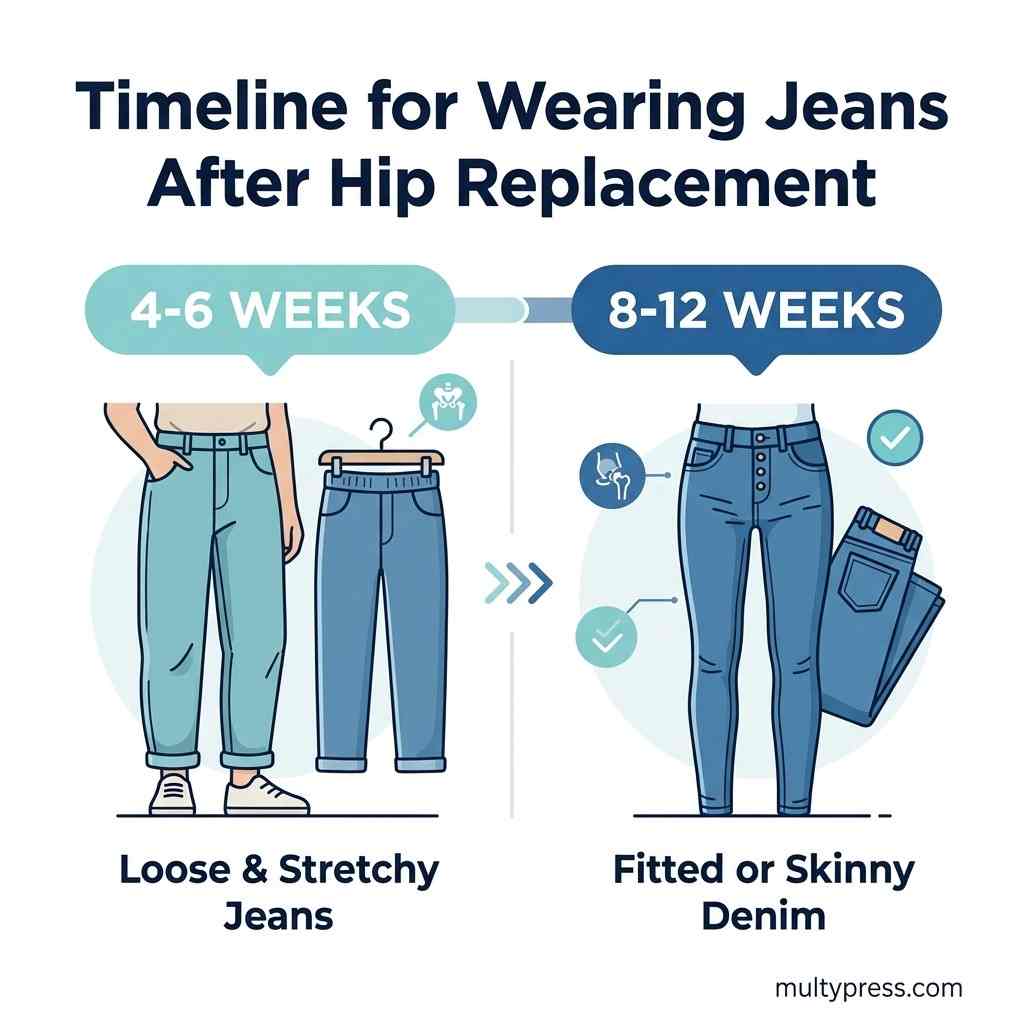
Table of Contents
Wear Jeans After Hip Replacement: A Safe, Week-by-Week Timeline
Staring at your favorite denim in the closet? You are not alone. Thousands of patients ask when they can wear jeans after hip replacement. The answer is more nuanced than a single date.
Rigid fabric, tight waistbands, and low bending all affect a healing hip. However, the right jeans and the right technique can bring you back to denim sooner. This guide shows you how.
Why Jeans Are Tricky After Hip Surgery?
Jeans look simple. Yet they demand movements your new joint dislikes early on.
First, you must bend toward your feet to pull them on. Many surgeons restrict bending the hip beyond 90 degrees. Second, stiff denim resists stretching. Third, a tight waistband can rub your incision.
Consequently, loose clothing wins in the early weeks. The American Academy of Orthopaedic Surgeons (AAOS) advises avoiding deep hip flexion during early recovery. This protects the joint from dislocation.
Safe Timeline to Wear Jeans After Hip Replacement
Recovery varies, but the stages below reflect common patterns. Always confirm with your surgeon first.
| Recovery Stage | Typical Clothing | Jeans Status |
|---|---|---|
| Weeks 0–2 | Loose pants, pajamas, dresses | Not yet |
| Weeks 2–4 | Elastic-waist pants, joggers | Not recommended |
| Weeks 4–6 | Stretch pants, relaxed fits | Loose, stretchy jeans may work |
| Weeks 6–12 | Most regular clothing | Straight-leg jeans are usually fine |
| After 12 weeks | Regular wardrobe | Skinny jeans, if comfortable |
Expert tip: The Mayo Clinic notes that recovery differs for every patient. Many people resume light daily activities within weeks, but full recovery can take several months.
Meanwhile, listen to your body. A calendar cannot replace clearance from your care team.
How Your Surgical Approach Changes the Answer?
Surgeons use different incisions. Each one affects your clothing choices.
Posterior approach: This approach carries stricter movement rules. Bending, twisting, and crossing your legs stay limited longer. Therefore, putting on jeans takes more care.
Anterior approach: Patients often report fewer movement restrictions. Nevertheless, the incision sits at the front of the hip. A waistband can irritate that area.
Lateral approach: The incision runs along the side of the hip. Tight denim may press on it for weeks.
So ask your surgeon which precautions apply to you. Your answer may differ from a friend’s experience.
How to Put On Jeans Safely: Step by Step
Technique matters as much as timing. Follow these steps to protect your hip.
- Sit on a firm, raised chair. A stable seat prevents deep bending.
- Dress your operated leg first. Use a reacher or dressing stick to guide the leg opening.
- Pull the waistband up to your knees. Keep your knees apart and your back straight.
- Stand with support. Hold a counter or walker, then pull the jeans up.
- Fasten them last. Take your time with buttons and zippers.
To undress, reverse the order. Remove the jeans from your operated leg last.
Expert tip: Occupational therapists commonly recommend long-handled reachers, sock aids, and dressing sticks. These tools help you dress without bending past safe limits (AAOS OrthoInfo, “Total Hip Replacement”).
Choosing the Right Jeans for Your Recovery
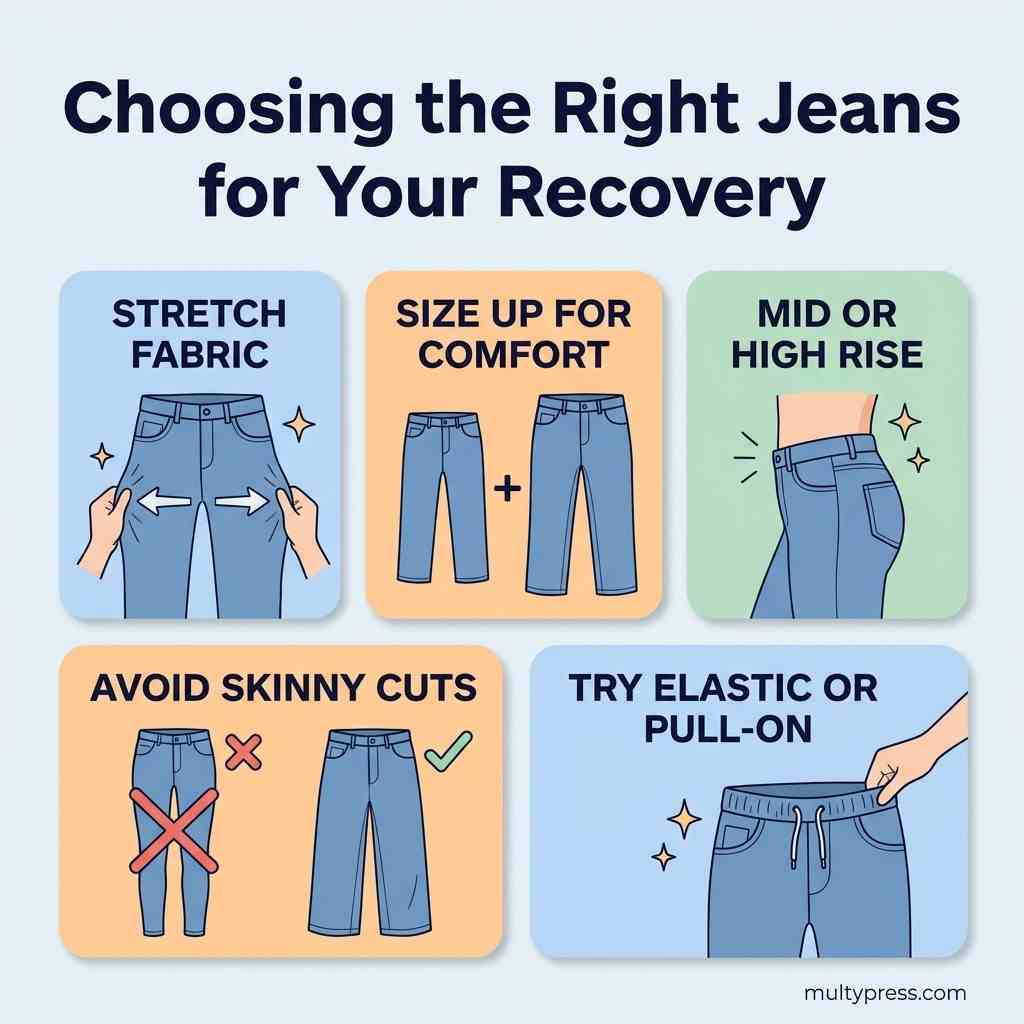
Not all denim is equal. Choose wisely, because comfort protects your progress.
- Pick stretch fabric. Look for 2% to 5% elastane in the blend.
- Size up temporarily. Extra room reduces pressure on swelling and scars.
- Choose a mid or high rise. A higher waistband sits above the incision.
- Avoid skinny cuts. They grip your thighs and make dressing harder.
- Try elastic or pull-on styles. These work well for early denim attempts.
Additionally, swelling can last for weeks. Your thigh may feel snug on some days and loose on others. Therefore, test the fit before you commit to a pair.
Post-Hip Replacement Wardrobe Transition
Click through each recovery stage to view recommended apparel, dressing rules, and adaptive tool guides.
Safe Stages to Wear Jeans After Hip Replacement
Understanding recovery milestones ensures smooth wardrobe transitions. Follow these four structured phases to protect your joint.
HIP RECOVERY CLOTHING TIMELINE
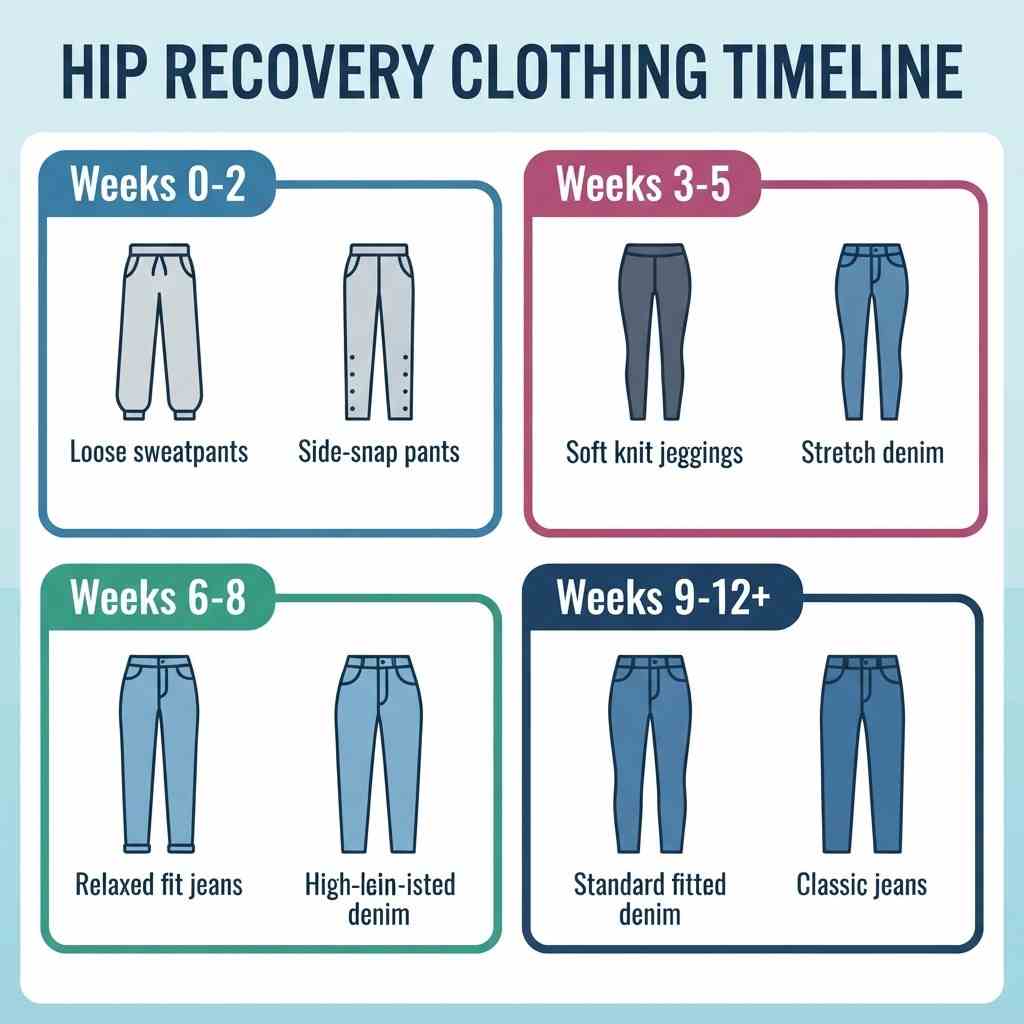
Phase 1: Weeks 0 to 2 (The Acute Recovery Window)
Stick exclusively to soft, breathable fabrics during early post-op recovery.
- Wear loose fleece sweatpants featuring soft elastic waistbands.
- Utilize side-snap tearaway trousers for effortless wound inspection access.
- Avoid all denim fabrics, metal buttons, and heavy front zippers.
Phase 2: Weeks 3 to 5 (The Adaptive Denim Transition)
Your surgical incision closes securely during this secondary healing window.
- Transition into pull-on jeans with minimum 3% elastane content.
- Choose soft knit denim leggings without restrictive front closures.
- Place a sterile silicone pad over your incision for friction protection.
Phase 3: Weeks 6 to 8 (Relaxed Fit Integration)
Surgeons typically lift strict bending precautions around six weeks post-op.
- Select straight-leg or wide-leg relaxed denim styles.
- Pick high-rise waistbands that sit safely above scar lines.
- Avoid wearing tight leather belts that press into hip flexors.
Phase 4: Weeks 9 to 12+ (Full Wardrobe Return)
Deep tissue inflammation resolves as muscle strength returns fully.
- Safely wear standard fitted denim and classic denim cuts.
- Resume normal standing or seated dressing routines confidently.
Essential Dressing Tools to Wear Jeans After Hip Replacement
Putting on pants requires smart adaptive strategies while joint precautions apply. Never bend forward past a 90-degree angle while dressing.
- Long-Handled Reacher: Grasp denim waistbands easily without bending your torso forward.
- Dressing Stick: Guide pant legs past your feet and calves smoothly.
- Sock Aid Tool: Slide socks on easily before pulling up your jeans.
- Long Shoe Horn: Slip into supportive shoes without stressing your hip joint.
Step-by-Step Guide to Put On Jeans Safely
- Sit securely on a firm, elevated chair or bed edge.
- Lower your jeans to the floor using a long-handled reacher.
- Slip your operated leg into the jean opening first.
- Pull the fabric carefully up past your surgical knee.
- Slide your unoperated leg into the opposite side normally.
- Stand up carefully using your walker for balance support.
- Pull the waistband up over your hips fully.
Expert Tips for Comfortable Post-Surgery Dressing
Modern surgical techniques influence your clothing timeline significantly. According to the American Academy of Orthopaedic Surgeons (AAOS), anterior hip replacement patients often experience faster early dressing mobility than posterior approach patients. However, incision healing needs remain identical across all surgical methods.
Always choose high-waisted pants to prevent waistband seams from rubbing directly against lateral surgical scars. Furthermore, keep your operated leg extended forward slightly while pulling up pants to avoid joint strain. If you notice skin redness, localized warmth, or fluid drainage, revert to loose sweatpants immediately and consult your physician.
Warning Signs: When to Pause the Denim
Sometimes your hip says “not yet.” Watch for these signals:
- Pain that increases while dressing
- Redness, warmth, or drainage near the incision
- Skin irritation from seams or rivets
- A feeling of instability in the joint
- Swelling that worsens after wearing tight clothing
If you notice any of these, switch back to soft, loose pants. Then contact your surgeon. Infection or dislocation signs need prompt medical attention.
Can Jeans Affect Your Hip Replacement Recovery Timeline?
Short answer: yes, but only when they are tight or worn too soon. Tight clothing can limit circulation and irritate scars. Furthermore, it may tempt you to bend unsafely.
On the other hand, the right pair supports your return to normal life. Wearing familiar clothes also lifts your mood. That matters because confidence helps you stay active during rehabilitation.
FAQs About Wearing Jeans After Hip Replacement
When can I safely wear jeans after total hip replacement surgery?
You can usually transition back to loose-fitting denim 4 to 6 weeks post-surgery. Your incision needs to fully close first. Post-operative swelling must subside significantly before rigid fabrics feel comfortable. Most surgeons advise waiting until your follow-up checkup. Always get direct clearance from your medical team before wearing stiff pants.
Why do jeans feel so uncomfortable over a healing hip incision?
Stiff denim creates direct friction against tender scar tissue and causes localized pain. Heavy metal rivets and thick seams press into healing nerves. Additionally, rigid fabric restricts the natural movement of a swollen joint. Denim lacks necessary stretch to accommodate changing fluid retention throughout the day.
How do strict hip precautions affect my ability to put on jeans?
You must avoid bending your surgical hip past a 90-degree angle during early recovery. Standard jeans require significant bending and pulling to pull over your feet. Consequently, forcing non-stretch denim onto your leg can break movement safety rules. You risk artificial joint dislocation if you bend too far forward.
What adaptive tools should I use to put on jeans without bending?
A long-handled reacher grabber lets you thread denim over your feet without bending. Dressing sticks help push pant legs past your calves smoothly. Sock aids and elastic shoe laces also simplify your entire dressing routine. These specialized tools maintain your hip angle within safe recovery limits.
What specific features should I look for in jeans post-hip surgery?
Choose flexible denim made with at least two percent elastane or spandex blend. High-rise waistbands sit comfortably above lateral or anterior surgical cuts. Straight or wide-leg cuts glide easily over swollen thighs and ankles. Soft elastic waistbands eliminate harsh metal buttons that press into healing skin.
Are posterior hip replacement patients restricted longer from wearing jeans than anterior patients?
Posterior approach patients often face stricter bending restrictions for up to six weeks. Anterior approach patients experience less tissue disruption around posterior muscle groups. Consequently, anterior patients usually return to wearing jeans two weeks earlier. However, incision healing timelines remain nearly identical for both surgical techniques.
How can I protect my surgical scar from denim friction?
Place a soft silicone scar strip or breathable gauze pad directly over your incision. Wear high-waisted cotton underwear underneath your denim to form a smooth protective layer. Avoid raw, unwashed denim because coarse fibers irritate delicate healing tissue. Remove jeans immediately if you notice redness, warmth, or skin irritation.
Can tight skinny jeans increase my risk of deep vein thrombosis or swelling?
Tight denim compresses superficial blood vessels around your thigh and groin area. This restriction slows down healthy blood circulation in your operated leg. Impaired fluid drainage increases localized edema and elevates deep vein thrombosis risks. Stick strictly to relaxed fits until your vascular flow fully stabilizes.
How do I put on jeans safely step-by-step after hip surgery?
Sit down securely on a firm chair before attempting to dress.
- Always slip your operated leg into the jean opening first.
- Use a reacher tool to pull the fabric up to your knee level.
- Slide your non-operated leg into the opposite side normally.
- Stand up carefully with your walker to pull the waistband over your hips.
Why does my hip ache more after sitting in jeans for an hour?
Heavy denim exerts continuous pressure against deep tissue layers while you sit. Rigid waistbands dig into hip flexors and restrict local nerve pathways. Furthermore, non-stretch fabric limits small posture shifts that relieve joint tension. Unyielding material amplifies early post-surgical muscle stiffness during prolonged sitting.
What are the best temporary alternatives to jeans during early recovery?
Soft fleece sweatpants provide warmth without placing pressure on your incision site. High-waisted yoga leggings offer gentle support while allowing full joint flexibility. Side-snap recovery pants grant easy access for medical checks without bending. Loose drawstring trousers minimize waistband constriction around sensitive hip tissues.
How long does post-hip replacement swelling prevent me from fitting into pre-surgery jeans?
Moderate tissue swelling typically persists for 8 to 12 weeks after joint surgery. Fluid moves down your leg due to gravity, making your thigh visibly thicker. Pre-surgery jeans will likely feel uncomfortably tight across your upper leg area. Normal leg circumference gradually returns as lymphatic drainage improves over time.
Can wearing heavy denim cause long-term damage to my new artificial hip?
Heavy denim cannot physically damage titanium or ceramic implants inside your bone. However, struggling against tight fabric causes awkward movements that strain surrounding soft tissues. Forced twists increase your fall risk during early balance rehabilitation stages. Protect your healing ligaments by choosing comfortable clothing that supports stability.
When can I wear a belt with my jeans after hip surgery?
Avoid wearing leather belts for at least six to eight weeks post-op. Buckles and thick leather straps dig directly into anterior surgical incisions when seated. Rigid belts also increase intra-abdominal pressure and aggravate nerve sensitivity around your hip. Use elastic internal waist adjustments or soft suspenders as safe alternatives.
How do I know if I am ready to return to wearing regular jeans?
You can comfortably dress while standing or sitting without breaking hip precautions. Your surgical incision must show zero fluid drainage, redness, or scab irritation. You can sit for thirty minutes without experiencing throbbing hip pain. Finally, your leg swelling has decreased enough for fabric to move freely.
Can I wear jeans two weeks after hip replacement?
Most surgeons say no. Incisions are still tender, and swelling peaks early. Stick with soft, elastic-waist pants.
Are skinny jeans safe after hip replacement?
Wait until your surgeon clears you, usually after 8 to 12 weeks. Skinny cuts are the hardest to pull on.
Do I need a dressing aid for jeans?
Many patients do in the first weeks. A reacher or dressing stick prevents risky bending.
Can I wear jeans after an anterior hip replacement sooner?
Possibly. Fewer movement limits can help. However, the incision location and your comfort still decide.
Should I ask my surgeon before wearing jeans?
Yes. Personal guidance always beats general timelines.
Final Thoughts
You can wear jeans after hip replacement safely. Patience, the right fit, and smart technique make it happen. Most people return to denim within 4 to 12 weeks.
Above all, follow your surgeon’s advice and your physical therapist’s guidance. Your new hip will reward you with years of comfortable movement. Soon, your favorite jeans will feel like old friends again.
Medical Disclaimer: This article offers general information. It does not replace advice from your orthopedic surgeon or physical therapist.