
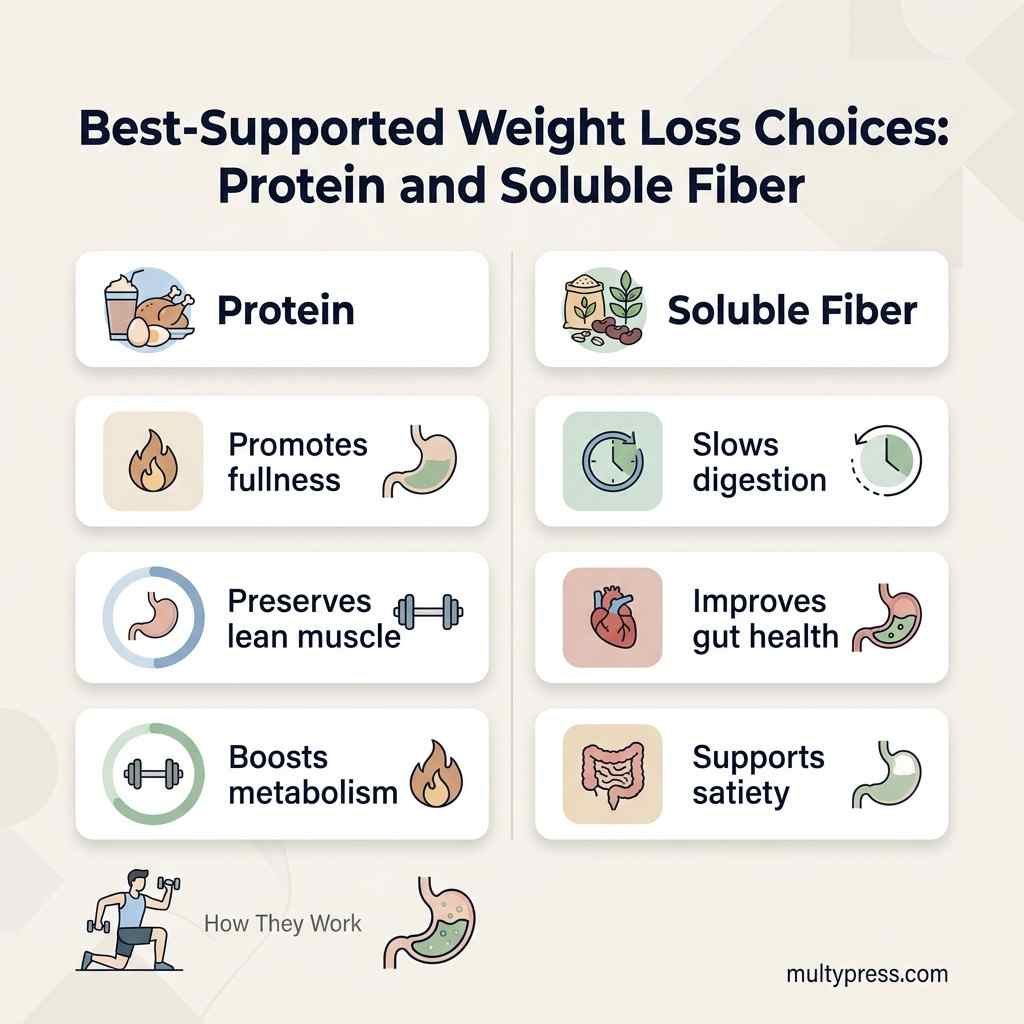
No supplement will melt fat on its own. A few have modest, honest evidence behind them. The best-supported choices are the least glamorous: protein, soluble fiber, and (for some people) caffeine. The most dangerous products are the ones that promise dramatic results fast. Read the safety section before anything else.
Find the Best Supplement for Your Weight Loss Goals
Step 1: Safety Check Before You Buy Anything
Talk to a doctor or pharmacist before taking any weight-loss supplement if any of these apply to you:
- You are pregnant, breastfeeding, or trying to conceive
- You are under 18
- You have a history of an eating disorder
- You have heart disease, high blood pressure, thyroid disease, diabetes, or liver or kidney problems
- You take blood thinners, antidepressants, diabetes medication, blood pressure medication, thyroid medication, or stimulants
Supplements can interact with all of these. “Natural” does not mean safe.
Important: If you are restricting food heavily, purging, or feeling distressed about your body, a supplement is not the answer. Please talk to a healthcare professional or someone you trust.
Step 2: Set Realistic Expectations
Diet, sleep, strength training, and daily movement do the heavy lifting. Supplements play a supporting role at best, and the effects in clinical trials are usually small, often a kilogram or two over several months.
Be skeptical of any claim that sounds bigger than that. Dietary supplements are not approved by the FDA for effectiveness, and some weight-loss products may contain hidden drugs. solvhealth
Quick Comparison Table
| Supplement | Evidence | Expected effect | Main risk | Approx. monthly cost* |
|---|---|---|---|---|
| Protein powder (whey, casein, or plant) | Moderate (for fullness and muscle retention) | Helps you eat less and keep muscle while dieting | Digestive upset, extra calories if overused | Low to medium |
| Soluble fiber (psyllium, glucomannan) | Moderate to weak | Small reduction in weight, better fullness | Bloating, choking risk with glucomannan tablets, can affect medication absorption | Low |
| Caffeine | Moderate (small effect) | Slight boost in energy and calorie burn | Jitters, poor sleep, palpitations | Very low |
| Green tea extract | Weak | Likely no meaningful loss | Liver injury risk at high doses | Low to medium |
| Berberine | Weak for weight (better for blood sugar) | Little to no weight effect | Stomach upset, drug interactions | Medium |
*Prices vary a lot by country and brand. Check local prices yourself.
The Best-Supported Options, in Detail
1. Protein powder (whey, casein, or pea/soy)
- What it claims: Controls hunger and protects muscle while you lose fat.
- What the evidence shows: Higher-protein diets help many people feel full and hold on to muscle during a calorie deficit. Powder is simply a convenient protein source, not a fat burner.
- Studied dose: Commonly 20 to 30 g per serving, used to fill gaps in daily protein intake.
- Side effects: Bloating or gas (especially whey if you are lactose intolerant).
- Avoid or ask your doctor first if: You have kidney disease.
- Look for: A short ingredient list, no added sugar, and third-party testing. Whole foods (eggs, fish, lentils, dairy) work just as well.
2. Soluble fiber (psyllium husk or glucomannan)
- What it claims: Fills your stomach and slows digestion.
- What the evidence shows: Glucomannan has some of the better trial results among “weight-loss” ingredients, but the effect is small.
- Studied dose: Often around 3 g per day of glucomannan, taken in divided doses with plenty of water before meals.
- Side effects: Gas, bloating, loose stools. Glucomannan can swell and block the throat or gut if not taken with enough water.
- Avoid or ask your doctor first if: You have swallowing problems or bowel obstruction, or you take oral medication (fiber can reduce absorption; space doses apart).
- Look for: Powder or capsules from a tested brand. Increase slowly.
3. Caffeine
- What it claims: More energy and a small rise in metabolism.
- What the evidence shows: A real but modest effect, and tolerance builds quickly. Coffee or tea gives you the same benefit as a pill.
- Side effects: Anxiety, insomnia, fast heartbeat, higher blood pressure.
- Avoid or ask your doctor first if: You have heart rhythm problems, high blood pressure, anxiety, or you are pregnant.
- Look for: Don’t stack it with multiple stimulant ingredients.
4. Green tea extract
- What it claims: Boosts “fat burning.”
- What the evidence shows: The results are unimpressive. A Cochrane review found that green tea preparations produced a small, statistically nonsignificant weight loss in adults with overweight or obesity, unlikely to be clinically meaningful. contemporaryclinic
- Side effects: Gastrointestinal symptoms, caffeine-related effects such as insomnia or palpitations, and liver toxicity, particularly with concentrated extracts. contemporaryclinic
- Verdict: Drinking green tea is fine. High-dose extract pills are hard to justify.
5. Berberine
- What it claims: The “natural Ozempic.” This is marketing, not science.
- What the evidence shows: Berberine may improve lipid parameters, but the evidence is more relevant to blood sugar control in diabetes than to weight loss. contemporaryclinic
- Side effects: Nausea, constipation, gas, and possible interactions with diabetes and other medications.
- Verdict: Only consider it under medical guidance.
Ingredients and Products to Avoid
- Anything promising rapid results (“lose 10 kg in a week,” “no diet or exercise needed,” “miracle”). The FDA has worked with industry to recall more than 40 weight-loss products with potentially harmful ingredients, and has issued consumer alerts about dozens more. drugs
- Hidden drugs. Regulators have repeatedly found weight-loss products tainted with prescription drug ingredients such as sibutramine. You cannot see these on the label, which is why buying from unknown sellers is risky. The Hill
- Banned or high-risk stimulants: DMAA, ephedra, and products with unclear stimulant blends.
- Yohimbe, which can raise blood pressure and heart rate. solvhealth
- Low-evidence ingredients: Raspberry ketones and garcinia cambogia lack meaningful clinical evidence, and CLA has documented liver toxicity cases. pages
- “Proprietary blends” that hide the dose of each ingredient.
- Unlabeled “detox” teas and laxative or diuretic products. Water loss is not fat loss.
How to Choose a Quality Product?
- Look for third-party testing seals such as USP, NSF Certified, Informed Choice, or ConsumerLab approval.
- Read the Supplement Facts panel. Every ingredient should have a listed amount.
- Skip proprietary blends.
- Check the expiry date and batch number.
- Buy from reputable pharmacies or the brand’s official store. Be careful with unfamiliar marketplace sellers.
- Check your national regulator’s warning lists for tainted products. In the US, the FDA keeps one and publishes alerts.
- Be wary of “review” sites that are really affiliate ads. Check claims against sources like the NIH Office of Dietary Supplements.
A Simple Starter Plan (8 to 12 Weeks)
- Fix the basics first for two weeks: protein at each meal, vegetables and fiber, a regular sleep schedule, and a daily walking target.
- Add only one supplement at a time. If you react badly, you will know which one caused it.
- Track weekly: weight, waist measurement, energy, hunger, sleep, and any side effects.
- Judge after 8 to 12 weeks. If you see no benefit, stop. Don’t stack more products.
- Stop immediately and see a doctor if you get palpitations, chest pain, dizziness or fainting, severe stomach pain or vomiting, yellow skin or eyes, dark urine, rash, or swelling.
Non-Supplement Basics That Matter More
- Prioritize protein at every meal to control hunger and protect muscle.
- Eat more fiber from vegetables, fruit, beans, lentils, and whole grains.
- Lift weights or do bodyweight strength training two to three times a week.
- Sleep 7 to 9 hours. Poor sleep increases hunger and cravings.
- Walk more. A daily step goal is one of the easiest sustainable habits.
- Drink water or unsweetened tea instead of sugary drinks.
Questions to Ask Your Doctor or Pharmacist
- Is this supplement safe with my medications and health conditions?
- What dose, if any, is appropriate for me?
- Which symptoms mean I should stop right away?
- Could I get the same benefit from food?
- Do I need blood tests (liver, blood sugar, blood pressure) while using it?
- Is a medically supervised option, including prescription treatment, appropriate for me?
Final Takeaway
The “best” weight loss supplement is usually the boring one: protein to help you stay full, fiber to help with appetite, and maybe your morning coffee. Everything else is either weakly supported or risky. If a product sounds too good to be true, assume it is.
Disclaimer: This article is for general education only and is not medical advice. Supplement effects and safety vary by person. Consult a qualified healthcare professional before starting any supplement, especially if you have a medical condition or take medication.