
Your stomach lets out a loud growl during a quiet meeting. Heads turn, and you ask yourself: what does it mean when your stomach growls? The answer goes well beyond simple hunger, and it might surprise you.
Quick Answer: When your stomach growls, it usually means gas and fluid are moving through your intestines during digestion. Hunger can amplify the sound, but it is not the only trigger. Most rumbling is harmless. However, noises with pain, weight loss, or bowel changes deserve a doctor’s attention.
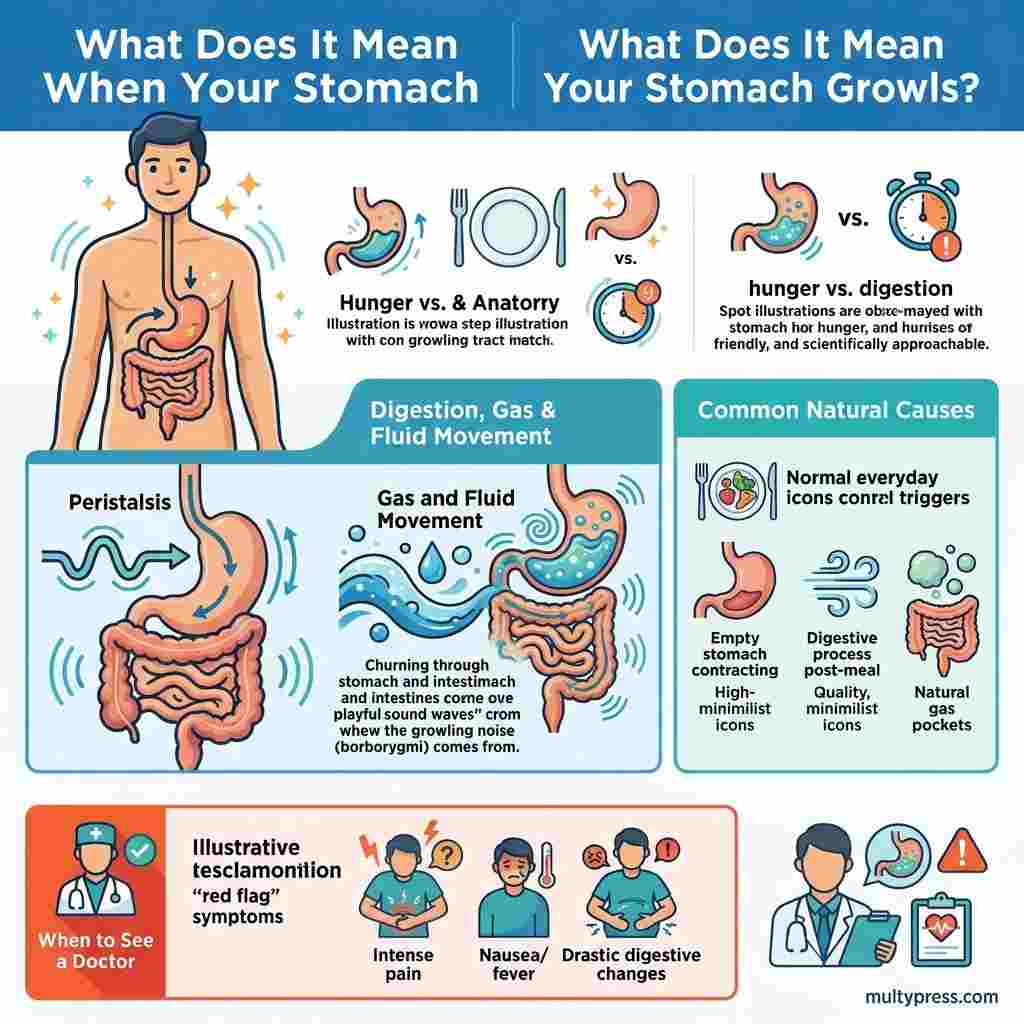
Table of Contents
The Main Meaning: Your Gut Is Doing Its Job
Doctors call this sound borborygmi. It is a normal part of digestion. These are ordinary intestinal sounds that occur during the digestive process. Muscles in your stomach and intestines squeeze food, fluid, and gas along the digestive tract. Gastroenterologist Donna Powell calls it “primarily caused by contractions of the muscles in the stomach and intestines.”
Think of water rushing through a pipe with air trapped inside. The trapped air makes the gurgling noise. Your gut works the same way. Gastroenterologists explain that gas mixing with liquid creates turbulence. Consequently, your stomach growls whenever gas and liquid mix and churn together.
What It Can Mean: Physical, Emotional, and Cultural Angles
The Physical Meaning: Digestion and Hunger
Hunger does play a real part. Between meals, your stomach empties, and your gut starts periodic cleansing waves. These waves sweep leftover food, fluid, and digestive juices onward. Their contractions can be audible, which explains growling hours after eating. In fact, an empty stomach has less food to muffle the sound. As a result, the rumble carries farther when you feel hungry.
However, hunger is only one trigger. Gastroenterologist Dr. Pedro de María Pallarés links the sounds to fasting. Still, he says they “don’t always mean you need to eat.”
The Emotional Meaning: Nerves and Stress
Your gut and brain talk all day long. Scientists call this connection the gut-brain axis. Therefore, stress and anxiety can speed up or disrupt digestion. For example, many people hear rumbling right before a speech or exam. Henry Ford Health physicians suggest meditation and breathing exercises to head off stress-related digestive problems. So when your stomach growls before a big presentation, nerves may share the blame.
The Cultural Meaning: Myths and Manners
Many of us grew up hearing that a growl means “feed me.” That idea is widespread, and it is partly true. However, it is incomplete. A loud rumble in a quiet room also feels embarrassing. Social pressure aside, when your stomach growls in public, you are in good company. Every human gut makes these sounds.
Another myth links loud noises to a fast metabolism. In fact, medical guidance says growling reflects gut movement, not calorie burning.
Why Your Stomach Growls: Common Causes
Several everyday factors explain why your stomach growls more on some days. Hunger leads the list. These habits and conditions follow close behind.
Swallowed Air
Eating fast, chewing gum, and sipping through straws all pull in extra air. That air then travels through your intestines. Medical sources list swallowed air alongside hunger and normal muscle contractions as common causes.
Gas-Producing Foods and Drinks
Beans, cabbage, and broccoli often create extra gas. Carbonated drinks and fiber-rich vegetables can raise gas and stomach sounds. Alcohol can irritate the digestive tract, too. As a result, your stomach growls more after a fizzy, fiber-heavy meal.
Food Intolerances
With lactose or fructose intolerance, undigested sugars ferment in the colon. That fermentation produces extra gas and noise. For example, a glass of milk may trigger gas, bloating, and cramps. Tracking your triggers helps.
Digestive Conditions
Irritable bowel syndrome can sit behind frequent stomach noises. Infections and blockages are rarer causes. Therefore, persistent growling with other symptoms needs a closer look.
Why Your Stomach Growls: Causes at a Glance
| Cause | What Happens Inside | Typical Clue | Quick Fix |
|---|---|---|---|
| Hunger | Empty stomach triggers cleansing waves | Rumbling hours after a meal | Eat a balanced snack |
| Swallowed air | Trapped air travels through the gut | Fast eating, gum, straws | Slow down and chew well |
| Gassy foods | Gut bacteria ferment fiber and make gas | Bloating after beans or cabbage | Adjust portions |
| Carbonation or alcohol | Bubbles add gas; alcohol irritates | Noises after drinks | Cut back |
| Food intolerance | Undigested sugars ferment in the colon | Gas and cramps after dairy | Track and limit triggers |
| Stress | Gut-brain signals shift digestion | Rumbling before big events | Breathing, walking |
| Digestive condition | Irritated or inflamed gut | Pain, bowel changes | See a doctor |
Normal or Not? When Growling Signals a Problem
Signs It Is Normal
Doctors generally call the sound harmless when it is painless, brief, and tied to meals. In other words, when your stomach growls without other symptoms, relax. The noise usually fades once you eat or digestion settles.
Warning Signs to Take Seriously
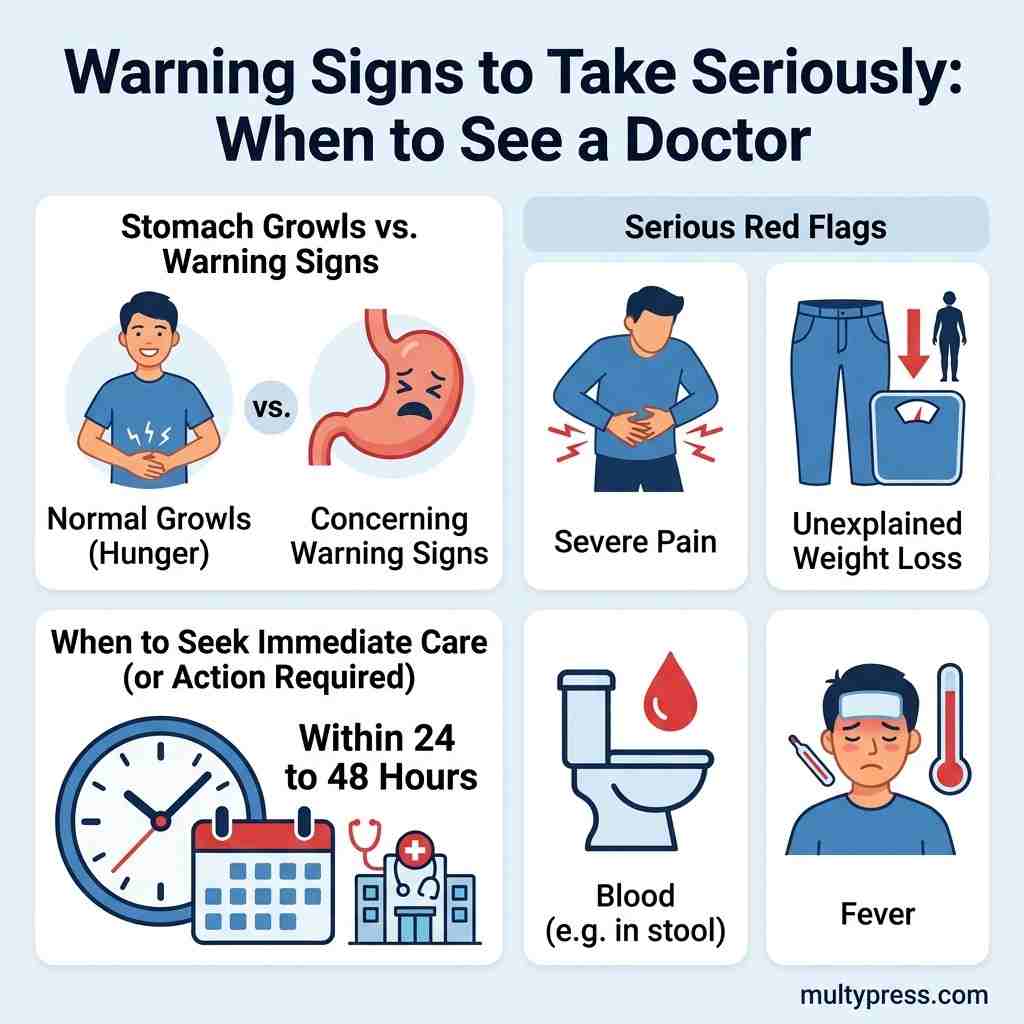
Medical guidance lists several red flags:
- Severe, persistent abdominal pain
- Unexplained weight loss
- Blood in vomit or stool
- Chronic diarrhea or constipation
- Vomiting that will not stop
- Fever alongside the noises
Serious causes include infection or an intestinal blockage. One clinical guide suggests watching mild symptoms for a week or two. However, it advises seeing a doctor within 24 to 48 hours for severe ones. If the noises persist or come with unusual symptoms, check with a doctor or gastroenterologist.
Tips & Suggestions: How to Quiet the Rumble
- Eat regular, balanced meals. Include protein and fiber so your stomach does not sit empty for hours.
- Slow down. Chew thoroughly to swallow less air.
- Limit fizzy drinks and alcohol. Both add gas and irritation.
- Keep a food diary. Note which meals set off the noise.
- Practice portion control. Smaller portions give your gut less to churn at once.
- Carry a small snack. A handful of nuts can calm an empty stomach before meetings.
- Manage stress. Try deep breathing, a short walk, or meditation.
- Watch gas triggers. Cut back on beans or cabbage if they bother you.
- Stay hydrated. Water supports smooth digestion.
If your stomach growls constantly despite these steps, book a medical visit.
Conclusion
So, what does it mean when your stomach growls? Usually, your digestive system is simply doing its job. Hunger, swallowed air, gas, and stress all play a part. Pain, weight loss, or bowel changes are the exceptions to watch. Listen to the pattern, not just the sound. Next time your stomach growls, take it as proof that your gut is awake and working.
FAQs On Stomach Growls
Why does my stomach growl right after I eat?
Your gut is busy processing the meal, and that activity makes noise. Food, liquid, and swallowed air all move through your intestines at once. Muscles squeeze that mixture along, and the churning gets loud.
Several things can amplify it:
- Eating fast: You swallow extra air with each bite.
- Fizzy drinks: Bubbles add gas straight into the mix.
- Big portions: More food means more digestive work at once.
Swallowed air and normal muscle contractions rank among the usual causes. Therefore, slower eating often quiets the noise.
Why does my stomach growl when I am not hungry?
Growling reflects gut movement, not just hunger. A noisy abdomen does not necessarily mean you are hungry. Air and fluid moving through the small and large intestines make the sound.
Common non-hunger triggers include:
- Gas-producing foods like beans and cabbage
- Carbonated drinks or alcohol
- Stress or nervous tension
- Mild food intolerances
If the noise comes with pain or bowel changes, mention it to a doctor.
Does a growling stomach mean I have a fast metabolism or I am burning fat?
No. Stomach noises have no proven link to metabolic rate or fat burning. They reflect how your digestive muscles move gas and fluid. People with fast and slow metabolisms experience these sounds equally.
For example, a very loud growl at 11 a.m. says nothing about calories burned. It simply shows an empty gut with little food to muffle the sound. Consequently, you cannot use rumbling to judge your weight-loss progress.
Why does my stomach growl so loudly at night?
Quiet surroundings make normal sounds seem louder. Your digestion never fully switches off while you sleep or lie in bed. Between meals, the gut runs cleansing waves that repeat roughly every 90 to 120 minutes during fasting.
Other nighttime contributors include:
- A late, heavy, or gassy dinner
- Evening alcohol or fizzy drinks
- Bedtime stress that keeps your gut active
Try finishing dinner two to three hours before bed. A light, protein-rich snack may help if you go to bed hungry.
Why does my stomach growl in quiet places like class or meetings, and can I stop it?
You cannot stop it completely, but you can reduce it. Quiet rooms simply expose a normal sound. A moderate approach works best.
Try these steps:
- Eat a balanced snack about an hour before the event.
- Choose protein and fiber over sugary foods.
- Skip fizzy drinks and chewing gum beforehand.
- Sip water slowly instead of gulping.
- Breathe slowly to ease nerves.
Meanwhile, remember that everyone’s gut makes these sounds. Most people barely notice yours.
Can anxiety or stress make my stomach growl?
Yes, it can. Your gut and brain communicate constantly through nerves and hormones. Stress can speed up or disrupt digestion, and the movement creates noise. Nervous people may also swallow more air without noticing.
Additionally, anxious moments often come with skipped meals, which adds hunger-related rumbling. Henry Ford Health physicians recommend meditation and breathing exercises to head off stress-driven digestive trouble. If anxiety regularly upsets your digestion, consider talking with a doctor or counselor.
Why does my stomach growl after drinking coffee?
Coffee stimulates your digestive system. It can boost stomach acid and trigger gut muscle contractions within minutes. As a result, you may hear rumbling soon after your first cup.
An empty stomach makes the effect louder. Food acts as a cushion and muffles the noise. For instance, try these changes:
- Drink coffee with breakfast instead of before it.
- Switch to a smaller cup.
- Test a lower-acid or cold-brew blend.
Persistent pain or heartburn after coffee deserves a doctor’s opinion.
Does constant stomach growling mean I have IBS?
Not necessarily. Constant growling alone does not diagnose anything. However, irritable bowel syndrome can sit behind frequent stomach noises. Doctors look at the full pattern rather than the sound.
Clues that point toward IBS include:
- Recurring abdominal pain, often for about three months
- Pain that eases or worsens after a bowel movement
- Ongoing diarrhea, constipation, or both
- Frequent bloating
If that list sounds familiar, book an appointment. A doctor can rule out other conditions first.
Can food intolerance cause loud stomach growling?
Yes, and it ranks among the most overlooked causes. With lactose or fructose intolerance, your gut cannot fully digest certain sugars. Fermentation in the colon then produces excess gas and noise.
Watch for these patterns:
- Noises and bloating within hours of dairy, fruit, or sweeteners
- Loose stools after trigger foods
- Symptoms that vanish when you avoid the food
Keep a food diary for two weeks. Do not cut out gluten before testing, though. Dropping it early can hide celiac disease on later tests.
Is stomach growling normal during pregnancy?
Yes, it is often more noticeable. Pregnancy hormones slow digestion, and the growing uterus presses on the gut. Both changes increase gas and rumbling. Hunger also arrives more often.
To ease it:
- Eat small, frequent meals.
- Limit gas-heavy foods if they bother you.
- Walk gently after meals.
However, call your prenatal provider if noises come with severe pain, repeated vomiting, fever, or bleeding. These symptoms always deserve a prompt check.
Is it a problem if I never hear my stomach growl?
Usually, no. Many people simply have quieter digestion, or they rarely listen. Silence alone does not signal trouble. Constant abnormal bowel sounds, or none at all, can still warrant a doctor’s visit.
The real concern is a sudden change alongside other symptoms. Seek urgent care if complete silence comes with:
- A swollen, hard belly
- Severe or worsening pain
- Repeated vomiting
- Inability to pass gas or stool
These signs can point to a blockage or paralyzed bowel.
Which stomach growling symptoms mean I should see a doctor right away?
See a doctor promptly when growling comes with severe or persistent abdominal pain. Other red flags include:
- Unexplained weight loss
- Blood in vomit or stool
- Chronic diarrhea or constipation
- Vomiting that will not stop
- Fever
Medical guidance lists these as warning signs. One clinical guide advises seeing a doctor within 24 to 48 hours for severe symptoms. Go to the emergency room for intense pain with a rigid belly or bloody vomit.
Does drinking water stop stomach growling?
Only briefly, and sometimes not at all. Water fills your stomach and may dampen hunger signals for a short while. However, it passes through quickly. The growling often returns within an hour if you have not eaten.
Gulping can even backfire. It swallows air and adds new noise. Instead, sip slowly throughout the day. For lasting quiet, pair fluids with a small snack containing protein or fiber.
Why does my stomach growl more during intermittent fasting?
Fasting leaves your stomach empty for longer, so the cleansing waves stay audible. Your body also releases the hunger hormone ghrelin around your usual mealtimes. Together, these effects make rumbling louder.
Many people notice it fades as the body adapts, often within a couple of weeks. To manage it:
- Drink water, black coffee, or plain tea during fasting hours.
- Break your fast with protein and fiber.
- Avoid huge, sugary first meals.
Stop fasting and see a doctor if you feel dizzy, faint, or in pain.
Which doctor should I see for constant loud stomach noises?
Start with your primary care doctor. They can review your symptoms, diet, and medications. Then they can refer you to a gastroenterologist if needed.
Expect questions about timing, meals, bowel habits, and weight changes. Doctors typically take a detailed history, including how symptoms relate to meals. Depending on your answers, they may order blood tests, stool tests, or imaging. Bring a short symptom diary to speed things up.
This content offers general information, not medical advice. Please see a doctor for unusual or persistent symptoms.