
The color of your stool is often a direct reflection of what you eat and the amount of bile in your digestive system. While most changes are benign and related to diet or medication, certain shades can serve as an important “check engine light” for your internal health.
🔍 Stool Color Checker Tool
Select a stool color and symptoms to receive general educational guidance. You can also compare the information with our stool color chart.
Choose the color that most closely matches what you have noticed.
Select any symptoms you are experiencing.
Analysis Results
The Basics: Why is Stool Brown?
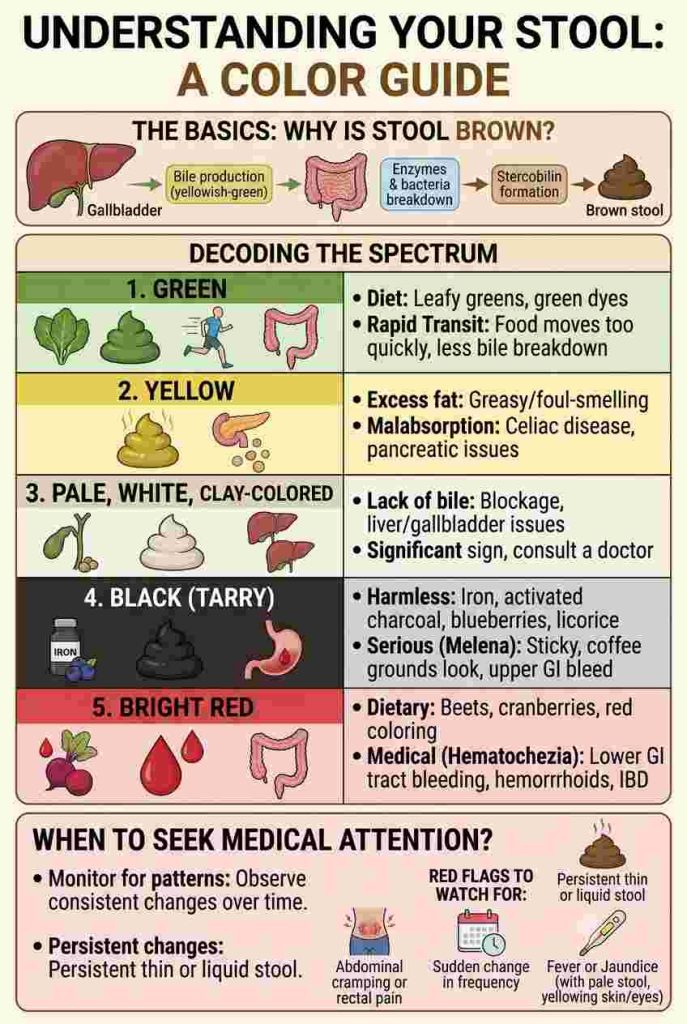
Stool is typically brown due to a substance called stercobilin, which is formed when bile—a fluid produced by the liver to digest fats—is broken down by enzymes and bacteria in the gut. Bile starts as a yellowish-green color and darkens as it travels through the gastrointestinal (GI) tract.
Decoding the Spectrum
1. Green
Green stool is one of the most common variations. It usually indicates one of two things:
- Diet: You have consumed large amounts of leafy greens (spinach, kale) or foods with green dye.
- Rapid Transit: Food is moving through the large intestine too quickly (diarrhea). As a result, bile doesn’t have enough time to break down and change from green to brown.
2. Yellow (Greasy/Foul-Smelling)
Yellow stool that appears greasy and smells particularly pungent often indicates an excess of fat. This can be a sign of malabsorption, where the body is failing to absorb nutrients properly. It is sometimes associated with celiac disease or issues with the pancreas.
3. Pale, White, or Clay-Colored
This is a significant clinical sign. A lack of color suggests a lack of bile. This may mean there is a blockage in the bile duct (often by gallstones) or an issue with the liver or gallbladder. If you see clay-colored stool consistently, you should consult a healthcare provider.
4. Black (Tarry)
Black stool can be harmless or serious depending on its texture:
- Harmless: Caused by iron supplements, activated charcoal, or dark foods like blueberries and black licorice.
- Serious: If the stool is black, sticky, and looks like coffee grounds (melena), it may indicate bleeding in the upper GI tract (stomach or esophagus).
5. Bright Red
Red stool can be alarming, but context is key:
- Dietary: Beets, cranberries, and red food coloring can turn stool a vibrant red.
- Medical: Bright red blood (hematochezia) usually indicates bleeding in the lower GI tract, such as the colon or rectum. Common causes include hemorrhoids, anal fissures, or inflammatory bowel disease (IBD).
When to Seek Medical Attention?
While a single “off-color” bowel movement is rarely a cause for panic, you should monitor for patterns. Identifying health problems through stool color is most effective when combined with other symptoms.
Red Flags to Watch For:
- Consistency: Stool that is persistently thin (pencil-like) or liquid.
- Pain: Abdominal cramping or rectal pain accompanying the color change.
- Frequency: A sudden, lasting change in how often you go.
- Fever or Jaundice: If pale stools are accompanied by yellowing of the skin or eyes, it points toward liver dysfunction.
Summary Table for Quick Identification
| Color | Potential Cause (Benign) | Potential Health Concern |
| Brown | Normal Diet | None (Healthy) |
| Green | Spinach, Kale, Green drinks | Fast digestion / Diarrhea |
| Yellow | Carrots, Sweet potatoes | Malabsorption / Celiac |
| Pale/Clay | Anti-diarrheal meds | Bile duct obstruction / Liver disease |
| Black | Iron pills, Blueberries | Upper GI bleeding (Ulcers) |
| Red | Beets, Red gelatin | Lower GI bleeding / Hemorrhoids |
Final Words
Monitoring your stool color is a simple yet effective way to stay in tune with your digestive health. In most cases, a shift in hue is a temporary reflection of your last few meals or a new supplement. However, because your gastrointestinal tract is a complex system, these colors act as visual cues for what is happening beneath the surface.
The most important takeaway is to look for patterns rather than isolated incidents. A single day of green or red stool after eating specific foods is rarely a cause for concern. Conversely, persistent changes—especially stools that are consistently pale, black and tarry, or accompanied by symptoms like pain and fatigue—should never be ignored.
Ultimately, your body uses these changes to communicate. By paying attention to the “spectrum of health” in your daily life, you can catch potential issues early and maintain a more proactive approach to your overall well-being. When in doubt, a quick conversation with a healthcare professional is the best way to turn a moment of concern into peace of mind.