
Your stool color can reveal valuable information about your digestive system, diet, and overall health. While most people expect stool to be brown, changes in color are common and often harmless. However, certain colors may indicate bleeding, liver disease, infections, or problems with the digestive tract that require medical attention. For a focused warning-sign guide, see our Blood in Stool Symptom Checker.
A stool color chart is a simple visual guide that helps identify what different colors may mean. It should never replace professional medical advice. For a more interactive stool-color assessment, see our Stool Color Checker Tool., but it can help you decide when a color change is likely caused by food or medication and when it deserves further evaluation.
Table of Contents
💩 Stool Color Chart / Visual Guide
Why Is Stool Normally Brown?
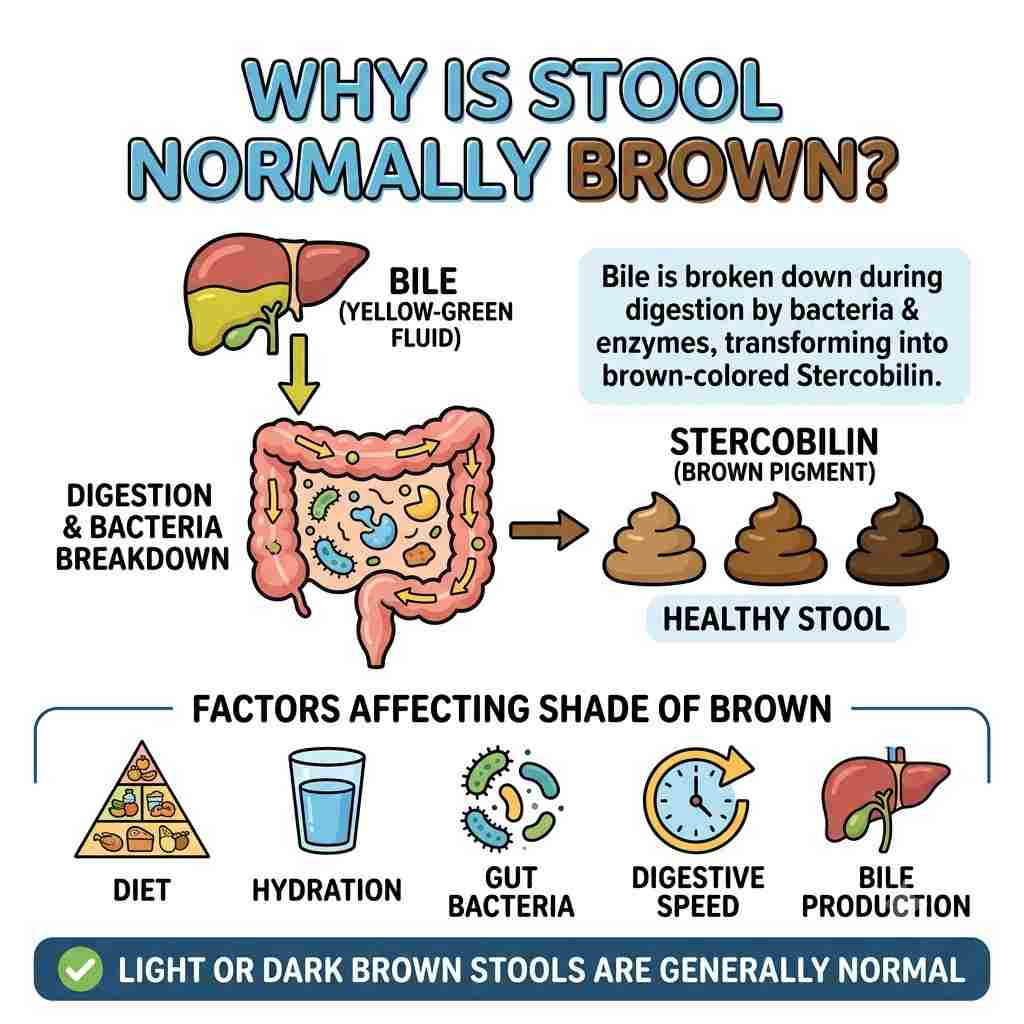
Healthy stool is usually light to dark brown because of stercobilin, a pigment produced when bile from the liver is broken down during digestion. Bile starts as a yellow-green fluid that helps digest fats. As it moves through the intestines, bacteria and digestive enzymes transform it into brown-colored stercobilin.
The exact shade of brown depends on several factors, including:
- Diet
- Hydration
- Gut bacteria
- Digestive speed
- Bile production
Light or dark brown stools are generally considered normal.
Stool Color Chart (Quick Reference)
| Stool Color | Common Causes | When to Seek Medical Care |
|---|---|---|
| Brown | Normal digestion, healthy bile flow | Usually no concern |
| Light Brown | Normal variation, high-fiber diet | No concern if temporary |
| Green | Leafy vegetables, food coloring, rapid digestion, iron supplements | If persistent with diarrhea or pain |
| Yellow | High-fat stool, malabsorption, pancreatic or liver disorders | See a doctor if oily, greasy, or recurring |
| Orange | Carrots, sweet potatoes, food dyes, reduced bile | Persistent changes should be evaluated |
| Red | Beets, tomatoes, red food coloring, lower GI bleeding, hemorrhoids | Immediate evaluation if blood is suspected |
| Black | Iron supplements, bismuth medications, upper GI bleeding | Emergency care if not explained by medication |
| White / Gray / Clay | Lack of bile, liver disease, gallbladder blockage | Prompt medical evaluation recommended |
Understanding Common Stool Colors
Brown Stool (Healthy)
Brown stool usually indicates healthy digestion and proper bile production. The color may range from tan to dark brown without indicating disease.
Green Stool
Green stool often occurs after eating spinach, kale, broccoli, or foods containing green food coloring. It may also happen when food passes too quickly through the intestines, preventing bile from fully breaking down.
Yellow Stool
Yellow stool can sometimes indicate excess fat that is not being absorbed properly. It may appear greasy, foul-smelling, or difficult to flush. Persistent yellow stool may suggest pancreatic disorders, celiac disease, or problems with bile flow.
Red Stool
Not every red stool is blood. Foods like beets, cranberries, and red gelatin can temporarily change stool color. However, bright red blood may come from hemorrhoids, anal fissures, inflammatory bowel disease, or bleeding in the lower digestive tract.
Black Stool
Iron supplements and medications containing bismuth commonly cause black stool. However, black, sticky, tar-like stool may indicate bleeding in the stomach or upper intestines and requires urgent medical attention.
White or Gray Stool
White, pale, or clay-colored stool usually means there is little or no bile reaching the intestines. This may result from liver disease, gallstones, bile duct blockage, or certain medications. Medical evaluation is recommended.
Foods That Can Change Stool Color
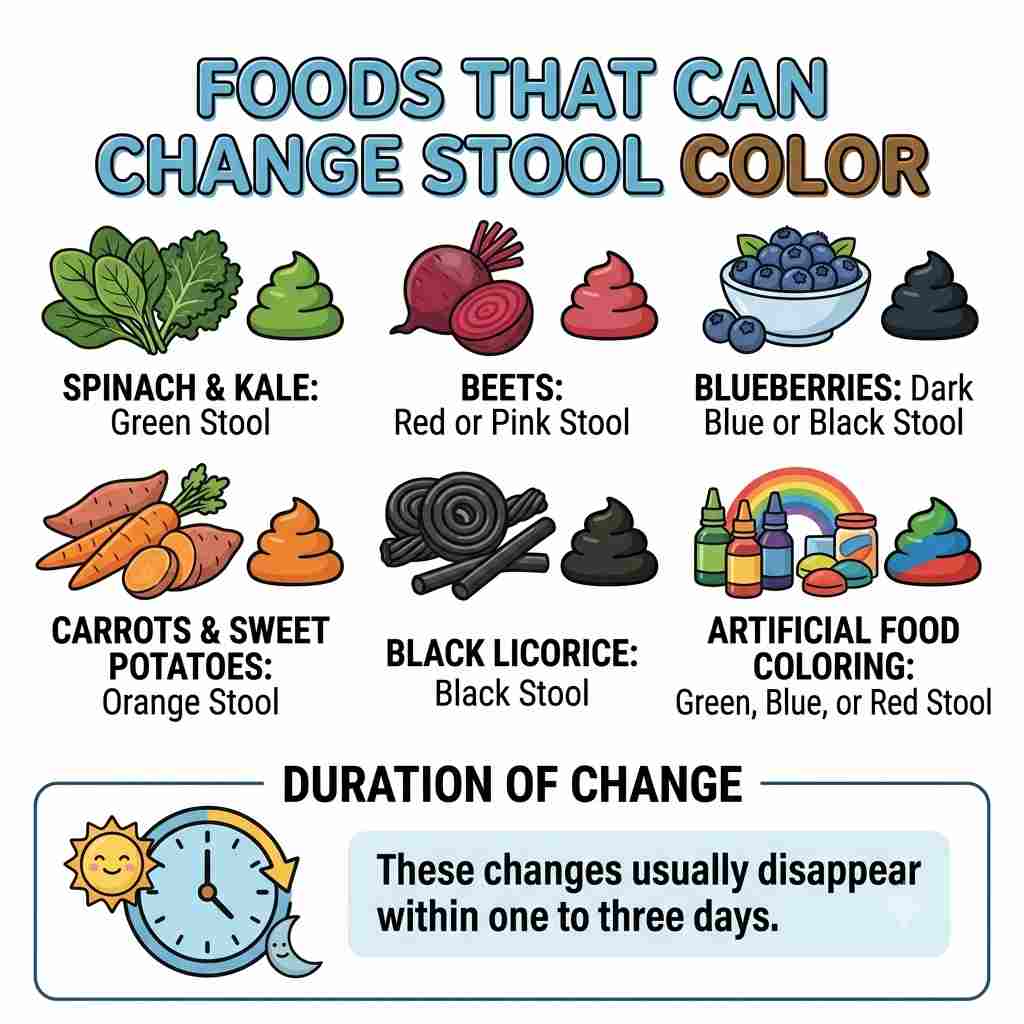
Many stool color changes are completely harmless and related to recent meals.
- Spinach and kale: Green stool
- Beets: Red or pink stool
- Blueberries: Dark blue or black stool
- Carrots and sweet potatoes: Orange stool
- Black licorice: Black stool
- Artificial food coloring: Green, blue, or red stool
These changes usually disappear within one to three days.
When Should You See a Doctor?
Occasional stool color changes are normal, but medical evaluation is recommended if you experience:
- Black, tar-like stool
- Bright red blood in stool
- White or clay-colored stool
- Persistent yellow greasy stool
- Stool color changes lasting more than several days without a clear dietary cause
- Severe abdominal pain
- Fever
- Persistent diarrhea
- Unexplained weight loss
- Dizziness or signs of significant blood loss
Key Takeaway
A stool color chart is an easy way to understand what your digestive system may be telling you. While most temporary color changes are caused by food, supplements, or medications, persistent or unusual colors—especially black, bright red, or white—should never be ignored. Monitoring stool color alongside symptoms such as pain, diarrhea, fever, or weight loss can help identify when professional medical evaluation is needed. Paying attention to these subtle changes is a simple but valuable part of maintaining good digestive health.
FAQs Stool Color Chart: What Your Stool Color Says About Your Health
What stool color is considered normal?
Brown stool is generally considered normal. Shades can range from light tan to dark brown. Diet, bile flow, hydration, and digestive speed can change the shade. Persistent unusual colors deserve attention.
What does green stool usually mean?
Green stool often results from leafy vegetables, food coloring, iron, or faster intestinal transit. It is usually temporary. Persistent green stool with pain, fever, or diarrhea needs medical evaluation.
Why is my stool yellow and greasy?
Yellow, greasy, foul-smelling stool can suggest excess fat in the stool. Possible causes include malabsorption or problems involving the pancreas or bile flow. Recurring symptoms should be evaluated by a healthcare professional.
Is bright red stool always a sign of bleeding?
No, foods such as beets can cause red stool. Bright red blood can also come from hemorrhoids, fissures, or lower intestinal bleeding. Heavy bleeding, weakness, dizziness, or severe pain requires urgent care.
What causes black tarry stool?
Black, sticky, tar-like stool can indicate bleeding in the upper digestive tract. Iron and bismuth can also darken stool. Tarry stool with weakness, dizziness, or vomiting blood requires urgent medical attention.
What does white or clay-colored stool mean?
White, gray, or clay-colored stool can mean that too little bile reaches the intestine. Possible causes include bile duct blockage, gallbladder disease, or liver problems. Persistent pale stool should receive prompt medical evaluation.
How long can a food-related stool color change last?
Food-related color changes often improve within a few days after the food leaves your system. Keep track of recent meals and medications. Contact a clinician if the color remains abnormal without an obvious cause.
Can medications change stool color?
Yes, some medicines and supplements can change stool color. Iron can darken stool, while bismuth can make it black. Review new products with a pharmacist or clinician when the change is unexpected.
When should stool color changes be considered an emergency?
Seek emergency care for heavy rectal bleeding, black tarry stool with weakness, fainting, severe abdominal pain, or other signs of major illness. Do not rely on stool color alone to judge severity. Rapidly worsening symptoms need immediate assessment.
Should I use a stool color chart to diagnose a disease?
No, a stool color chart cannot diagnose disease. It can help you recognize patterns and warning signs. A healthcare professional may need an examination, medical history, or testing to identify the cause.
1 thought on “Stool Color Chart: What Your Stool Color Says About Your Health”