
Seeing a change in stool colour can be alarming, especially when it turns green. Green stool is a common digestive symptom that can occur for harmless reasons, such as diet, but in some cases, it may indicate an underlying health issue. This article explains what green stool means, its causes, symptoms, and when you should seek medical advice, and introduces the usefulness of a Green Stool Symptom Checker online tool.
Table of Contents
Green Stool Symptom Checker Online Tool – A Smart Way to Understand Your Health
🟢 Green Stool Symptom Checker
Green Stool Symptom Checker Online Tool: Why It’s Useful
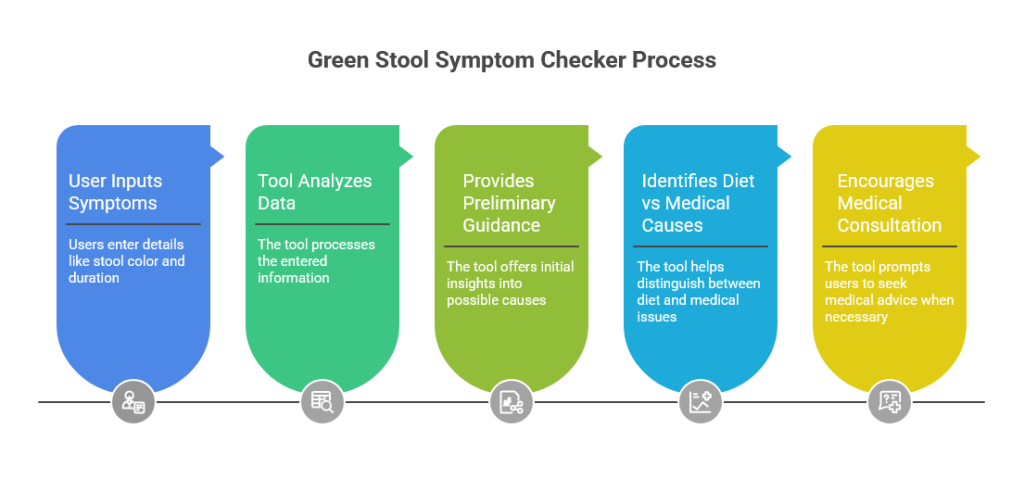
A Green Stool Symptom Checker is an interactive health tool designed to help users understand the possible causes of their symptoms. Instead of guessing or panicking, users can input details such as:
- Stool colour shade
- Duration of symptoms
- Diet habits
- Presence of pain, fever, or diarrhea
- Age and general health condition
Benefits of Using a Green Stool Symptom Checker Tool
- Provides instant preliminary guidance
- Helps identify diet-related vs medical causes
- Encourages timely medical consultation when needed
- User-friendly and accessible 24/7
- Ideal for health awareness and education
⚠️ Note: This tool does not replace a doctor but helps users make informed decisions.
What Is Green Stool?
Green stool refers to bowel movements that appear green rather than the usual brown. Normally, stool gets its brown colour from bile, a digestive fluid produced by the liver. When digestion changes or food moves too quickly through the intestines, stool may not have enough time to turn brown—resulting in green-colored stool. For a broader visual reference, see our stool color chart.
Green stool can appear light green, dark green, or yellowish-green, depending on the cause.

Common Causes of Green Stool Symptoms
1. Diet-Related Causes
Diet is the most common and harmless reason behind green stool.
- Eating large amounts of green leafy vegetables (spinach, kale, broccoli)
- Foods with green food colouring (candies, drinks, ice cream)
- Iron supplements or multivitamins
In these cases, green stool usually resolves on its own.
2. Fast Digestive Transit
When food passes too quickly through the intestines—such as during diarrhea—bile does not have enough time to change colour from green to brown. This is common in:
- Stomach infections
- Food poisoning
- Stress-related digestion issues
3. Infections and Gut Conditions
Some infections and digestive disorders can cause green stool:
- Bacterial infections (Salmonella, E. coli)
- Viral gastroenteritis
- Irritable Bowel Syndrome (IBS)
- Inflammatory Bowel Disease (IBD)
If green stool is accompanied by fever, abdominal pain, or mucus, seek medical attention.
4. Medications and Supplements
Certain medicines can affect stool colour:
- Antibiotics (alter gut bacteria)
- Laxatives
- Iron tablets
5. Gallbladder or Bile Issues
In rare cases, problems with bile secretion can cause green or pale stools. This may require professional evaluation.
Symptoms Associated With Green Stool
Green stool alone is usually not dangerous. However, you should observe associated symptoms such as:
- Persistent diarrhea
- Abdominal pain or cramps
- Fever
- Nausea or vomiting
- Weight loss
- Blood or mucus in stool
The presence of these symptoms may indicate a more serious condition.
When Should You Worry About Green Stool?
You should consult a doctor if:
- Green stool lasts more than 3–4 days
- There is severe abdominal pain
- Stool is green, along with blood or black tarry appearance
- There are signs of dehydration or weakness
- It occurs in infants or elderly individuals persistently
How Accurate Are Online Symptom Checker Tools?
When designed properly, symptom checker tools can be highly informative. They are best used as a first step, not a diagnosis. For persistent or severe symptoms, professional medical evaluation is essential. Cleveland Clinic also notes that green stool can have dietary, medication-related, infectious, or gastrointestinal causes and should be assessed with accompanying symptoms in mind. See its green stool guidance for additional medical context.
Final Thoughts
Green stool is usually harmless and often related to diet or temporary digestive changes. However, when accompanied by other symptoms or lasting several days, it may signal an underlying issue. Using an online Green Stool Symptom Checker can help you better understand your condition and decide whether further medical attention is needed.
Being aware of your body’s signals is the first step toward better digestive health.