
Experiencing discomfort after a dental restoration is incredibly common, and understanding your Post-Filling Sensitivity Level is the first step toward finding relief. In most cases, this reaction is a temporary sign that your tooth nerve is healing after the irritation of the procedure.
Post-Filling Sensitivity Level Analyzer
Table of Contents
Decoding Your Post-Filling Sensitivity Level: Causes, Timelines, and Expert Relief
Have you ever taken a sip of iced coffee after a dental visit, only to feel a sharp shock shoot through your jaw? You are not alone. Millions of dental patients experience varying degrees of discomfort after leaving the clinic chair. Navigating your Post-Filling Sensitivity Level can feel unsettling. For another dental self-assessment, see our Mouthwash Comparison Slider., especially when you expect a quick recovery. The good news is that most post-operative discomfort is a normal part of the healing process.
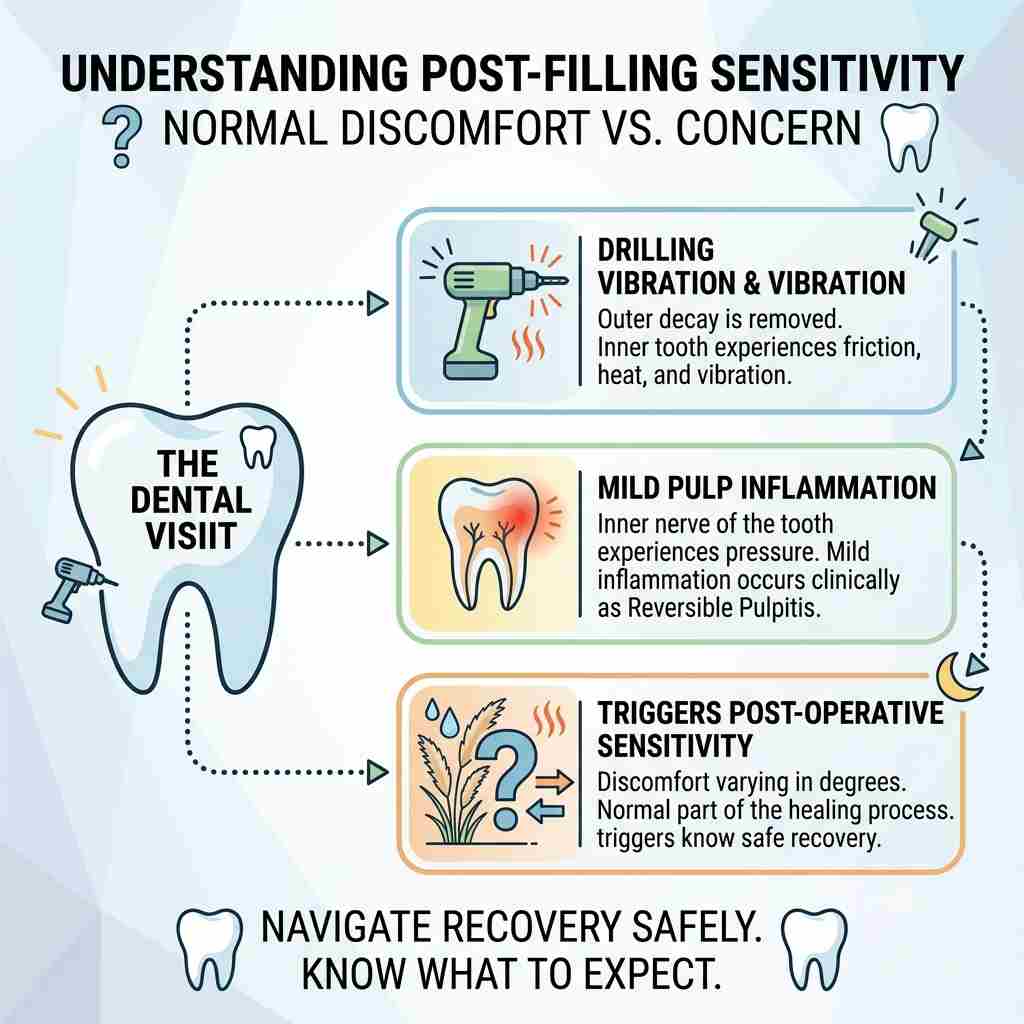
When a dentist drills away decay, the inner nerve of the tooth experiences friction, heat, and vibration. This creates mild inflammation inside the tooth pulp. This response is known clinically as reversible pulpitis. Knowing what triggers this reaction helps you manage your recovery safely at home.
What Determines Your Post-Filling Sensitivity Level?
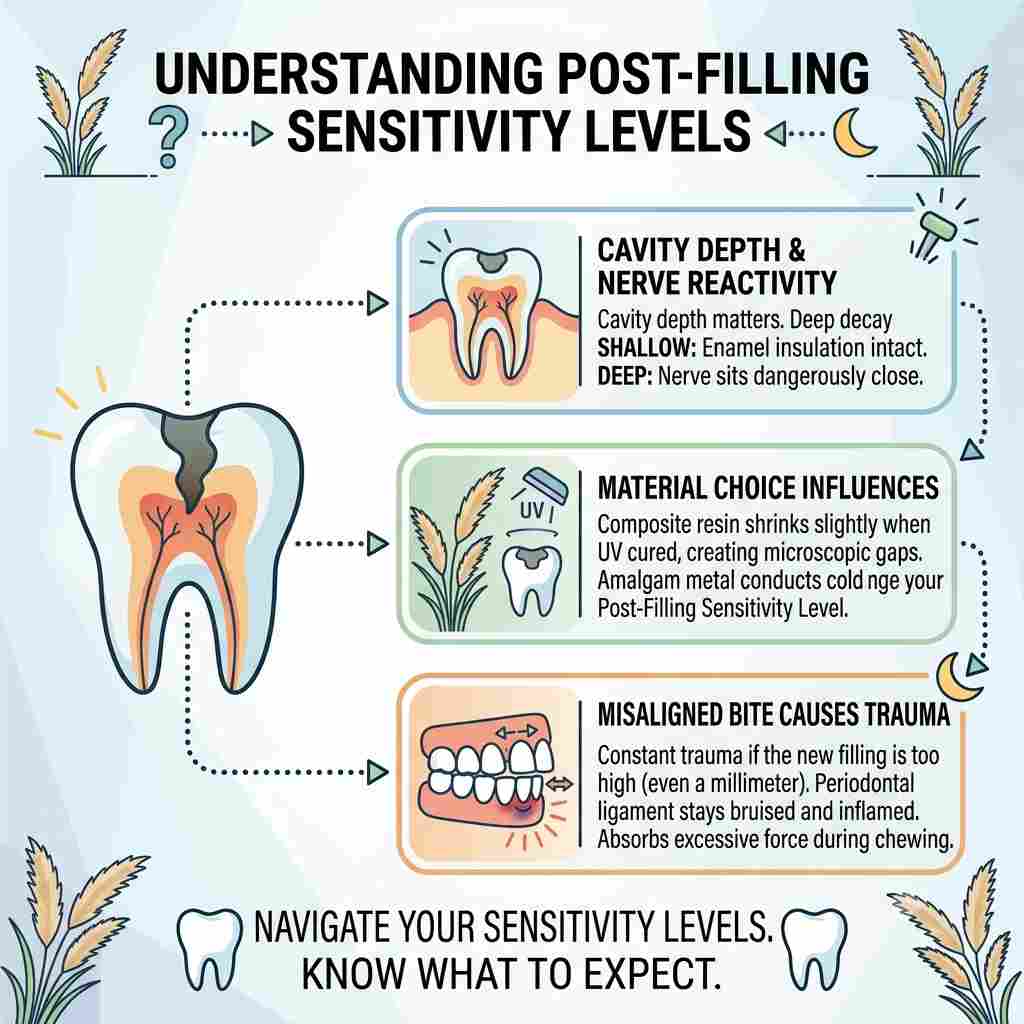
Your unique Post-Filling Sensitivity Level depends heavily on the depth of the original cavity. Shallow cavities rarely cause long-term issues because the enamel insulation remains largely intact. Deep decay, however, sits dangerously close to the primary nerve tissue.
“The closer the dental restoration sits to the pulp chamber, the more reactive the nerve becomes to thermal shifts.” — Dr. Arjan Singh, DDS
Material choice also influences how your mouth reacts. Modern composite resin restorations shrink slightly when cured with UV light. This shrinkage can create microscopic gaps, changing your Post-Filling Sensitivity Level during the first week. Amalgam metal fillings conduct cold temperatures much faster than natural enamel structure.
Another frequent culprit is a misaligned bite. If a new filling is even a millimeter too high, it absorbs excessive force whenever you chew. This constant trauma keeps the surrounding periodontal ligament bruised and inflamed.
| Symptom Type | Typical Cause | Normal Duration |
| Sharp, fleeting cold zing | Thermal conductivity of resin/metal | 1 to 3 weeks |
| Dull ache when biting | High spot / premature bite contact | Requires quick dental adjustment |
| Lingering heat throbbing | Deeper pulp tissue distress | Abnormal; check for infection |
Tracking the Recovery Timeline
Every patient recovers at a different pace, but general milestones help track progress. During the first forty-eight hours, you should anticipate mild to moderate twinges. The local anesthetic leaves the tissue, exposing the freshly treated nerve endings to oral fluids.
By day seven, your Post-Filling Sensitivity Level should begin a steady downward trend. You will notice fewer sharp reactions while consuming daily meals. The nerve slowly builds a protective barrier called reparative dentin to insulate itself.
If discomfort persists past four weeks or intensifies over time, you must schedule a follow-up evaluation. Continuous, throbbing pain that wakes you up at night points to irreversible pulpitis. This condition means the nerve cannot heal on its own and requires a root canal.
Proactive Steps for Home Care
You can actively lower your Post-Filling Sensitivity Level by altering a few everyday habits. Switch to a desensitizing toothpaste containing potassium nitrate immediately. This compound blocks the microscopic pathways leading to the nerve, reducing painful signals.
- Avoid eating extremely hot or ice-cold foods for the first week.
- Chew your food on the opposite side of your mouth to give the healing tooth a rest.
- Use a soft-bristled toothbrush and brush with gentle, circular motions.
- Limit highly acidic foods like citrus and soda, which strip away protective enamel layers.
Protecting the area from unnecessary stress gives your mouth the best environment for rapid, uncomplicated healing.
FAQs Post-Filling Sensitivity Level Analyzer
How long does tooth sensitivity usually last after a filling?
Mild sensitivity often improves within days to a few weeks. Deeper fillings can take longer to settle.
Is sensitivity to cold normal after a filling?
Yes, brief cold sensitivity can occur after a filling. It should gradually become less intense and frequent.
Why does my filled tooth hurt when I bite?
Pain when biting can occur from a high filling or irritated supporting tissues. A dentist can check the bite.
What does lingering pain after a filling mean?
Lingering pain can indicate significant pulp irritation. Persistent or worsening pain needs dental evaluation.
Can a deep filling cause more sensitivity?
Yes, deeper cavities can leave the filling closer to the pulp. That proximity can increase temporary sensitivity.
Should I avoid hot and cold foods after a filling?
Avoiding extreme temperatures for several days can reduce discomfort while the tooth settles.
Can a filling be too high and cause pain?
Yes, a high filling can create excessive pressure during chewing. Your dentist can usually correct it with a simple adjustment.
When should I worry about severe tooth pain after a filling?
Seek prompt dental care when pain becomes severe, worsens, occurs spontaneously, or disrupts sleep.
Can desensitizing toothpaste help after a filling?
Yes, toothpaste for sensitive teeth may reduce cold sensitivity when used consistently as directed.
Can this analyzer diagnose the cause of my tooth sensitivity?
No. This tool provides general guidance and cannot diagnose pulp inflammation, infection, or a filling problem.
Disclaimer: This analyzer is educational only and does not replace professional dental evaluation.
1 thought on “Post-Filling Sensitivity Level Analyzer”