
Caterpillar replacement glass typically costs between $150 and $700 per panel depending on machine model. Cab glass replacement usually takes 2 to 4 hours given the specialized frame designs. Many panels require custom-cut glass sourced through authorized CAT dealers.
Heavy equipment maintenance data shows cracked cab glass often results from job site debris, rocks, or falling material impact. Prompt replacement protects both operator safety and visibility.
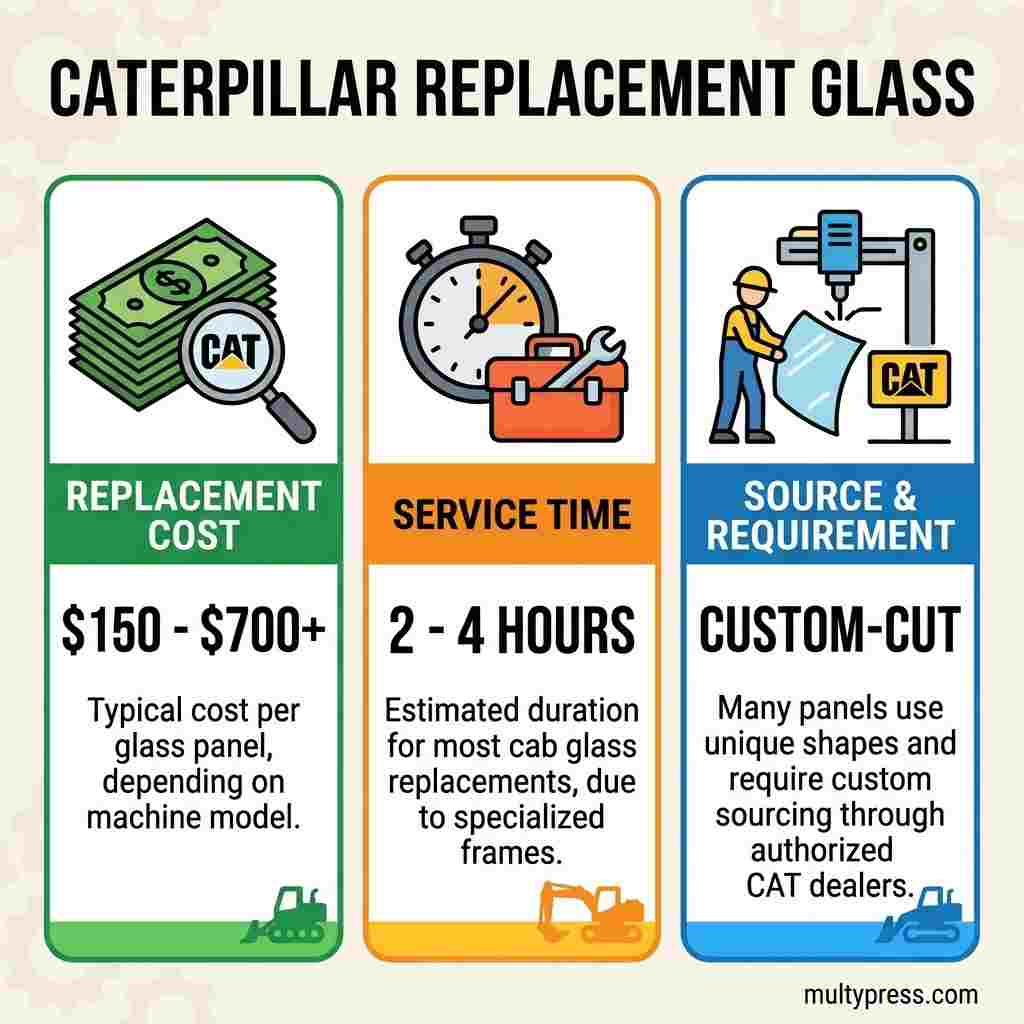
Table of Contents
Quick Answer
Most Caterpillar cab glass replacement involves removing damaged panels and installing new tempered or polycarbonate glass. Authorized CAT dealers and parts suppliers offer the most reliable sourcing for exact fits. Professional installation ensures proper sealing against dust, weather, and debris.
Safety note: operating equipment with cracked cab glass risks reduced visibility and injury from shattering. Address damage before returning machinery to active job site use.
Step-by-Step Replacement Process
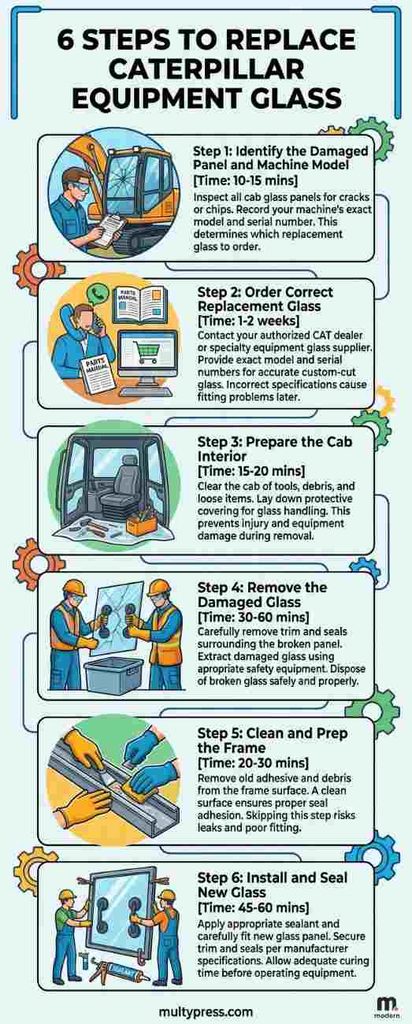
Step 1: Identify the Damaged Panel and Machine Model [Time: 10-15 mins]
Inspect all cab glass panels for cracks or chips. Record your machine’s exact model and serial number. This determines which replacement glass to order.
Step 2: Order Correct Replacement Glass [Time: 1-2 weeks]
Contact your authorized CAT dealer or specialty equipment glass supplier. Provide exact model and serial numbers for accurate custom-cut glass. Incorrect specifications cause fitting problems later.
Step 3: Prepare the Cab Interior [Time: 15-20 mins]
Clear the cab of tools, debris, and loose items. Lay down protective covering for glass handling. This prevents injury and equipment damage during removal.
Step 4: Remove the Damaged Glass [Time: 30-60 mins]
Carefully remove trim and seals surrounding the broken panel. Extract damaged glass using appropriate safety equipment. Dispose of broken glass safely and properly.
Step 5: Clean and Prep the Frame [Time: 20-30 mins]
Remove old adhesive and debris from the frame surface. A clean surface ensures proper seal adhesion. Skipping this step risks leaks and poor fitting.
Step 6: Install and Seal New Glass [Time: 45-60 mins]
Apply appropriate sealant and carefully fit new glass panel. Secure trim and seals per manufacturer specifications. Allow adequate curing time before operating equipment.
Why proper sealing matters most: cab glass seals protect against dust, water, and debris infiltration during heavy job site conditions. Poor sealing leads to leaks and accelerated frame corrosion over time. This step directly affects your equipment’s long-term cab integrity.
Glass Type Comparison Table
| Glass Type | Durability | Best For |
|---|---|---|
| Tempered safety glass | High impact resistance | Standard cab windows |
| Polycarbonate | Extremely shatter-resistant | High-debris job sites |
| Laminated glass | Moderate, holds together when cracked | Front windshield panels |
Equipment specialist insight: “Custom-cut glass is often necessary since CAT cab shapes vary by model and year,” says heavy equipment technician Owen Radcliffe. “Never assume standard sizing fits.”
Tips for Longer-Lasting Cab Glass
Install protective screens over vulnerable panels on high-debris job sites. Regularly inspect seals for wear or cracking. Address small chips immediately before they spread into larger cracks.
Park equipment under cover when possible to reduce sun and weather exposure. UV exposure gradually weakens glass and seal materials. Routine maintenance checks extend overall cab glass lifespan.
The Bigger Picture
Heavy equipment maintenance continues evolving alongside modern cab designs prioritizing operator comfort and safety. Enclosed, climate-controlled cabs have become standard across most newer Caterpillar equipment. This shift has increased demand for specialized cab glass replacement services.
Proper installation protects both operator safety and equipment value. Custom-fit glass and correct sealing prevent costly future repairs. Following this process ensures your Caterpillar equipment stays functional and secure.
FAQs on Caterpillar Replacement Glass
Where do I find the serial number I need to order CAT cab glass?
Look for the serial plate on the machine frame, usually near the cab or engine area. The number is often also in your operator manual or service records. Photograph the plate for easy reference when contacting your dealer. Having the exact model and serial number speeds up quoting. It also prevents ordering errors.
Can I use aftermarket glass instead of genuine CAT glass?
Often yes, if it matches the exact dimensions, thickness, and safety rating. Quality aftermarket suppliers can offer lower prices and faster delivery. Confirm the glass meets any rollover or operator protection standards for your machine. Ask for documentation of the safety rating. Genuine parts offer guaranteed fit and clear compliance.
Why does my replacement panel take weeks to arrive?
Many cab panels are custom cut or made to order for specific models. Dealers may need to source glass from a central warehouse or manufacturer. Lead times grow when machine models are older or less common. Ask for an estimated delivery date when you order. Plan temporary protection for the opening in the meantime.
Is it safe to operate with a temporary plastic cover over broken glass?
Only for short periods and with care, since plastic cannot replace safety glass. Visibility and operator protection are both reduced. Keep the machine out of high-debris work until the panel is replaced. Never use a temporary cover on front glass in demanding conditions. Replace the panel as soon as it’s available.
Does polycarbonate glass really last longer than tempered glass?
Polycarbonate resists impact far better and rarely shatters. It can scratch more easily and may yellow with long UV exposure. Tempered glass stays clearer but breaks into small pieces when hit hard. The better choice depends on your debris exposure and budget. Ask your dealer which fits your typical job sites.
How do I protect cab glass on demolition or forestry work?
Install guards or screens designed for your machine and the type of work. Choose polycarbonate panels where flying material is common. Keep the cab doors and windows closed during hazardous operations. Inspect guards for damage before each shift. These steps cut glass replacements considerably.
Can a cracked windshield fail an equipment inspection?
Yes, many site safety checks flag cracked glass that obstructs the operator’s view. Contractors and insurers may require repairs before machines return to work. Damage in the main sightline is treated most strictly. Check your site and company policies. Fixing cracks early avoids downtime and fines.
Why does my new glass leak at the corner after installation?
Leaks usually come from uneven sealant or a poorly seated gasket. Old adhesive left on the frame can also create gaps. Remove the panel or re-seal the corner using manufacturer-approved material. Check the frame for bends or damage that prevent a tight seal. A water test confirms the repair.
Do I need special adhesive for bonded CAT cab glass?
Many cabs use bonded glass that requires urethane adhesive and primers. The product must meet the manufacturer’s specifications and cure conditions. Using the wrong adhesive can weaken the bond and risk panel loss. Follow dealer instructions for temperature and curing time. Professional installation helps ensure a proper bond.
How often should I inspect cab glass seals on heavy equipment?
Check seals at least monthly, and daily on harsh job sites during walk-around checks. Look for cracks, gaps, and lifting edges. Early detection prevents leaks and corrosion in the frame. Clean seals with mild soap to keep rubber flexible. Replace worn seals before they compromise the glass.