
It is a scenario that plays out in households every day: a sudden spike in fever, a deep cut while preparing dinner, or a strange pain in the chest. In these high-stress moments, a critical question arises: Do I need to rush to the Emergency Room (ER), or can this wait for an Urgent Care clinic or a primary care doctor?
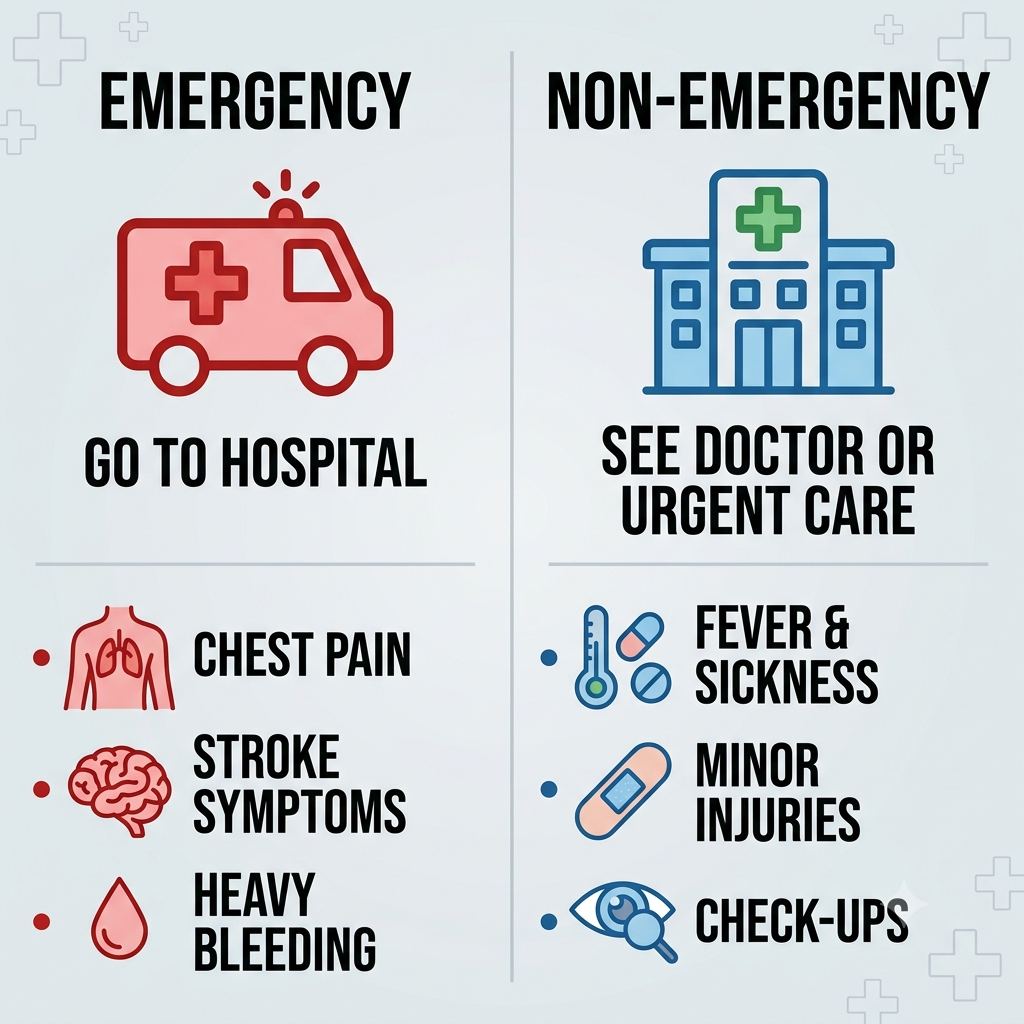
Making the right choice is not just about saving time and money; it can be a matter of life and death. Understanding the distinct roles of emergency and non-emergency medical facilities is the first step toward making a calm, informed decision when health crises strike.
🚨 Emergency vs. Non-Emergency Decision Tool
Answer a few quick questions to know what action to take
Are you experiencing heavy or continuous bleeding?
Do you feel dizzy, faint, or extremely weak?
Are you having severe abdominal or rectal pain?
Is your stool black, tar-like, or mixed with large amounts of blood?
Defining a True Medical Emergency
An emergency department is designed for one primary purpose: treating life- or limb-threatening conditions. These facilities operate 24/7 and are equipped with advanced imaging, surgical suites, and specialized physicians prepared for worst-case scenarios.
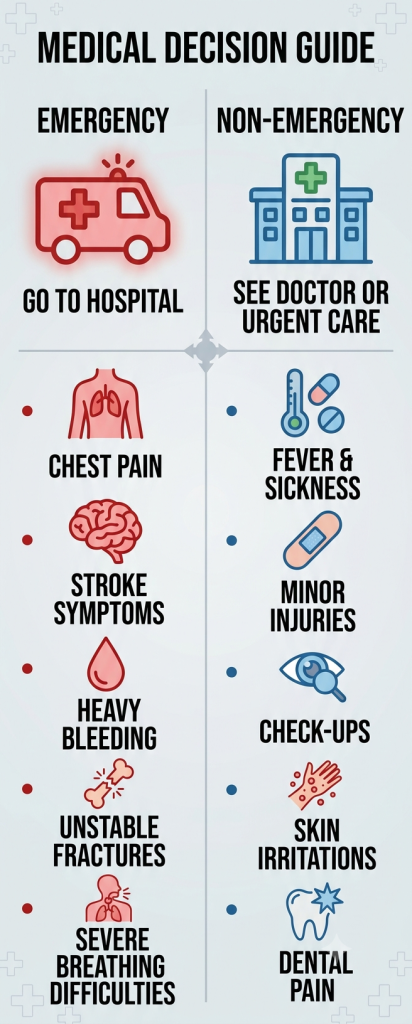
A true medical emergency involves symptoms that could cause permanent harm or death if not addressed immediately. Critical warning signs include: For symptoms involving blood in stool, see our Blood in Stool Symptom Checker for additional guidance.
- Chest pain or pressure, which can indicate a heart attack.
- Sudden weakness, numbness, or slurred speech, classic signs of a stroke.
- Severe shortness of breath or an inability to breathe.
- Major trauma, such as deep puncture wounds, compound fractures (bone breaking through the skin), or severe head injuries accompanied by confusion or fainting.
- Uncontrollable bleeding that does not stop after applying direct pressure for ten minutes.
In these situations, driving yourself to the hospital is often a mistake. Calling an ambulance ensures that paramedics can begin life-saving treatment en route, significantly improving survival rates.
Knowing When It Can Wait: Non-Emergency Care
Conversely, millions of ER visits each year involve non-emergency conditions that could be handled more efficiently elsewhere. Utilizing emergency services for minor ailments strains hospital resources, leading to longer wait times for everyone and exorbitant medical bills for the patient.
For conditions that require prompt attention but are not life-threatening, Urgent Care Centers are the ideal middle ground. They handle issues that need to be seen within 24 hours, such as:
- Minor cuts requiring a few stitches.
- Sprains, strains, or minor, non-deformed fractures.
- Mild asthma attacks or low-grade fevers.
- Urinary tract infections, rashes, or earaches.
For ongoing, chronic management or non-urgent symptoms—like a persistent cough, mild back pain, or routine physicals—your Primary Care Physician (PCP) remains the best option. Your regular doctor knows your medical history, which prevents fragmented care and unnecessary testing.
The Mental Checklist for Critical Moments
When a health issue arises, take a deep breath and ask yourself three questions:
- Is this condition life- or limb-threatening?
- Could severe harm occur if I delay care by a few hours?
- Does this require advanced hospital equipment (like a CT scan or surgery)?
If the answer to any of these is yes, head straight to the nearest emergency room. If the answer is no, an urgent care clinic will save you hours of waiting and thousands of dollars, leaving the ER clear to handle the true crises. Being proactive and identifying your local urgent care options before an illness occurs is the best way to ensure you make the right call when every second counts.
FAQs Emergency vs. Non-Emergency Decision Tool
When should I go to the emergency room instead of urgent care?
Go to an emergency department for life-threatening symptoms or rapidly worsening conditions. Examples include severe chest pain, major breathing difficulty, stroke signs, uncontrolled bleeding, or fainting. Call local emergency services when transport may be unsafe. Do not delay care while trying to use an online decision tool.
What symptoms require emergency medical care immediately?
Severe chest pain, severe breathing difficulty, stroke symptoms, heavy bleeding, severe injury, or loss of consciousness require immediate care. Sudden confusion or extreme weakness can also signal an emergency. When symptoms threaten life or major body function, call emergency services.
Is severe abdominal pain an emergency?
Severe or rapidly worsening abdominal pain can require emergency evaluation. Risk increases with fainting, persistent vomiting, fever, rigid abdomen, or significant bleeding. Mild, stable pain may have other care options. New severe pain should receive prompt professional assessment.
Is black tarry stool always an emergency?
Black, tarry stool can indicate bleeding in the upper digestive tract and needs prompt medical assessment. Iron and bismuth can also darken stool without causing bleeding. Tarry texture, weakness, dizziness, or vomiting blood raises concern. Seek urgent care when the cause is uncertain.
Can I drive myself to the emergency room?
Do not drive yourself when you feel faint, confused, severely weak, or seriously ill. Emergency medical services can provide treatment during transport. Ask someone else to drive when symptoms are significant but stable. Choose the safest available transport option.
When is urgent care appropriate?
Urgent care suits problems that need prompt attention but do not threaten life or major function. Common examples include minor cuts, mild infections, sprains, and some uncomplicated fractures. Call ahead when you are unsure. Choose an emergency department for severe or rapidly worsening symptoms.
When should I contact my primary care doctor?
Primary care is best for stable, non-urgent symptoms and ongoing health management. Your regular clinician can review your history and coordinate testing. Examples include persistent mild cough, routine checkups, and chronic condition management. Seek faster care if symptoms worsen.
Can an online emergency decision tool diagnose a medical problem?
No, an online decision tool cannot diagnose a medical condition. It can only organize warning signs and suggest a level of care. A clinician must evaluate symptoms, examination findings, and testing. Never use a reassuring result to delay urgent care.
What should I bring to the emergency room?
Bring a medication list, allergies, identification, relevant medical history, and information about symptom onset. Bring recent test results when readily available. Do not delay emergency treatment while gathering paperwork. Emergency clinicians can obtain missing information later.
What should I do if symptoms become worse after using this tool?
Seek emergency medical care if symptoms become severe, rapidly worsen, or develop new warning signs. Call local emergency services when immediate transport is needed. Do not repeat the tool instead of seeking care. Your symptoms should guide action, not the calculator result.
1 thought on “Emergency vs. Non-Emergency Decision Tool”