
Classic car glass replacement typically costs between $300 and $1,500 per panel depending on rarity and curvature. Vintage vehicles often require custom-fabricated glass since original manufacturing molds no longer exist. This process can take anywhere from a few days to several weeks.
Restoration industry data shows classic car glass often needs specialty sourcing given discontinued original equipment. Working with experienced restoration glaziers significantly improves results.
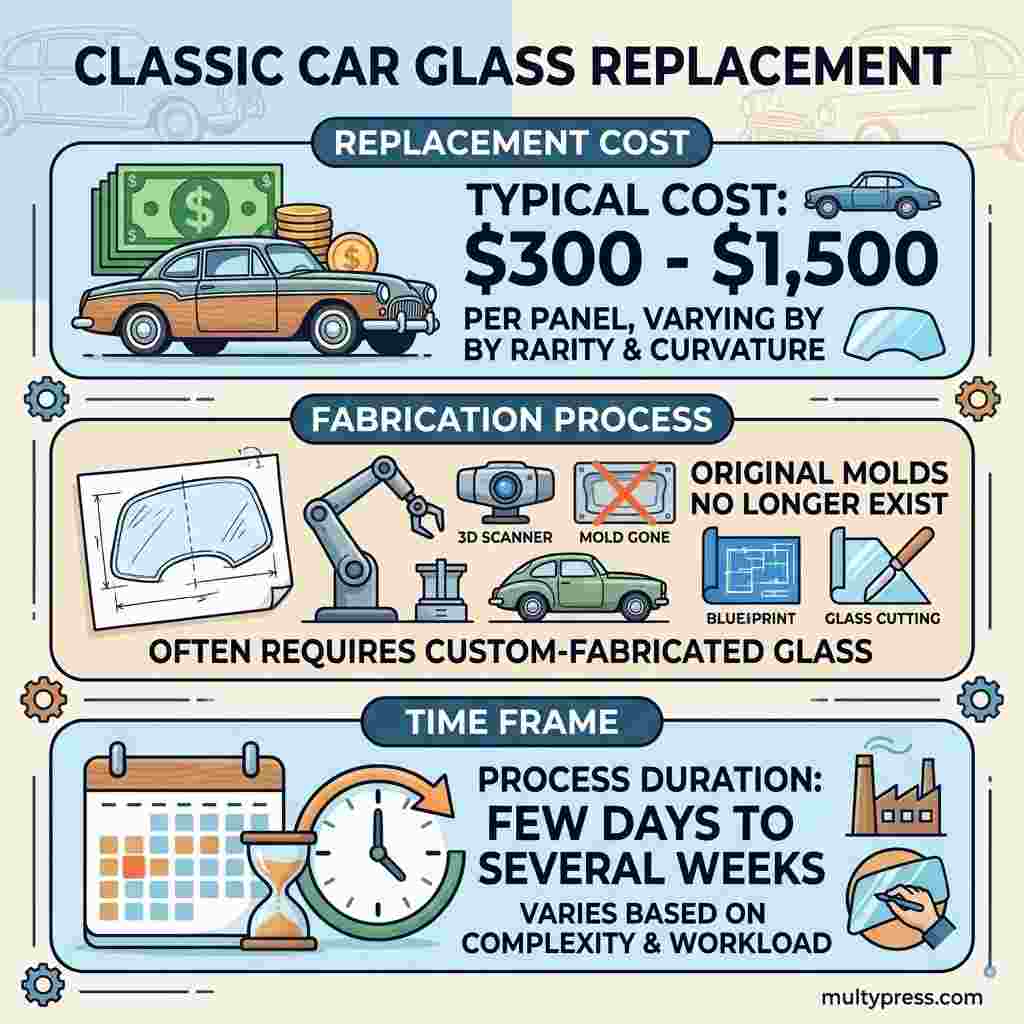
Table of Contents
Quick Answer
Most classic car glass replacement involves either sourcing new-old-stock glass or having a specialist fabricate a custom panel. Curved windshields present the greatest sourcing challenge for older models. Rubber gasket seals typically get replaced alongside the glass for a proper fit.
Prerequisite note: research your exact model year and trim before sourcing glass. Even small design changes between years can affect fitment significantly.
Step-by-Step Replacement Process
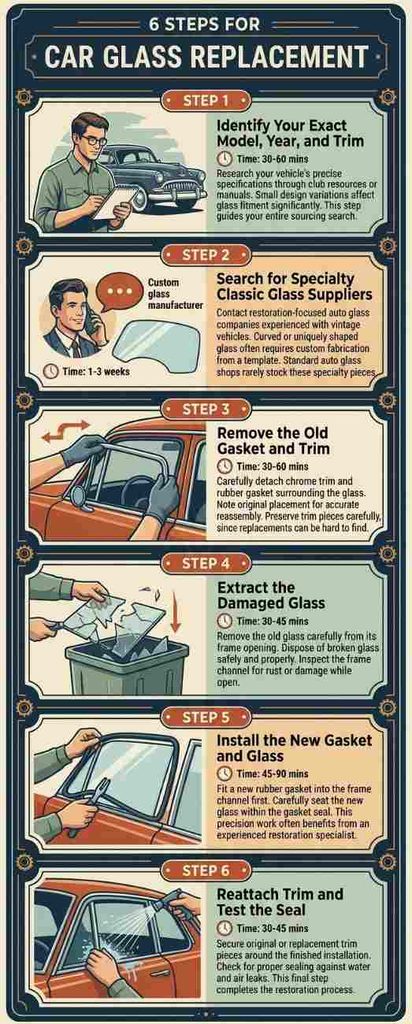
Step 1: Identify Your Exact Model, Year, and Trim [Time: 30-60 mins]
Research your vehicle’s precise specifications through club resources or manuals. Small design variations affect glass fitment significantly. This step guides your entire sourcing search.
Step 2: Search for Specialty Classic Glass Suppliers [Time: 1-3 weeks]
Contact restoration-focused auto glass companies experienced with vintage vehicles. Curved or uniquely shaped glass often requires custom fabrication from a template. Standard auto glass shops rarely stock these specialty pieces.
Step 3: Remove the Old Gasket and Trim [Time: 30-60 mins]
Carefully detach chrome trim and rubber gasket surrounding the glass. Note original placement for accurate reassembly. Preserve trim pieces carefully, since replacements can be hard to find.
Step 4: Extract the Damaged Glass [Time: 30-45 mins]
Remove the old glass carefully from its frame opening. Dispose of broken glass safely and properly. Inspect the frame channel for rust or damage while open.
Step 5: Install the New Gasket and Glass [Time: 45-90 mins]
Fit a new rubber gasket into the frame channel first. Carefully seat the new glass within the gasket seal. This precision work often benefits from an experienced restoration specialist.
Step 6: Reattach Trim and Test the Seal [Time: 30-45 mins]
Secure original or replacement trim pieces around the finished installation. Check for proper sealing against water and air leaks. This final step completes the restoration process.
Why gasket quality matters most: vintage glass installations rely heavily on rubber gasket seals rather than modern adhesive bonding. A poor-quality or improperly fitted gasket causes leaks and glass instability. Investing in quality gasket material protects both the new glass and your restoration investment.
Sourcing Option Comparison Table
| Sourcing Option | Cost | Best For |
|---|---|---|
| New-old-stock (NOS) glass | $300-$800 | Popular models with available parts |
| Custom-fabricated glass | $600-$1,500 | Rare models, curved windshields |
| Reproduction glass | $250-$600 | Common classic models |
Restoration specialist insight: “Curved glass is where most classic car projects hit unexpected costs,” says restoration glazier Franklin Pruitt. “Budget extra time and money for these pieces.”
Tips for a Successful Restoration
Join classic car forums or clubs specific to your model for sourcing recommendations. Photograph original glass markings before removal for reference. Budget extra time for custom fabrication, since this process isn’t quick.
Work with glaziers experienced specifically in vintage vehicles rather than general auto glass shops. Their expertise significantly reduces fitting problems. Patience throughout this process protects your restoration’s overall quality.
The Bigger Picture
Classic car restoration remains a passionate hobby supporting a dedicated specialty parts industry. Glass sourcing continues to be one of the more challenging aspects of complete restorations. Specialized fabrication techniques have improved, making even rare glass replacement increasingly possible.
Thorough research and patience guide successful classic car glass replacement. Working with experienced specialists protects both time and financial investment. Following this process ensures your classic vehicle’s glass matches its original quality and appearance.
FAQs on Classic Car Glass Replacement
Why does classic car glass cost so much more than modern windshield replacement?
Vintage glass is made in small batches, often by hand or on specialty equipment. Original tooling rarely exists, so makers rely on templates and custom bending. Demand is limited, which raises per-piece costs. Shipping fragile curved glass also adds expense. This explains prices far above mass-produced modern glass.
Should I choose tinted or clear glass for an authentic restoration?
Match what the factory offered for your model and year. Many classics originally used clear or lightly tinted glass. Check build sheets, brochures, or club resources to confirm. Original date codes and logos matter to concours judges. Choose authenticity for show cars and practicality for drivers.
Can I reuse my original rubber gasket with new glass?
It’s rarely a good idea, since old rubber hardens and shrinks. A tired gasket can leak and may even crack the new glass. Fresh gaskets are inexpensive compared to the cost of replacement glass. Order a quality reproduction set made for your model. Replace trim clips at the same time.
Is laminated glass correct for a classic car windshield?
Most classics from the mid 1960s onward used laminated windshields. Earlier cars may have used plate or tempered glass. Laminated glass is safer because it holds together when cracked. Check what your model originally used before ordering. Modern replacement laminated glass is generally acceptable for driven cars.
How do I make a template for custom glass?
Trace the opening using stiff cardboard or thin plastic, pressing it into the frame edge. Mark curves, corners, and mounting points carefully. If you have broken glass pieces, save them for the fabricator. Photograph the template in place for reference. Accurate templates prevent costly errors.
Why does my replacement glass leak even though it was a perfect fit?
Leaks often come from a poorly seated gasket or rust in the glass channel. Even tiny frame distortions can let water through. Reseat the gasket with proper lubricant and check the frame carefully. Apply sealant only where recommended for your model. A slow water test reveals the problem spot.
Does classic car glass need to be installed by a specialist?
It’s strongly recommended, especially for curved or rare windshields. Specialists understand gaskets, trim, and delicate frames. Mistakes can crack expensive glass or damage chrome and paint. Experienced installers also know how to avoid rust issues. The extra cost protects your investment.
Can old glass be repaired instead of replaced?
Small chips in laminated glass can sometimes be repaired with resin. Cracks, delamination, and scratches in prime sightlines usually require replacement. Rare original glass with date codes may be worth preserving if repairable. A specialist can assess the damage honestly. Repair works best on minor damage only.
How long does custom classic car glass take to fabricate?
Lead times range from a couple of weeks to several months. Complex curves, rare models, and busy shops all add delay. Ask for a realistic timeline before you pay a deposit. Plan to protect the opening during the wait. Patience usually produces a better fit.
Will modern glass change how my classic car looks?
Quality reproductions are designed to match original appearance closely. Minor differences in tint, edge finish, or markings can exist. Date codes and logos may differ from factory glass. For show cars, ask about period-correct markings. For drivers, modern glass is usually a sensible, safe choice.