
Mazda glass replacement typically costs between $250 and $650 depending on model and features. Vehicles equipped with i-Activsense safety technology require recalibration after installation. Older Mazda models without advanced sensors fall on the lower end of this range.
Auto glass industry data shows Mazda windshield costs vary based on trim level and safety features. Higher trims with radar cruise control cost more due to sensor complexity.
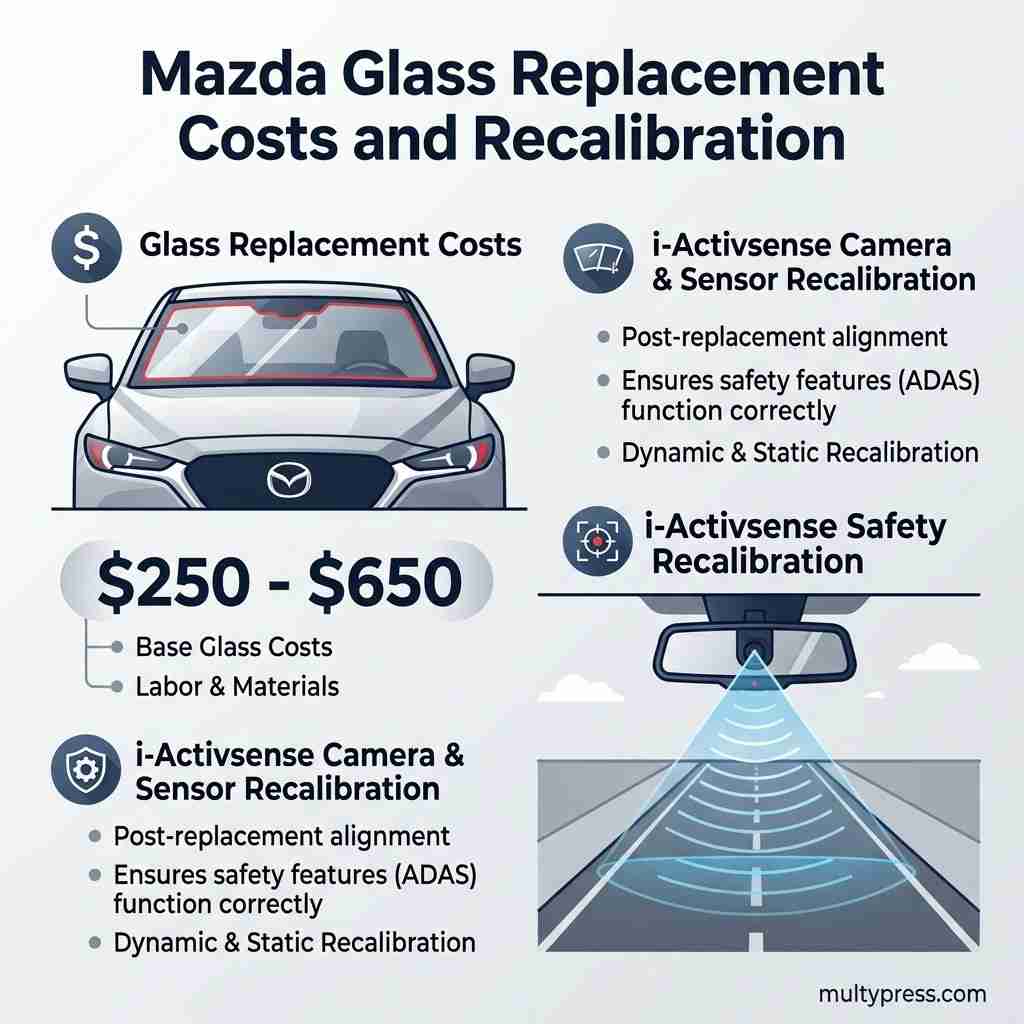
Table of Contents
Quick Answer
Basic Mazda windshield replacement without sensors averages $250 to $400. Models equipped with i-Activsense typically cost $400 to $650 including recalibration. OEM glass costs more than aftermarket but ensures proper sensor accuracy.
Prerequisite note: confirm whether your Mazda has forward-facing cameras or radar sensors before requesting quotes. This significantly affects both price and required service steps.
Step-by-Step Replacement Process
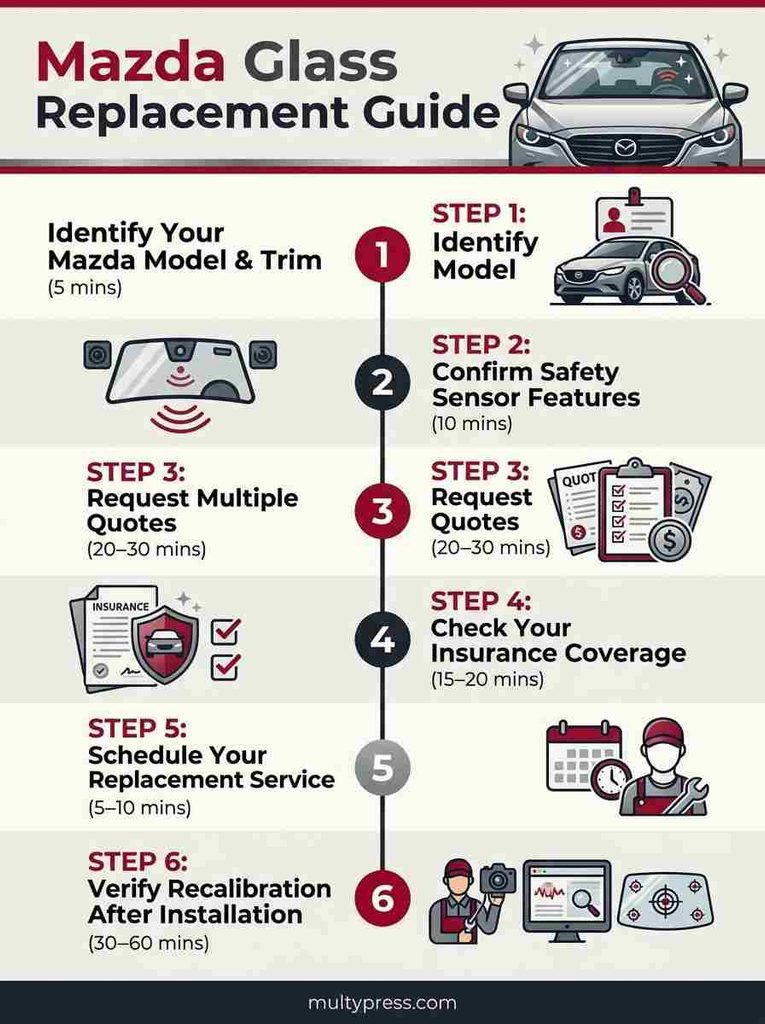
Step 1: Identify Your Mazda Model and Trim [Time: 5 mins]
Check your registration or VIN for exact specifications. This determines whether i-Activsense features are present. Pricing varies significantly between base and higher trims.
Step 2: Confirm Safety Sensor Features [Time: 10 mins]
Look for a camera mounted near your rearview mirror. This camera indicates your Mazda requires ADAS recalibration after replacement. Skipping this check leads to inaccurate quotes.
Step 3: Request Multiple Quotes [Time: 20-30 mins]
Contact several local auto glass providers for pricing. Ask specifically about OEM versus aftermarket glass options. Compare quotes including recalibration fees if applicable.
Step 4: Check Your Insurance Coverage [Time: 15-20 mins]
Review your policy for comprehensive glass coverage details. Many policies reduce or waive deductibles for windshield claims. This step can significantly lower your final cost.
Step 5: Schedule Your Replacement Service [Time: 5-10 mins]
Choose between mobile and in-shop service based on your needs. In-shop service often works better for ADAS recalibration. Confirm appointment details and expected timeline.
Step 6: Verify Recalibration After Installation [Time: 30-60 mins]
Ensure technicians properly recalibrate safety cameras post-installation. This step confirms features like lane departure warning function correctly. Skipping verification risks malfunctioning safety systems.
Why recalibration matters most: i-Activsense relies on precise camera and sensor alignment behind your windshield. Improper recalibration can cause safety features to malfunction unexpectedly. This step directly affects your vehicle’s crash-prevention technology.
Cost Comparison Table
| Mazda Type | Average Cost | ADAS Recalibration Needed |
|---|---|---|
| Mazda3 (base trims) | $250-$400 | Sometimes |
| CX-5 / CX-30 | $350-$550 | Usually |
| CX-9 (higher trims) | $400-$650 | Usually |
Industry insight: “Higher Mazda trims pack more sensors, which raises both parts and labor cost,” says auto glass specialist Erin Whitmore. “Recalibration is non-negotiable on these models.”
Ways to Save on Replacement Costs
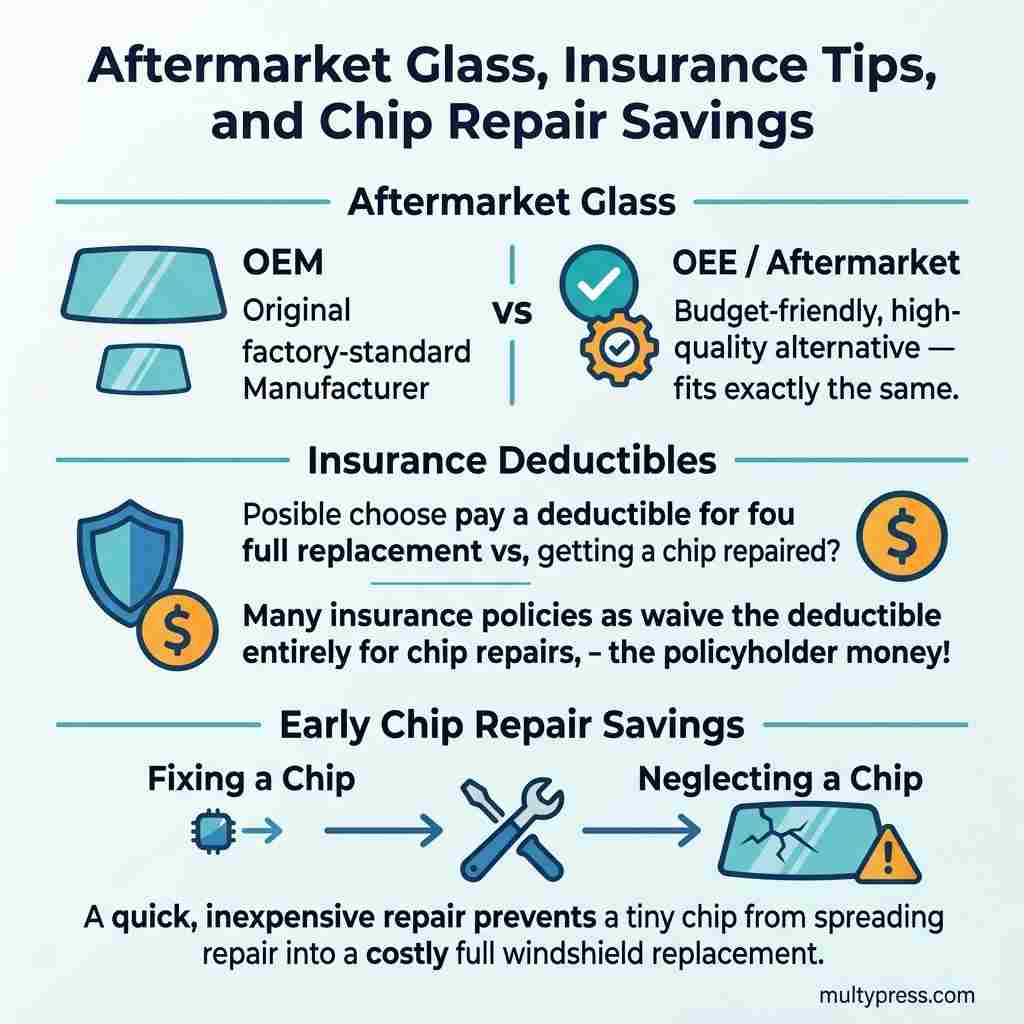
Compare aftermarket glass options for models without sensitive sensor requirements. Check if your insurance waives deductibles for windshield claims. Ask providers about bundled recalibration pricing to avoid hidden fees.
Avoid delaying repair once damage appears, since cracks can spread quickly. Small chip repairs cost far less than full replacement. Addressing issues early often saves significant money long-term.
The Bigger Picture
Mazda’s expanding i-Activsense technology has changed windshield replacement pricing across the lineup. ADAS features now require specialized calibration equipment many shops have adopted. This shift reflects broader trends toward safer, technology-integrated vehicles.
Understanding your specific model’s requirements helps you budget accurately. Comparing multiple quotes ensures fair, competitive pricing. Following this guide helps you make an informed replacement decision confidently.
FAQs on Mazda Glass Replacement
Why did my CX-5 quote come in higher than a similarly aged Mazda3?
The CX-5 often includes more standard safety sensor packages than base Mazda3 trims. Larger glass size for the CX-5’s body style also adds material cost. This combination explains the price gap between these two popular models. Comparing across different Mazda body styles rarely produces matching quotes. This reflects genuine differences in glass size and sensor inclusion.
Can I use my Mazda’s factory warranty for windshield replacement at any shop?
Windshield replacement typically falls outside standard factory warranty coverage entirely. This applies to wear-and-tear or damage-related glass issues generally. Factory warranties usually cover manufacturing defects, not impact damage. Check your specific warranty documentation for any glass-related exceptions. Insurance, not factory warranty, typically covers standard windshield replacement.
Why does my Mazda need radar recalibration in addition to camera calibration?
Some Mazda models integrate both camera and radar systems for comprehensive safety features. Radar sensors, often located near the grille, work alongside windshield cameras. Both systems require separate calibration procedures for full accuracy. This comprehensive approach ensures features like adaptive cruise control function properly. Both calibrations matter for complete safety system restoration.
Does Mazda’s i-Activsense system get affected by minor windshield chip repairs?
Minor chip repairs away from the camera area typically don’t require recalibration. Chips directly within the camera’s viewing area may warrant precautionary calibration checks. This depends on chip location relative to sensor placement specifically. Ask your provider whether your specific repair affects sensor components. This assessment protects your safety system’s continued accuracy.
Why do some older Mazda models still see notable glass replacement costs?
Curved or complexly shaped Mazda windshields cost more regardless of sensor technology. Design elements affecting aerodynamics can increase glass fabrication complexity. This applies even to models predating widespread ADAS adoption. Glass shape and size remain significant cost factors independent of technology features. This explains costs on older, feature-free Mazda models.
Can a Mazda MX-5 Miata have different glass replacement considerations than sedans?
Yes, the Miata’s compact, sporty design uses uniquely shaped windshield glass. This specialty shape sometimes requires more specific sourcing than common sedan glass. Confirm with your provider whether they stock or can quickly source Miata-specific glass. This ensures accurate timeline expectations for this particular model. Specialty vehicle shapes sometimes affect both cost and availability.
Why did my insurance quote a lower price than every Mazda-specialized shop I contacted?
Insurance estimates sometimes reflect standard regional rates, not shop-specific pricing. This can create a gap between what your insurer expects and actual costs. Discuss this discrepancy directly with your insurance adjuster for clarification. Many insurers work with your chosen shop to resolve pricing gaps. This is a common, resolvable issue worth addressing directly.
Does choosing OEM Mazda glass guarantee better recalibration accuracy?
OEM glass generally provides more precise specifications matching original engineering exactly. This can improve calibration accuracy compared to some aftermarket options. However, skilled technicians can often achieve accurate calibration with quality aftermarket glass too. The technician’s expertise matters as much as the glass source itself. Both factors together determine your final calibration accuracy.
Why do some Mazda dealerships charge more for the same glass than independent shops?
Dealership pricing often includes overhead costs not present at independent shops. This can include specialized Mazda-certified training and dealership facility costs. Independent shops with ADAS calibration equipment can often match dealership quality. Compare both options directly, considering both price and calibration capability. This comparison helps you make an informed, cost-effective choice.
Can I drive my Mazda immediately after i-Activsense recalibration completes?
Yes, once calibration is verified complete, normal driving resumes safely. Technicians typically confirm successful calibration before releasing your vehicle. This differs from adhesive curing time, which still applies separately. Confirm both adhesive curing and calibration completion before your first drive. Both factors matter for a fully safe departure from the shop.