
Avoiding dental work after dermal fillers is crucial because dental procedures can increase swelling, disrupt filler placement, and raise infection risks. Most experts recommend waiting 2–4 weeks after fillers before any invasive dental treatments to ensure optimal results and safety.

The world of cosmetic enhancements has seen a surge in popularity, with lip fillers being one of the most sought-after procedures. However, an intriguing aspect often gets overlooked: the cautionary advice to avoid dental work shortly after getting fillers. This comprehensive article delves into the question of “Why no dental work after fillers?” We’ll explore the intricacies of this precaution, the potential risks, and the necessary considerations to ensure your well-being and satisfaction with your dental and cosmetic procedures.
🦷 Dental & Filler Timeline Planner
The Science Behind Fillers and Dental Procedures
Dermal fillers add volume to areas like lips, cheeks, and nasolabial folds. They consist of hyaluronic acid or other biocompatible materials that integrate gradually into facial tissues.
Dental work after fillers can interfere with this process. Here’s why:
1. Increased Swelling and Displacement
Dental procedures, especially extractions or root canals, cause localized swelling. This swelling can:
- Shift the freshly injected filler.
- Create uneven facial contours.
- Prolong recovery time.
Expert Tip: “Swelling from dental work can push fillers into unwanted areas, altering your desired look.” – Dr. Emily Roberts, Cosmetic Dermatologist.
2. Higher Infection Risk
Bacteria from the mouth can enter the bloodstream during dental work. Since fillers are foreign substances, they may react poorly to infections.
Common Risks Include:
- Delayed healing.
- Filler degradation.
- Increased inflammation.
3. Blood Flow and Filler Longevity
Dental treatments often involve anesthetic injections, which increase blood flow. Excess circulation can break down fillers faster, reducing their effectiveness.
⚠️ Risk Checker: Dental Work After Fillers
Check the possible risk level of dental work based on your filler area.
How Long Should You Wait for Dental Work After Fillers?
| Type of Filler | Recommended Wait Time Before Dental Work |
|---|---|
| Lip Fillers | 2–3 weeks |
| Cheek Fillers | 3–4 weeks |
| Nasolabial Fold Fillers | 2–4 weeks |
Note: Always consult your injector before scheduling dental procedures.
What If You Need Emergency Dental Care?
If urgent dental work is necessary:
- Inform both your dentist and injector.
- Use gentle techniques to minimize trauma.
- Avoid extensive procedures until fillers settle.
Expert Insight: “In emergencies, dentists can use low-trauma methods to protect your fillers.” – Dr. Mark Sullivan, Oral Surgeon.
The Reasons Behind the Precaution
Here are the reasons why you should not have dental work after fillers:
Post-Filler Swelling
One primary reason for avoiding dental work right after fillers is the potential for post-treatment swelling. After receiving lip fillers, it’s common for the lips to swell, which can affect the accuracy and comfort of specific dental procedures. Dental work requires precise measurements and control, which can be compromised when the lips are swollen.
Pressure and Discomfort
Dental procedures like cleaning, check-ups, or more invasive work like extractions often involve tools and instruments requiring pressure on the mouth. This pressure can be uncomfortable when your lips are sensitive or swollen from recent filler injections. Patients may experience discomfort or even pain during the procedure.
Minimizing Risk and Ensuring Optimal Results
The cautionary advice aims to minimize the risk of complications and ensure that your dental and cosmetic procedures yield the best results. By allowing swelling to subside and ensuring your comfort during dental work, you can avoid potential issues and ensure a successful outcome for both treatments.
Filler migration
The pressure and manipulation of the face during dental work can cause the filler to move out of place. This can result in an uneven or unnatural appearance of the lips.
Bruising
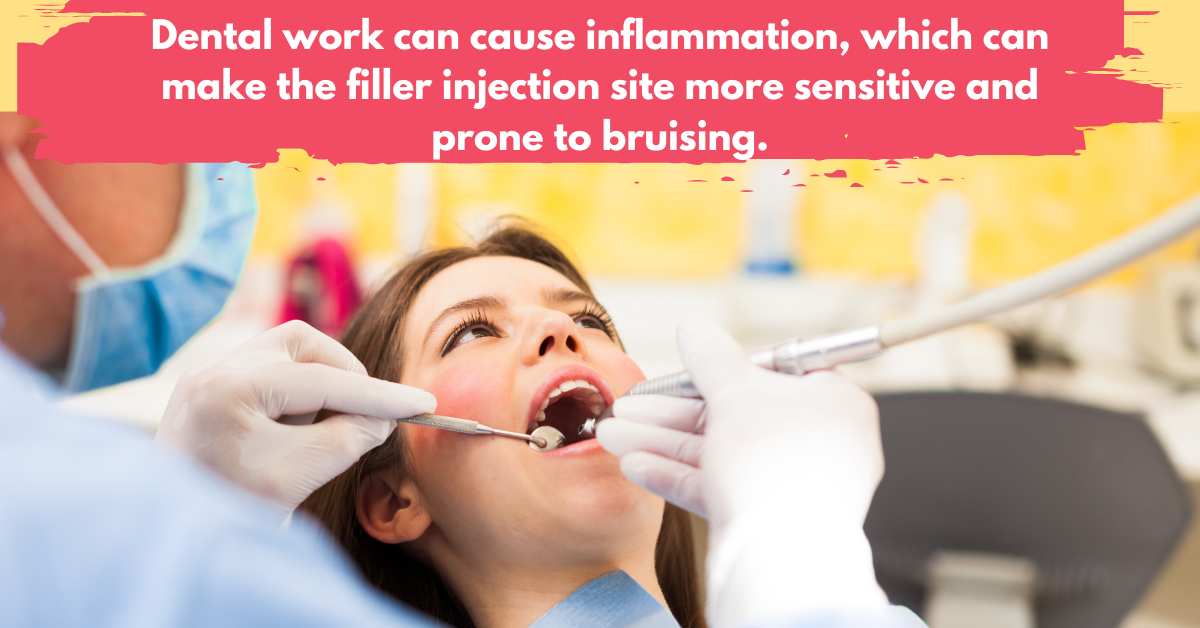
The pressure and manipulation of the face during dental work can also cause bruising around the lips. This is usually temporary and will go away within a few days.
Infection
The pressure and manipulation of the face during dental work can introduce bacteria into the bloodstream, increasing the risk of infection at the filler injection site.
Precautions to Take Before & After Dental Work
To safeguard your filler results:
✔ Wait at least 2 weeks for minor dental cleanings.
✔ Avoid straws and excessive mouth movements post-dental work.
✔ Apply cold compresses to reduce swelling.
How Long to Wait?
Ideal Timing
While avoiding dental work immediately after getting fillers is recommended, the ideal waiting period can vary. It’s generally advisable to wait at least one to two weeks before scheduling dental procedures. This timeframe reduces swelling, ensuring a more comfortable and precise dental experience.
Communication Is Key
Transparent communication with your dentist and the practitioner responsible for your fillers is essential. Inform them about your recent cosmetic enhancements and your plans for dental work. This information helps them tailor their approach to your needs, ensuring your safety and satisfaction.
Expert Advice

Anthony Youn, a board-certified plastic surgeon: “The pressure and manipulation of the face during dental work can cause the filler to migrate, or move out of place. This can result in an uneven or unnatural appearance of the lips, or even require additional filler injections to correct.”

Michael Persky, a board-certified facial plastic surgeon: “If you have had fillers, it is important to tell your dentist so they can take extra precautions to protect the filler during dental work.”

David Shafer, a dentist and president of the American Academy of Cosmetic Dentistry, said, “It is important to wait at least two weeks after getting lip fillers before having any dental work. This will give the filler time to settle and reduce the risk of complications.”
Here are some additional things to keep in mind:
- If you have concerns about having dental work after fillers, talk to your dentist and injector. They can help you decide what is best for you.
- Be sure to tell your dentist if you have had filler injections. This will help them to take the necessary precautions to protect the filler during dental work.
- Avoid taking aspirin or ibuprofen for at least seven days before and after dental work. These medications can increase the risk of bruising.
- Follow your dentist’s instructions carefully after dental work. This will help to prevent infection and promote healing.
Following these tips can help ensure your dental work is safe and effective after lip fillers.
Final Thoughts
Understanding why no dental work after fillers is essential for maintaining your aesthetic results and health. Always prioritize communication between your cosmetic specialist and dentist.
Did You Know? Over 60% of filler complications arise from improper aftercare, including premature dental visits.
By following expert guidelines, you can enjoy both a radiant smile and flawless fillers, without compromise.
FAQs (Frequently Asked Questions)
Can I go to the dentist immediately after getting lip fillers?
It’s generally advisable to wait one to two weeks after getting lip fillers before scheduling dental work to ensure a more comfortable and precise experience.
Why do lips swell after filler injections?
Swelling is a common side effect of lip filler injections due to the injection process and the body’s response to the treatment.
What risks are associated with dental work shortly after lip fillers?
Dental work immediately after lip fillers may result in discomfort, compromised precision, and potential complications due to post-filler swelling.
How can I ensure a successful outcome for my lip fillers and dental procedures?
Transparent communication with your healthcare providers and waiting for swelling to subside can help ensure optimal results for cosmetic enhancements and dental work.
Are there any specific dental procedures to avoid after lip fillers?
While routine check-ups and cleanings are generally safe, more invasive procedures like extractions may require additional caution and coordination with your healthcare providers.
Can I Get a Dental Cleaning After Fillers?
Yes, but wait at least 2 weeks to avoid unnecessary pressure on the treated areas. Gentle cleanings are safer than deep scaling.
How Long Should I Wait for Dental Work After Lip Fillers?
The safest window is 2–3 weeks to prevent filler displacement from dental tools or swelling.
What Happens If I Get a Tooth Extraction Too Soon After Fillers?
Extractions cause significant swelling, which may push fillers out of place, leading to asymmetry or lumps.
Can Dental Anesthesia Affect My Fillers?
Yes, some anesthetics (like epinephrine) increase blood flow, potentially breaking down filler faster.
Why Do Dentists Ask About Fillers Before Treatment?
They need to adjust techniques to avoid excessive pressure on filler areas, reducing migration risks.
Can I Get Braces Adjusted After Fillers?
Wait at least 2 weeks—tightening braces involves pressure that could disturb cheek or lip fillers.
Does Teeth Whitening Affect Fillers?
No, whitening is safe since it doesn’t involve physical pressure or swelling risks.
Can Fillers Get Infected from Dental Work?
Rarely, but oral bacteria entering the bloodstream could cause inflammation near filler sites.
Why Do My Fillers Hurt After a Dental Visit?
Dental tools may press on sensitive filler areas, causing temporary soreness. Ice packs can help.
Can I Use a Straw After Fillers If I Had Dental Work?
Avoid straws for 1–2 weeks post-fillers (and post-dental work) to prevent unnecessary muscle movement.
Do Fillers Dissolve Faster After Dental Procedures?
Possibly—increased blood flow from dental work may accelerate hyaluronic acid breakdown.
What’s the Worst That Could Happen If I Don’t Wait?
Severe cases include filler migration, prolonged swelling, or uneven facial contours requiring correction.
Can I Get a Root Canal After Fillers?
Wait 3–4 weeks—root canals cause significant swelling, which may displace cheek or nasolabial fillers.
Are There Any Dental Procedures Safe Right After Fillers?
Non-invasive treatments (like consultations or X-rays) are fine, but avoid anything causing pressure or swelling.
What Should I Do If I Need Emergency Dental Work?
Inform both your dentist and injector immediately. They can minimize risks with gentle techniques.