
Curious about the Cat Licking Behavior? Why does your cat lick you? The “Why Is My Cat Licking Me? Quiz Tool” unlocks the mystery! This interactive tool helps you understand your cat’s behavior. With simple questions, it reveals if licking signals affection, stress, or health issues. Perfect for cat owners, it offers personalized insights. Strengthen your bond by decoding feline instincts. Compare related behaviors with our Cat Behavior Analyzer Tool. Easy to use, it’s a must-have for curious pet parents. Try it now and connect with your cat.
🧾 Your Cat’s Licking Behavior Means:
🐾 Cat Care Tips:
- Keep a consistent daily routine.
- Offer regular interactive playtime.
- Provide safe grooming alternatives.
- Use calming diffusers if anxiety is present.
- Make vet visits a positive experience.
- Offer clean and fresh water regularly.
- Provide vertical spaces (shelves/towers).
- Never punish licking – redirect instead.
- Ensure a stress-free environment.
- Use treats to reward calm behavior.
Why Is My Cat Licking Me?
Ever wonder why your cat licks you? This quirky feline behavior often leaves pet owners curious. Cats lick for various reasons, from showing affection to marking territory. Understanding this habit strengthens your bond with your furry friend. This article explores the reasons behind cat licking. It provides insights into their instincts and emotions. You’ll learn practical tips to interpret and respond to this behavior. Let’s dive into the fascinating world of feline communication.
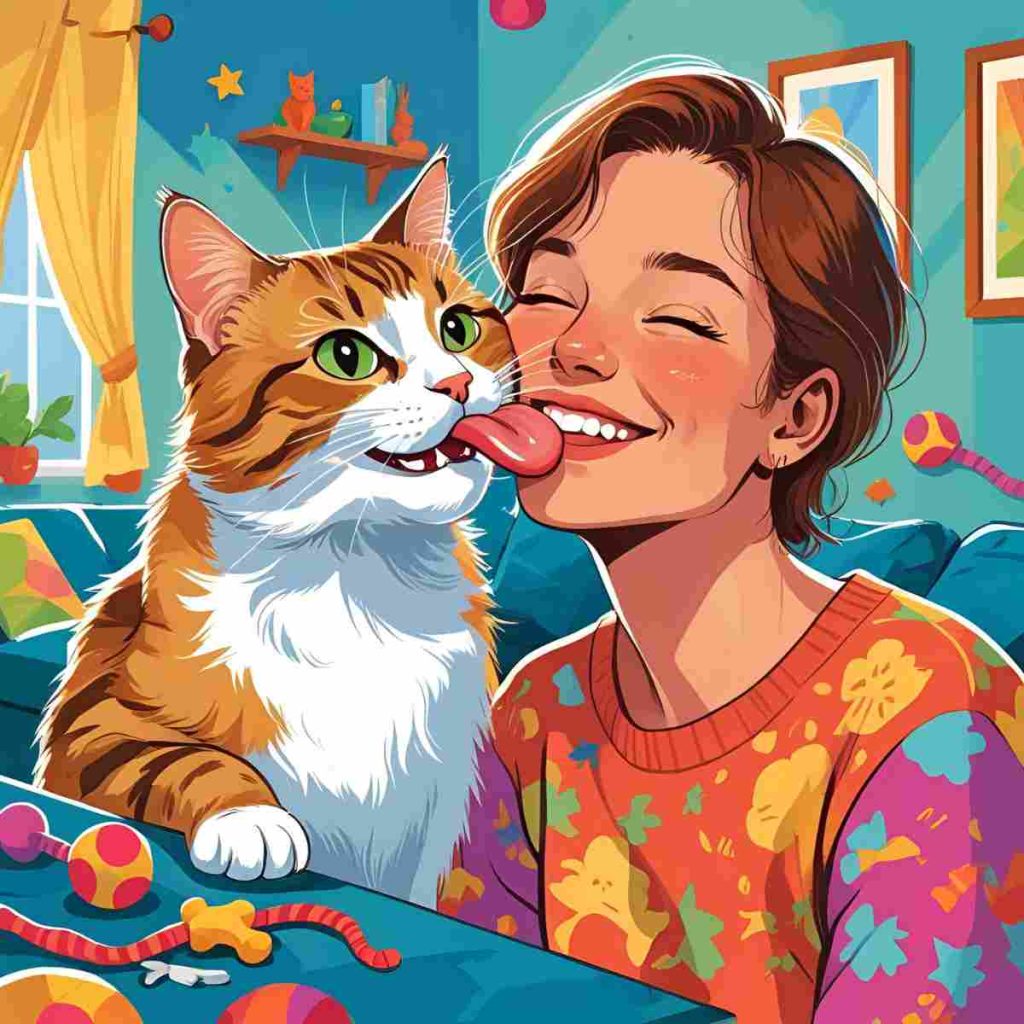
Why Cats Lick Their Owners?
Cats lick humans for several reasons. Firstly, licking shows affection. Your cat views you as family. By licking, they express love and trust. This mimics how cats groom each other. It’s a sign of bonding. Moreover, licking can be a stress reliever. Cats often groom to calm themselves. Licking might soothe their anxiety.
Additionally, cats use licking to mark territory. Their saliva contains scent markers. When they lick you, they claim you as theirs. This behavior stems from their wild instincts. Interestingly, cats may lick to taste something on your skin. Sweat or food residue can attract them. Therefore, licking can be exploratory. Understanding these reasons helps you connect with your cat.
Instinctual Behavior
Licking is deeply rooted in feline instincts. Kittens learn grooming from their mothers. This behavior carries into adulthood. Cats lick to maintain social bonds. In the wild, grooming strengthens group ties. When your cat licks you, they includes you in their circle. Consequently, this act reinforces their sense of belonging.
Furthermore, licking serves as a self-soothing mechanism. Cats groom when stressed or anxious. Licking, you might extend this calming ritual. For instance, changes in the household can trigger licking. Recognizing this helps you address their emotional needs. Thus, licking reflects both instinct and emotion.

Health and Hygiene Considerations
Sometimes, licking indicates health issues. Cats may lick excessively due to skin irritations. Allergies or fleas can cause discomfort. If your cat licks you more than usual, check their skin. Additionally, dental problems might prompt licking. Painful teeth or gums can alter behavior.
Moreover, nutritional deficiencies can lead to unusual licking. A lack of specific nutrients might cause them to seek salts. Your skin’s natural saltiness could attract them. Therefore, ensure their diet is balanced. Consulting a vet can rule out medical causes. Regular checkups keep your cat healthy. This ensures licking remains a normal behavior.
Top Reasons Your Cat Licking Behavior
Showing Love and Trust
Licking is a cat’s way of saying, “You’re part of my pack.” Mother cats groom their kittens to show care. Your cat may mimic this behavior to bond with you.
Marking Territory
Cats have scent glands in their tongues. By licking you, they leave their scent behind. This signals other animals that you’re “theirs.”
Enjoying Your Taste
Human skin has traces of salt, lotion, or food residue. Cats often lick these appealing flavors. Sweat after a workout can be especially tempting.
Stress or Anxiety
Excessive licking may indicate stress. Changes in routine or new pets can trigger this. Watch for other signs like hiding or aggression.
Seeking Attention
If licking gets your reaction, your cat may repeat it. They learn that licking earns them pets or playtime.
Habit or Boredom
Some cats lick simply out of habit. Without enough stimulation, they may groom you to pass time.
Health Concerns
In rare cases, compulsive licking signals medical issues. Allergies, pain, or skin conditions could be the cause. Consult a vet if it’s excessive.
How to Respond to Cat Licking Behavior?
Responding appropriately strengthens your bond. If your cat licks to show affection, reciprocate with gentle petting. This reinforces their trust in you. However, excessive licking might need boundaries. Gently redirect them to a toy. This distracts them without causing stress.
Additionally, keep your skin clean. Avoid lotions or foods that attract licking. If licking persists, observe their environment. Stressors like loud noises can increase licking. Creating a calm space reduces this behavior. Patience and understanding are key. Thus, you maintain a harmonious relationship.
Should You Stop Your Cat From Licking You?
Occasional licking is harmless and sweet. However, constant licking can become annoying or unhygienic. Redirect their attention with toys if it bothers you. Avoid punishing them, as it may cause stress. Instead, reward calm behavior with treats. If health concerns arise, seek veterinary advice promptly.
When to Seek Professional Help?
Excessive licking may signal problems. If your cat licks obsessively, consult a vet. Medical issues like allergies need attention. Behavioral changes also warrant professional advice. A sudden increase in licking could indicate stress. A behaviorist can offer tailored solutions.
Furthermore, monitor for other symptoms. Weight loss or lethargy paired with licking requires immediate care. Early intervention prevents serious issues. Therefore, stay proactive about your cat’s health. Regular vet visits ensure their well-being. This keeps lying within normal limits.
FAQs Why Is My Cat Licking Me? Cat Licking Behavior Quiz Tool
Why does my cat lick me, then bite me?
Cats may lick and then bite to show affection. This mimics playful grooming among cats. It’s usually not aggressive.
Is cat licking a sign of dominance?
Licking is rarely about dominance. Cats lick to bond or mark territory. It’s more about affection than control.
Can cat licking spread diseases?
Cat licking rarely spreads diseases. However, keep wounds clean to avoid infections. Regular vet checkups ensure safety.
Why does my cat lick my hair?
Cats lick hair to groom or bond. Hair’s texture might attract them. It’s often a sign of affection.
How do I stop excessive cat licking?
Redirect excessive licking with toys. Check for stress or health issues. Consult a vet if it persists.
Does cat licking mean they’re hungry?
Licking can indicate hunger if they seek food residue. Ensure regular feeding schedules. Consult a vet for changes.
Why does my cat lick me at night?
Nighttime licking often seeks attention or comfort. Cats may feel more affectionate then. Provide a cozy sleep environment.
Why does my cat lick me when I am sleeping?
Your cat may seek comfort, attention, or social interaction while you sleep.
Should I worry if my cat suddenly licks me more?
A sudden change can reflect stress, discomfort, or another behavioral change. Monitor other symptoms.
Can I redirect my cat when licking becomes excessive?
Yes. Calmly redirect your cat toward a toy or another suitable activity.