
Replacing a nose piece on glasses typically takes 5 to 10 minutes at home. Most nose pads attach through either a push-in or screw-in mechanism. Choosing the correct replacement type ensures a comfortable, secure fit. For detailed replacement steps and fit guidance, see this eyeglass nose-pad replacement guide.
Optical repair experience shows nose pads commonly wear out, discolor, or fall off after months of regular use. Prompt replacement restores comfort and prevents glasses from slipping.
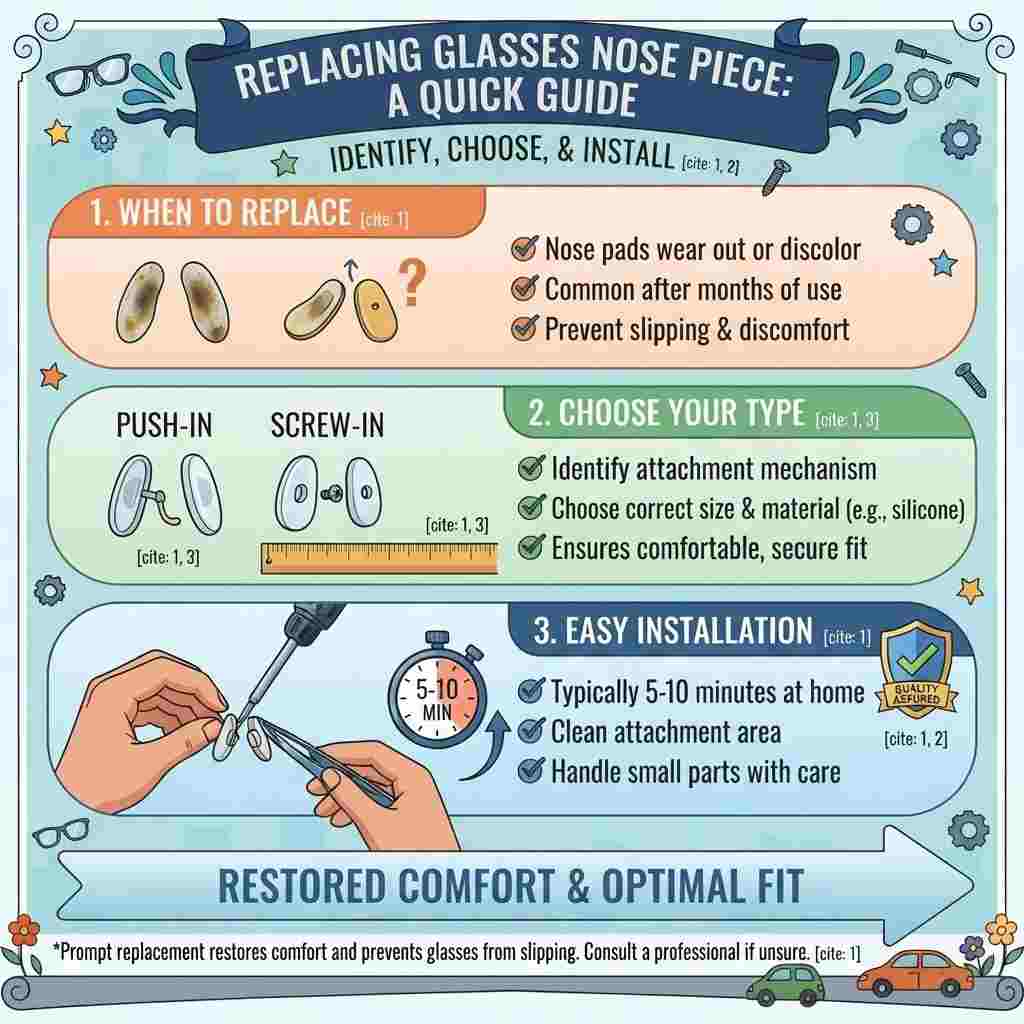
Table of Contents
Quick Answer
Nose piece replacement involves removing the old, worn pad and attaching a new one matching your frame’s mechanism. Push-in pads simply snap into place, while screw-in versions require a small screwdriver. Silicone replacements offer improved comfort over standard plastic options. For fitting guidance, the American Association for Pediatric Ophthalmology and Strabismus notes that frames and nose pads can be changed to improve fit. You can also compare this repair with our step-by-step glass replacement guide for another small-component replacement project.
Prerequisite note: identify whether your glasses use push-in or screw-in nose pads before purchasing replacements. The two types aren’t interchangeable.
Step-by-Step Replacement Process
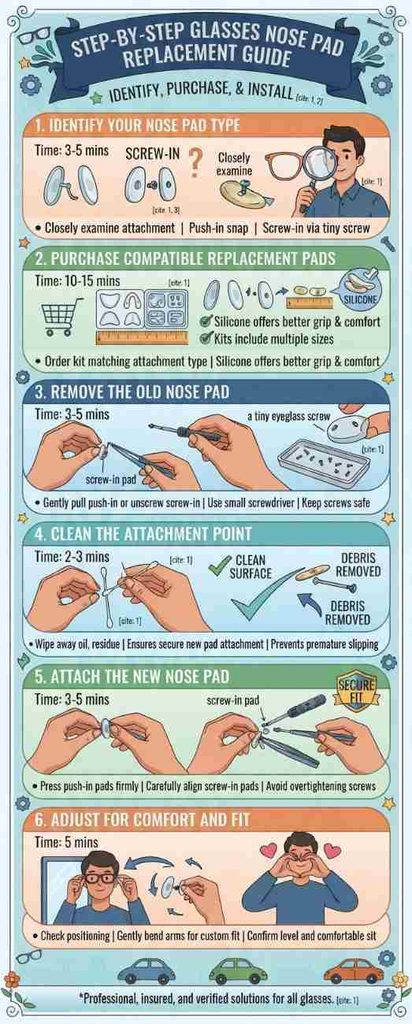
Step 1: Identify Your Nose Pad Type [Time: 3-5 mins]
Examine the current nose pad attachment mechanism closely. Push-in pads snap into a small post on the frame. Screw-in pads attach via a tiny screw and arm.
Step 2: Purchase Compatible Replacement Pads [Time: 10-15 mins]
Order a nose pad kit matching your identified attachment type. Silicone pads offer better grip and comfort than hard plastic options. Most kits include multiple sizes for a customized fit.
Step 3: Remove the Old Nose Pad [Time: 3-5 mins]
Gently pull off push-in pads or unscrew screw-in versions. Use a small eyeglass screwdriver for screw-type removal. Keep tiny screws in a safe, contained space.
Step 4: Clean the Attachment Point [Time: 2-3 mins]
Wipe away oil, residue, or debris from the mounting post. A clean surface ensures the new pad attaches securely. This step prevents premature slipping of the new pad.
Step 5: Attach the New Nose Pad [Time: 3-5 mins]
Press push-in pads firmly onto the mounting post until secure. Screw-in pads require careful alignment before tightening. Avoid overtightening screws, which can crack the pad or arm.
Step 6: Adjust for Comfort and Fit [Time: 5 mins]
Put on the glasses and check nose pad positioning. Gently bend the nose pad arms for a customized fit. Confirm the glasses sit level and comfortable on your face.
Why proper arm adjustment matters most: even correctly installed nose pads can feel uncomfortable if the arms aren’t positioned right. Misaligned pads cause pressure points or cause glasses to slide down. Taking time to adjust the arms ensures lasting comfort throughout the day.
Nose Pad Type Comparison Table
| Pad Type | Comfort Level | Best For |
|---|---|---|
| Standard plastic push-in | Moderate | Basic, budget-friendly replacement |
| Silicone push-in | High | Improved grip and comfort |
| Screw-in adjustable | High, customizable | Frames requiring precise fit |
Optical Specialist Insight: “Silicone pads make a bigger comfort difference than people expect,” says optician Dana Whitfield. “It’s a small, inexpensive upgrade.”
Tips for Longer-Lasting Nose Pads
Clean nose pads regularly to prevent oil and residue buildup. Replace pads proactively if you notice discoloration or hardening. Avoid exposing glasses to extreme heat, which can warp pad material.
Store glasses in a protective case when not in use. This prevents accidental damage to both pads and frames. Routine care extends the lifespan of your replacement nose pads significantly.
The Bigger Picture
Nose pad replacement remains one of the most common at-home eyewear repairs. Affordable replacement kits have made this maintenance accessible without professional help. This trend reflects growing consumer interest in extending eyewear lifespan affordably.
Correct identification and careful installation ensure a comfortable, lasting fit. Taking time to adjust pad arms makes a significant comfort difference. Following this guide keeps your glasses comfortable and properly fitted.
FAQs on Replacement Nose Piece for Glasses
Why do my new nose pads leave marks on my nose that the old ones didn’t?
New pads sometimes sit slightly differently until arms are properly adjusted. Harder pad material can also press more firmly before breaking in. Adjusting the arm angle carefully often resolves this pressure point issue. Switching to silicone pads if you started with plastic can help too. This adjustment period typically resolves within a few days of wear.
Can I use nose pads from a different eyewear brand on my current frames?
Yes, as long as the attachment mechanism and size match your frame. Push-in posts and screw-in arms follow fairly standard industry dimensions. Universal replacement kits work across most major eyewear brands generally. Confirm the mechanism type matches before purchasing any replacement kit. Brand-specific matching matters less than mechanism and size compatibility.
Why does one nose pad feel looser than the other after replacement?
Slight differences in mounting post wear can cause uneven pad tightness. This is common on frames that have seen significant previous use. Try adjusting the looser side’s arm slightly for a more secure fit. If looseness persists, that specific mounting post may need professional repair. This asymmetry is a common but usually fixable minor issue.
Does the color of silicone nose pads affect their comfort or durability?
No, color is purely a cosmetic choice without affecting silicone performance. Choose whatever color matches your frame or personal preference best. Material quality matters far more than color for comfort and longevity. Focus your selection criteria on silicone quality rather than color options. This decision comes down entirely to personal aesthetic preference.
Why did my screw-in nose pad screw strip before I could fully tighten it?
Stripped screws often result from using the wrong-sized screwdriver initially. Using excessive force on a tiny screw also risks stripping the threads. A proper eyeglass repair kit includes correctly sized screwdrivers for this purpose. If stripped, a professional optician can often extract and replace the screw. This prevents further frame damage from continued forceful attempts.
Can I adjust nose pad arms myself, or does this require professional tools?
Gentle adjustments are generally safe to attempt at home carefully. Use your fingers or small pliers to bend arms incrementally. Avoid excessive force, which risks breaking the delicate metal arm. For significant adjustments or if uncertain, an optician can help for free typically. Most optical shops offer this basic adjustment service at no charge.
Why do my glasses still slide down even with brand-new nose pads installed?
Sliding often relates to arm angle rather than the pad material itself. Pads angled too flat don’t grip the nose bridge effectively. Adjusting the arms to angle slightly inward often resolves this sliding issue. Frame weight and face shape also influence how well glasses stay in place. This adjustment, not just pad replacement, often solves persistent sliding problems.
Does humidity or sweat affect how long silicone nose pads last?
Yes, frequent moisture exposure can accelerate silicone pad degradation somewhat. This applies particularly to those who exercise regularly while wearing glasses. Cleaning pads after sweaty activities helps extend their functional lifespan. This is a normal wear factor rather than a defect in the product. Regular cleaning habits help manage this environmental factor effectively.
Why do some frames use fixed nose pieces that can’t be replaced individually?
Some budget or specific style frames use molded, non-adjustable nose bridges. This design choice reduces manufacturing cost and adjustment complexity. These frames typically can’t accept standard push-in or screw-in replacement pads. If comfort issues arise, frame replacement may become the practical solution. This design difference is worth checking before assuming pad replacement is possible.
Can worn nose pads actually affect my glasses’ overall lens alignment?
Yes, worn or uneven pads can cause glasses to sit crookedly on your face. This subtle tilt can affect how you look through your lenses slightly. Replacing worn pads often improves both comfort and visual alignment together. This connection between pad condition and proper lens positioning is often overlooked. Addressing worn pads promptly supports both comfort and optical performance.