
Soft washing a driveway uses low pressure paired with specialized chemical solutions to sanitize concrete surfaces. This method kills algae, mold, and mildew at the root without damaging the substrate. Unlike high-pressure blasting, soft washing prevents surface etching while delivering long-lasting cleanliness.
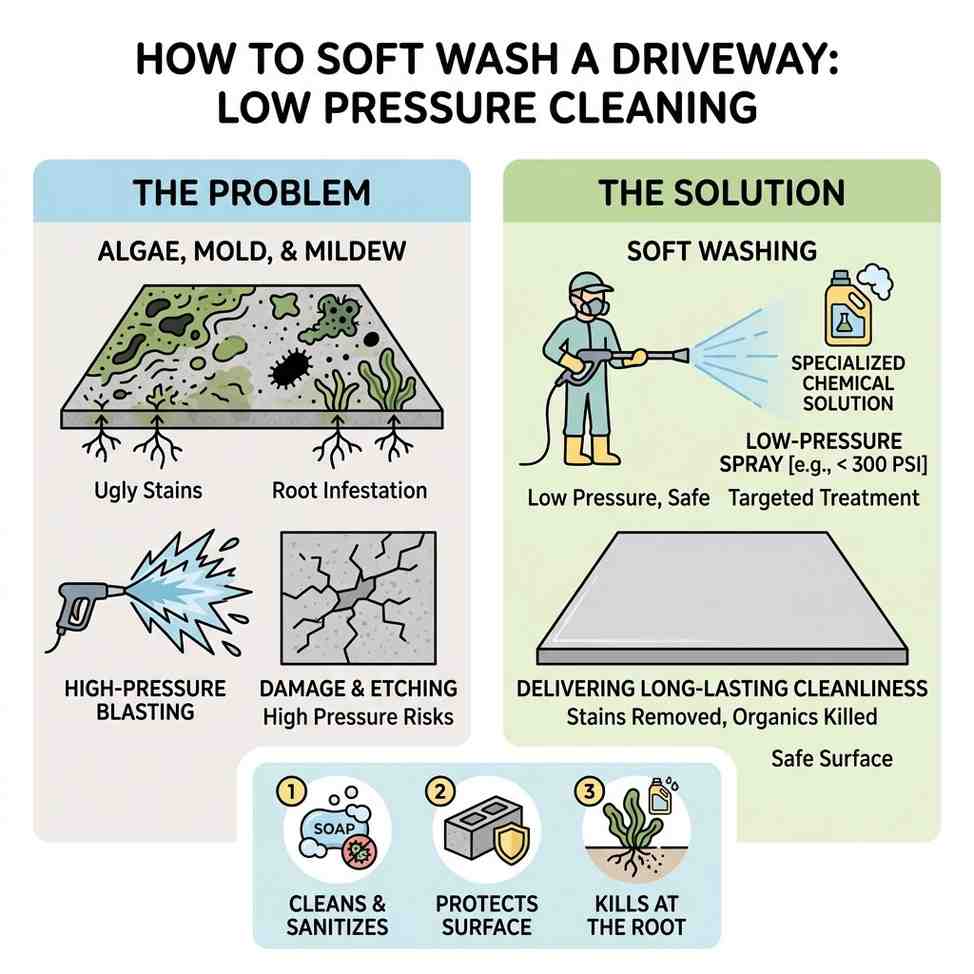
Table of Contents
Soft Wash vs. Standard Pressure Wash
Choosing the right cleaning method depends on your driveway material, stain severity, and surface age.
| Cleaning Method | Primary Application | Pressure Range | Chemical Usage | Surface Risk |
| Soft Washing | Organic growth, delicate stone, sealed concrete | 150 – 300 PSI | High (Algaecides & Surfactants) | Extremely Low |
| Standard Power Washing | Dirt buildup, unsealed old concrete | 1,500 – 3,000 PSI | Low to None | Moderate (Etching Risk) |
| Surface Cleaner Machine | Uniform flat work, heavy grime | 2,500 – 3,500 PSI | Optional Pre-treatment | Low to Moderate |
Required Tools & Safety Gear
Gather your equipment before mixing any chemicals.
- Chemical Sprayer: Pump sprayer or dedicated soft wash system
- Cleaning Solution: 10% to 12.5% Sodium Hypochlorite (pool shock)
- Surfactant: Detergent designed to stick to sloped surfaces
- Protective Gear: Safety goggles, chemical-resistant gloves, and boots
- Garden Hose: Clean water source for rinsing and plant pre-soaking
How to Soft Wash a Driveway?
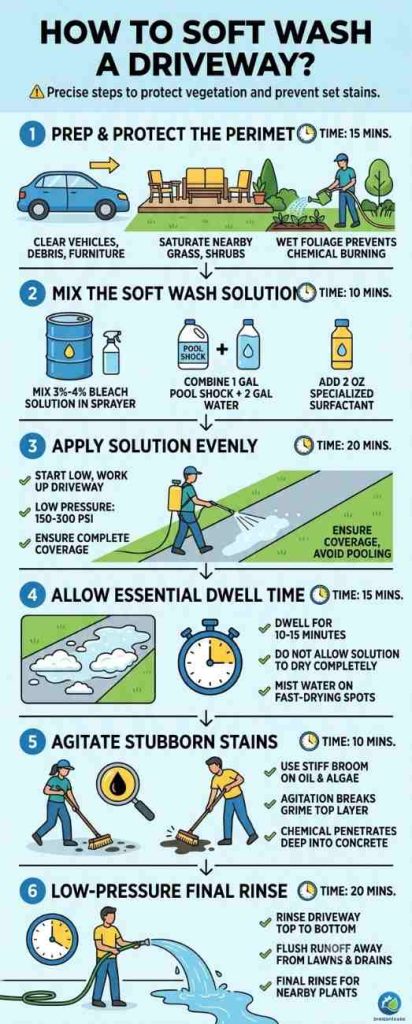
Follow this sequence precisely. Altering these steps can kill surrounding vegetation or set persistent stains permanently.
1.Step 1: Prep and Protect the Perimeter: [Time: 15 mins.]
- Clear the driveway of vehicles, debris, and outdoor furniture.
- Thoroughly saturate all nearby grass, shrubs, and plants with clean water.
- Wet foliage prevents chemical burning if accidental overspray occurs.
2.Step 2: Mix the Soft Wash Solution: [Time: 10 mins.]
- Mix a 3% to 4% active bleach solution in your sprayer.
- Combine 1 gallon of pool shock with 2 gallons of water.
- Add 2 ounces of specialized surfactant to boost cling time.
3.Step 3: Apply Solution Evenly: [Time: 20 mins.]
- Start applying the mixture from the lowest point of the driveway working upward.
- Maintain low pressure between 150 and 300 PSI.
- Ensure complete coverage without creating large pooling areas.
4.Step 4: Allow Essential Dwell Time: [Time: 15 mins.]
- Let the cleaning solution dwell on the concrete for 10 to 15 minutes.
- Do not allow the chemical solution to dry out completely.
- Mist light clean water over fast-drying spots if necessary.
5.Step 5: Agitate Stubborn Stains: [Time: 10 mins.]
- Use a stiff-bristled broom on oil spots or heavy black algae.
- Agitation breaks the top layer of grime.
- This allows the chemical to penetrate deeper into porous concrete.
6.Step 6: Low-Pressure Final Rinse: [Time: 20 mins.]
- Rinse the entire driveway thoroughly with fresh water from top to bottom.
- Flush all runoff completely away from lawn edges and storm drains.
- Rinse nearby plants one final time to ensure safety.
Why Dwell Time Is Critical: Sodium hypochlorite requires active contact time to break down organic spores at a cellular level. Rinsing too early leaves living roots inside porous concrete. This causes algae to return within weeks instead of years.
Pro Tips for Maximum Curb Appeal
“High pressure strips away top-layer cream from concrete, causing structural pitting. Chemical soft washing kills biological growth without destroying the matrix.”
— Jim Crawford, Exterior Restoration Specialist
- Check the Weather: Never soft wash under direct midday sun. Heat evaporates the solution before chemicals sanitize the surface.
- Treat Oil First: Soft washing eliminates organic growth, but oil requires an enzymatic degreaser prior to bleaching.
- Seal Concrete Post-Wash: Apply a siloxane-based penetrating sealer 48 hours after washing to block future water intrusion.