
Yes, you can absolutely get Invisalign with wisdom teeth still present in your mouth. Your orthodontist will evaluate your third molars using 3D X-rays to check their alignment and health. If your wisdom teeth are not causing pain, crowding, or decay, you can proceed with aligner treatment without removing them. However, if they are impacted or interfering with tooth movement, extraction might be recommended before starting.
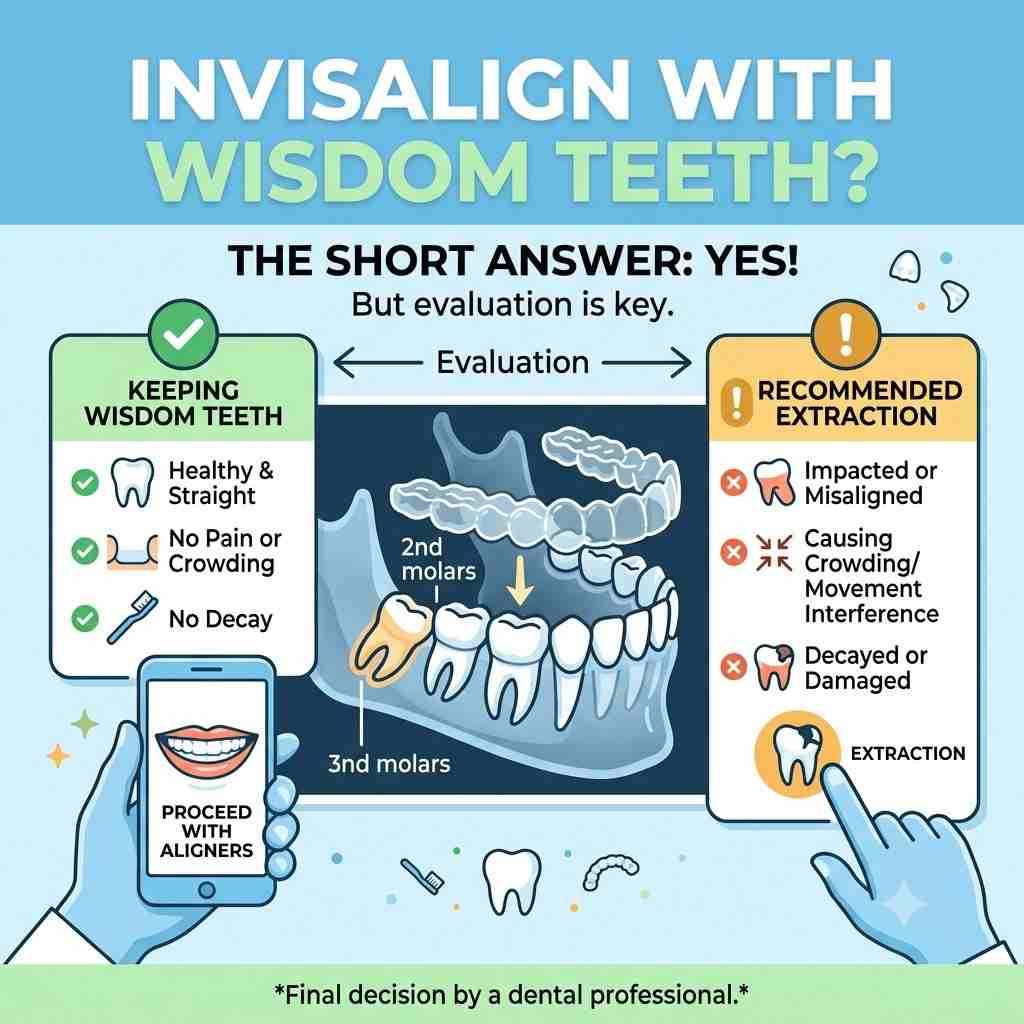
If these teeth are causing discomfort or disrupting the alignment process, they may need to be extracted before starting invisalign treatment. In this article, we will discuss in detail the relationship between wisdom teeth and invisalign treatment. We will also look at the various options available for patients with wisdom teeth when it comes to getting braces.
In the end, you will have a better understanding of how invisalign works with wisdom teeth and what to expect from the treatment process.
Table of Contents
What Are Wisdom Teeth?
Wisdom teeth are the third molars we get at the back of our mouth. Most people develop these teeth by the age of 17-25. These teeth were helpful for our ancestors who ate raw diets, but now our jaws have adapted to modern diets.
As a result, wisdom teeth cause a lot of trouble for many people. Because of their late arrival and limited space in the mouth, they create misalignment and other dental problems. Invisalign aligners can help straighten misaligned teeth, but when it comes to wisdom teeth, it’s best to have them removed before starting treatment.
If wisdom teeth are impacting your bite or causing overcrowding, consult your orthodontist.
🦷 Invisalign & Wisdom Teeth Eligibility Checker
Recommended Next Steps
This checker provides educational guidance only and cannot diagnose dental or orthodontic conditions. Invisalign treatment planning requires a clinical examination and dental X-rays performed by a qualified dentist or orthodontist.
What Is Invisalign?
Invisalign is a form of orthodontic treatment that uses clear plastic aligners to straighten teeth. It is a popular alternative to traditional braces due to its discreet appearance. Invisalign works by gradually shifting teeth into their desired position through a series of custom-made aligners.
Each aligner is worn for about two weeks before being replaced with the next one in the series. To be eligible for invisalign treatments, patients should have healthy teeth and gums, and their wisdom teeth should not be causing any issues.
Invisalign can be a great option for anyone looking to improve the appearance of their smile without the hassle and appearance of metal braces.
Invisalign With Wisdom Teeth
If you have wisdom teeth, you might wonder if you can still get invisalign treatment. Having wisdom teeth won’t necessarily disqualify you from invisalign, but it can affect the treatment. If your wisdom teeth are impacted or causing problems, your orthodontist may recommend removing them before continuing with invisalign.
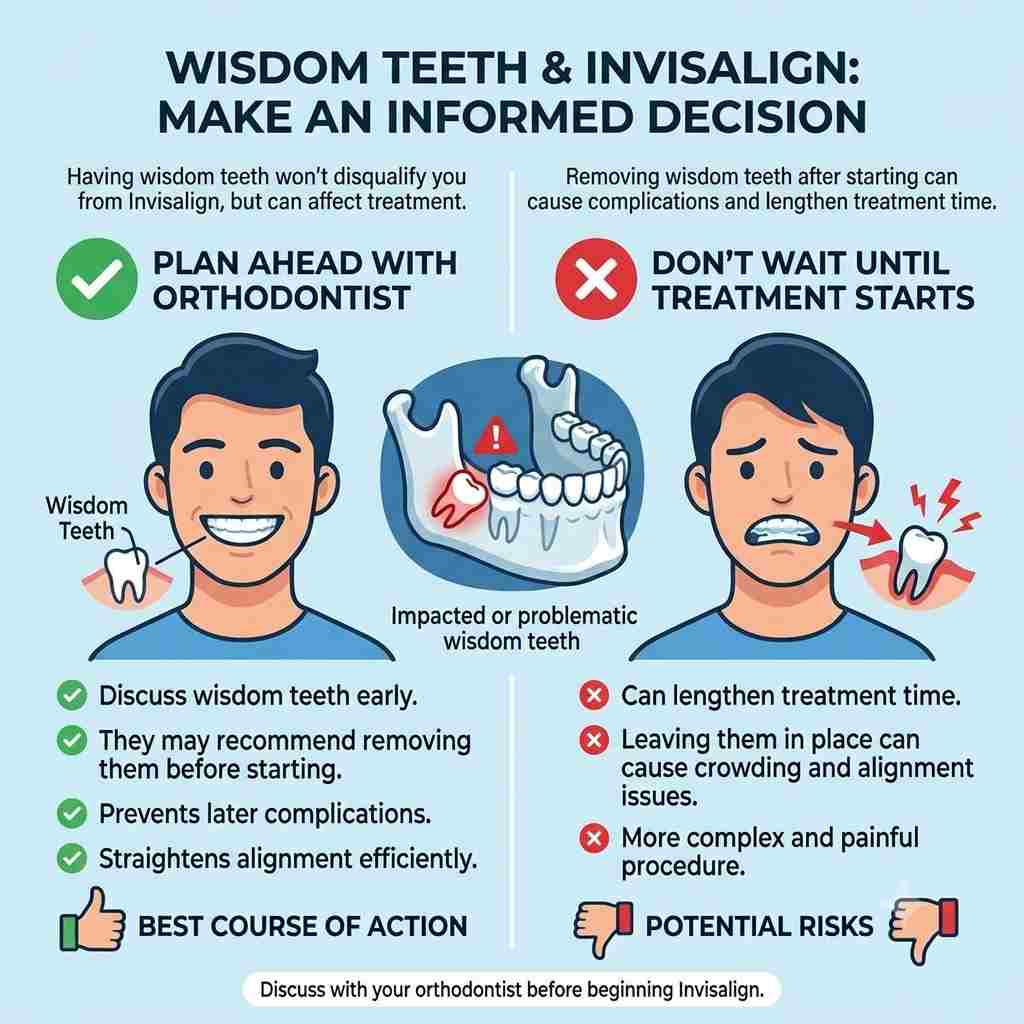
Removing wisdom teeth after starting treatment can cause complications and lengthen the treatment time. Leaving wisdom teeth in place can also impact the alignment and cause crowding. It’s important to discuss your wisdom teeth with your orthodontist before beginning invisalign to determine the best course of action.
When Can You Keep Your Wisdom Teeth During Invisalign?
You do not always need oral surgery before starting your smile transformation. In fact, keeping your third molars is often the preferred choice if they are healthy.
Here are the primary scenarios where you can keep your wisdom teeth:
- Fully Erupted and Healthy: Your wisdom teeth grew in straight and have no decay.
- Out of the Way: The teeth do not interfere with the planned movement of your other teeth.
- Sufficient Space: Your jaw has enough room to accommodate all your teeth without overcrowding.
- Asymptomatic: You experience no pain, swelling, or gum inflammation around the back molars.
When Is Removal Necessary Before Aligners?
Sometimes, wisdom teeth pose a direct threat to your orthodontic goals. In these situations, your dental professional may recommend extraction before you receive your first set of trays.
| Scenario / Condition | Orthodontic Recommendation | Impact on Treatment Plan |
|---|---|---|
| Impacted Wisdom Teeth | Extract before starting Invisalign treatment | Prevents root damage, pain, and unwanted pressure on adjacent teeth. |
| Severe Overcrowding | Extract to create necessary arch space | Frees up crucial space in the arch to align crowded front teeth properly. |
| Active Decay or Gum Disease | Treat or extract prior to wearing aligners | Ensures oral cavity is healthy before applying orthodontic forces. |
| Healthy, Fully Erupted Molars | Keep molars and monitor throughout treatment | Molars act as stable anchors without delaying aligner progress. |
Impacted third molars can push against neighboring teeth, causing pain and shifting. If your orthodontist needs to move your molars backward to fix a bite issue, those extra back teeth will simply be in the way. Removing them first creates the space required for proper alignment.
Alternatives To Invisalign
Invisalign is a popular choice for teeth alignment, but some wonder if it’s compatible with wisdom teeth. Fortunately, invisalign can still work with wisdom teeth, but it depends on the individual case. There are also alternative teeth alignment options available for those who can’t use invisalign.
One alternate option is traditional metal braces which can effectively straighten teeth but are more visible. Clear braces, lingual braces, and ceramic braces are other options to consider. Each treatment has its benefits and drawbacks, and it’s essential to consult with a dental professional to determine which option would suit you best.
While invisalign’s comfort and flexibility make it a preferred choice, other treatments may be more appropriate depending on the individual’s dental needs.
Key Benefits of Treating Invisalign and Wisdom Teeth Together
Addressing your third molars while planning aligner therapy offers distinct clinical advantages.
- Precise Digital Planning: Software maps out exact tooth movements from start to finish.
- Preventing Relapse: Addressing crowding early stops future shifting after treatment ends.
- Optimized Oral Hygiene: Straight teeth are much easier to brush and floss effectively.
Expert Tip: Never skip your initial panoramic X-ray. A hidden, impacted wisdom tooth can ruin months of orthodontic progress if left unchecked.
What to Expect During Your Orthodontic Consultation
Your journey begins with a comprehensive evaluation. Your provider will thoroughly examine your mouth and take digital scans.
First, they check the position of your third molars relative to your dental arch. Second, they determine whether wisdom teeth before Invisalign need removal or simply monitoring. Finally, they design a custom treatment plan tailored to your goal.
If you need extractions, you will typically wait two to four weeks before starting aligner trays. This healing buffer ensures your gums recover fully before gentle force is applied to your teeth.
Practical Tips for Success
If you choose to move forward with Invisalign with wisdom teeth, follow these essential care guidelines:
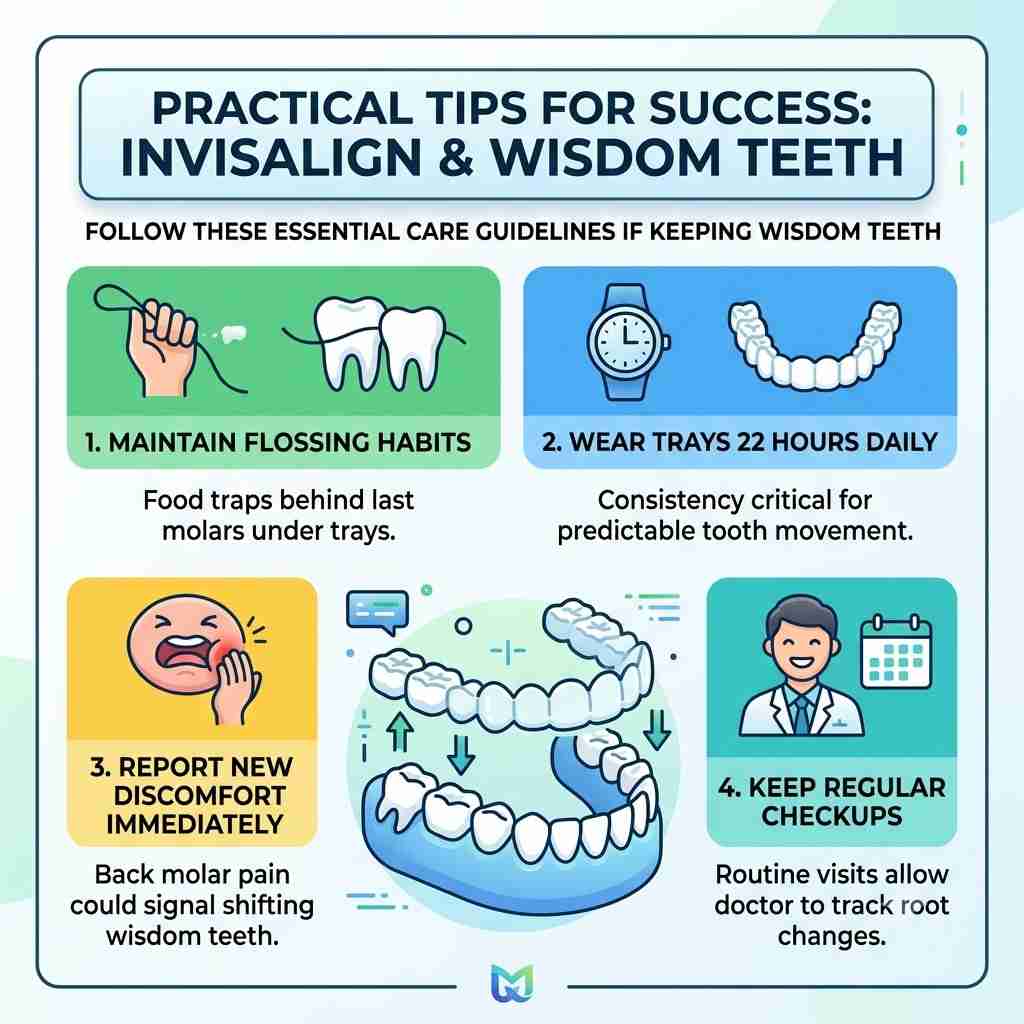
- Maintain Flossing Habits: Food easily gets trapped behind the last molars under clear trays.
- Wear Trays 22 Hours Daily: Consistency is critical for predictable tooth movement.
- Report New Discomfort Immediately: Pain near your back molars could signal shifting wisdom teeth.
- Keep Regular Checkups: Routine visits allow your doctor to track underlying root changes.
FAQs For Can I Get Invisalign With Wisdom Teeth
Can I Get Invisalign Even With Wisdom Teeth?
Yes, you can get invisalign with wisdom teeth, but it depends on the position and condition of your teeth.
Do I Need To Remove My Wisdom Teeth Before Invisalign?
It depends on your dentist’s recommendation and the position of your wisdom teeth. Removal is not always necessary.
Can Wisdom Teeth Affect The Success Of Invisalign Treatment?
Yes, impacted wisdom teeth can impede invisalign treatment’s progress, causing teeth to move unpredictably or fail to move altogether.
Does Invisalign Treatment Worsen Wisdom Teeth Pain?
Invisalign may temporarily increase the pain caused by wisdom teeth, but it is not a direct cause and shouldn’t worsen it significantly.
How Do I Manage Wisdom Teeth Pain During Invisalign Treatment?
Maintain good oral hygiene, avoid hard and crunchy foods, use an ice pack, and take over-the-counter pain medications to manage wisdom teeth pain.
Will my wisdom teeth shift my teeth after Invisalign?
Properly worn retainers prevent your teeth from shifting, even if wisdom teeth erupt later. Always wear your custom retainers as directed by your orthodontist.
Can Invisalign move wisdom teeth themselves?
Invisalign aligners rarely move wisdom teeth directly. Usually, aligners move the front teeth and bicuspids while leaving third molars in place.
Is the treatment process more painful with wisdom teeth?
No, the presence of healthy third molars does not increase general aligner discomfort. You may feel mild pressure during the first few days of a new tray.
Final Thoughts
You do not have to let your third molars stand between you and a confident smile. Getting Invisalign with wisdom teeth is a safe, effective, and common path for thousands of patients today.
Schedule a consultation with an experienced orthodontist. They will capture 3D scans, evaluate your molars, and build a personalized plan for your perfect smile.