
Toyota Sequoia timing belt replacement typically costs between $600 and $1,200. Labor makes up the majority of this cost due to the V8 engine’s complex layout. Most manufacturers recommend replacement every 90,000 to 100,000 miles.
Auto repair industry data shows Sequoia timing belt jobs take significantly longer than four-cylinder vehicles. This labor intensity drives up the overall cost estimate.
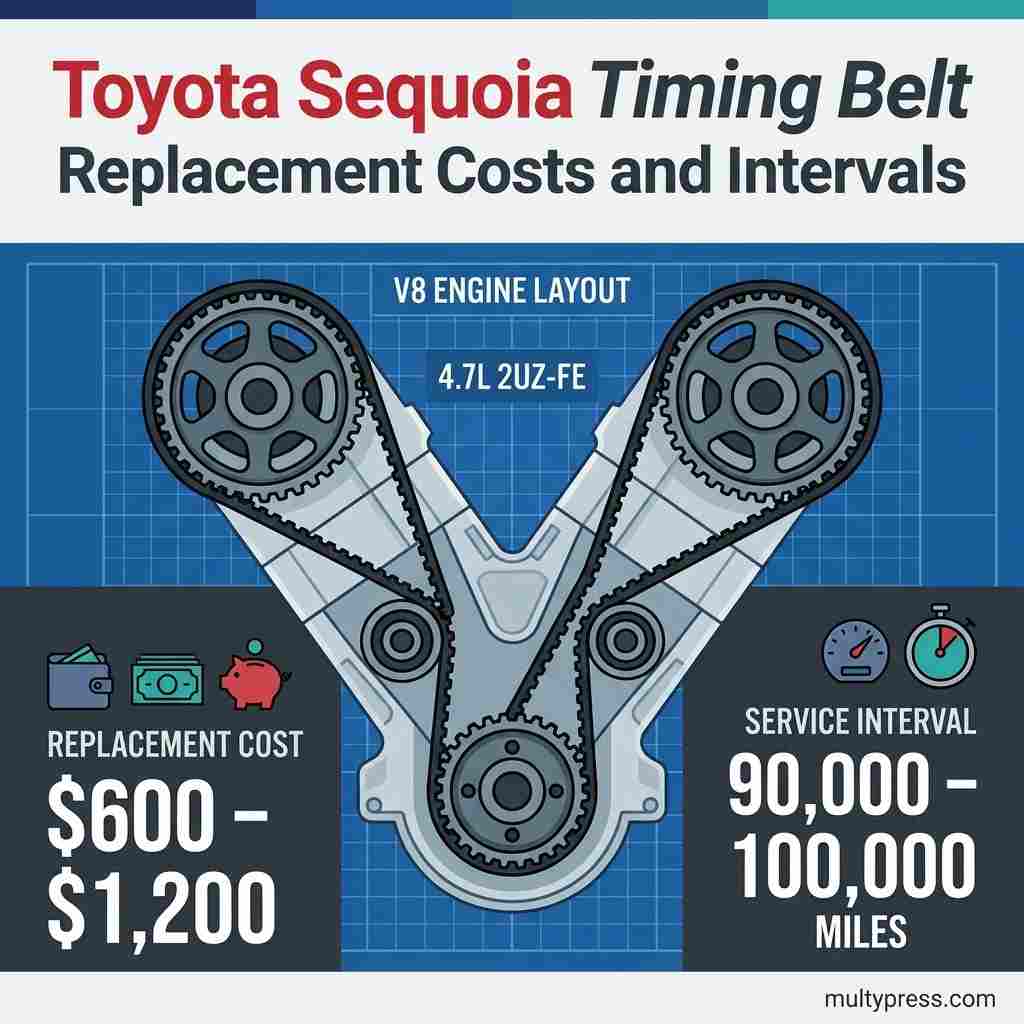
Table of Contents
Quick Answer
Parts alone typically cost $150 to $300 for a quality timing belt kit. Labor adds $450 to $900 depending on your location and shop rates. Replacing the water pump simultaneously is highly recommended and included in most quotes.
Prerequisite note: check your specific model year, since some Sequoia engines use timing chains instead of belts. Chain-equipped models don’t require this scheduled service.
Step-by-Step Replacement Process
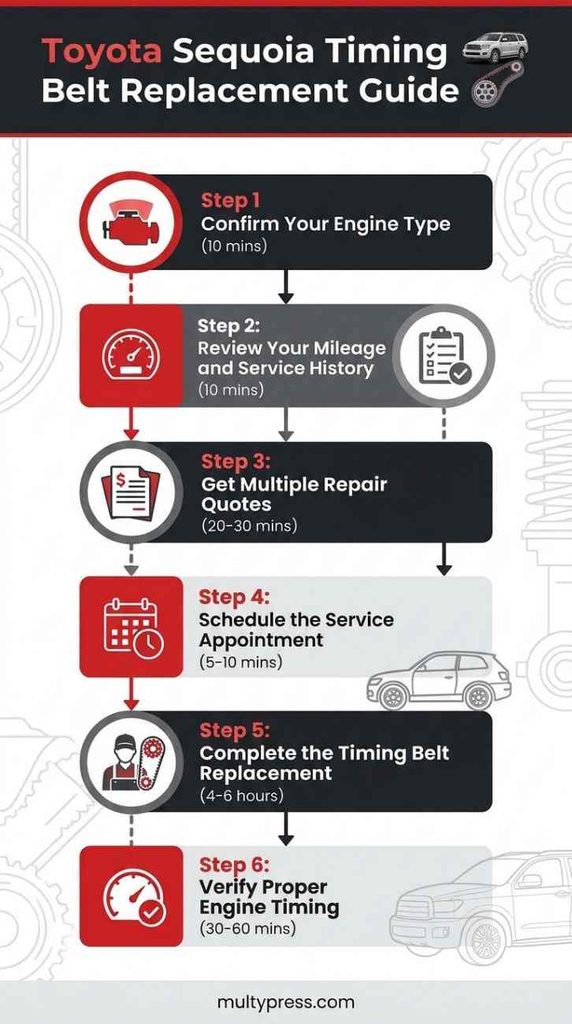
Step 1: Confirm Your Engine Type [Time: 10 mins]
Check your owner’s manual or VIN for engine specifications. Some Sequoia years use timing chains, not belts. This step prevents unnecessary service requests.
Step 2: Review Your Mileage and Service History [Time: 10 mins]
Confirm whether you’re approaching the 90,000 to 100,000 mile interval. Skipping this scheduled service risks catastrophic engine damage if the belt fails. Check previous maintenance records if available.
Step 3: Get Multiple Repair Quotes [Time: 20-30 mins]
Contact both dealership and independent shops for pricing. Ask specifically about water pump replacement bundling. Compare parts quality and warranty terms across quotes.
Step 4: Schedule the Service Appointment [Time: 5-10 mins]
Book your appointment with your chosen shop. Confirm expected completion time, typically 4 to 6 hours. Ask about loaner vehicles if the job takes a full day.
Step 5: Complete the Timing Belt Replacement [Time: 4-6 hours]
Technicians remove engine components to access the timing belt. The old belt, tensioner, and often water pump get replaced together. This precision work requires experienced technicians.
Step 6: Verify Proper Engine Timing [Time: 30-60 mins]
Technicians confirm correct belt alignment before finishing. Improper timing can cause serious engine damage. This final check ensures safe, reliable operation.
Why replacing the water pump simultaneously matters most: the water pump sits behind the timing belt in most Sequoia engines. Replacing it separately later means paying for the same labor twice. Bundling both repairs together saves significant money over time.
Cost Comparison Table
| Service Type | Average Cost | Includes Water Pump |
|---|---|---|
| Timing belt only | $600-$800 | No |
| Timing belt plus water pump | $800-$1,200 | Yes |
| Dealership full service | $900-$1,200 | Usually yes |
Industry insight: “Skipping the water pump during timing belt service is a false economy,” says master technician Paul Reeves. “You’ll pay for labor again within a year or two.”
Ways to Save on Replacement Costs
Bundle related services like the water pump and tensioner during one appointment. Compare independent shops against dealership pricing for potential savings. Ask about aftermarket parts that meet OEM specifications.
Avoid delaying this service past the recommended interval. A failed timing belt can cause severe engine damage on interference engines. Addressing this proactively saves thousands compared to engine repair costs.
The Bigger Picture
Timing belt maintenance remains one of the most critical scheduled services for V8 Toyota engines. Skipping this service ranks among the costliest maintenance mistakes owners make. Understanding realistic costs helps Sequoia owners budget and plan accordingly.
Proactive scheduling based on mileage protects your engine long-term. Bundling related repairs saves both time and money. Following manufacturer intervals ensures your Sequoia stays reliable for years to come.
Cost estimates and mileage intervals here are general figures. Confirm exact specifications for your model year against your owner’s manual or a Toyota service center.
FAQs on Toyota Sequoia Timing Belt Replacement Cost
Why did my dealership quote nearly double what an independent shop offered?
Dealerships typically use OEM parts and factory-trained technicians, raising both material and labor costs. Independent shops often use quality aftermarket parts at lower labor rates. Both can provide reliable service if the shop has V8 timing belt experience specifically. Compare warranty terms alongside price when weighing this significant cost difference. This price gap reflects genuine differences in parts sourcing and overhead.
Can I extend my timing belt service interval if I don’t drive many miles yearly?
Timing belts degrade from age and heat cycles, not just mileage accumulation. Manufacturers typically specify intervals as whichever comes first, mileage or years. Low-mileage vehicles often still need replacement around the 7 to 10 year mark. Rubber components deteriorate over time regardless of actual driving distance. Check your specific manual for the time-based interval alongside mileage.
Why does my mechanic want to replace additional parts beyond just the belt and water pump?
Tensioners, idler pulleys, and seals often wear alongside the timing belt itself. Replacing only the belt while leaving worn tensioners risks premature failure again. This comprehensive approach costs more upfront but prevents repeat labor costs later. Ask your mechanic to explain which specific components they recommend and why. This thoroughness typically reflects genuine best practice, not unnecessary upselling.
Does a Sequoia timing belt failure always cause catastrophic engine damage?
This depends on whether your specific engine is an interference or non-interference design. Interference engines risk valve and piston damage if the belt fails suddenly. Non-interference engines simply stop running without this additional damage risk. Most Sequoia V8 engines are interference designs, making this risk significant. Confirm your specific engine type to understand your actual failure risk level.
Why do timing belt costs vary so much between different Sequoia model years?
Engine design changes across model years can affect labor complexity significantly. Some years require more extensive disassembly to access the timing components. Parts costs can also vary based on availability for older or newer models. This explains why quotes for seemingly similar Sequoias can differ notably. Always get quotes specific to your exact model year for accuracy.
Can I do a partial timing belt job to save money right now and finish later?
This isn’t recommended, since most labor cost comes from accessing the components. Doing the job partially still requires the same extensive disassembly process. You’d essentially pay for labor twice by splitting this single job. Complete the full recommended service in one appointment for genuine cost efficiency. Partial approaches rarely save money in timing belt scenarios specifically.
Why does my Sequoia’s timing belt cost more than a similar Toyota Tundra?
The Sequoia and Tundra share engine platforms in many cases, but body work can differ. Access complexity in the engine bay layout varies slightly between these platforms. This can result in minor labor time differences between otherwise similar vehicles. Confirm your specific engine code when comparing costs across different Toyota models. Platform sharing doesn’t guarantee identical labor requirements always.
Does using synthetic oil affect how long my timing belt lasts before replacement?
Oil type doesn’t directly affect timing belt longevity in most cases. Timing belts operate outside the oil system in a separate, dry environment. Engine oil leaks onto the belt area can accelerate degradation though. Address any oil leaks promptly to protect your timing belt’s expected lifespan. This is a less common but still relevant maintenance consideration.
Why do some shops recommend replacing the drive belts at the same time?
Accessory drive belts are separate from the timing belt but often show similar age-related wear. Since the engine is already partially disassembled, replacing both saves future labor costs. This isn’t always necessary if your drive belts are relatively new already. Ask your mechanic to inspect drive belt condition before agreeing to this addition. This bundling makes sense mainly when both components show genuine wear.
Can I verify my Sequoia’s timing belt was actually replaced if I bought it used?
Yes, request maintenance records from the previous owner or dealership history. A visual inspection by a trusted mechanic can also reveal belt condition. If records are unavailable and mileage is unknown, proactive replacement is often wise. This protects against unknown maintenance history on a used vehicle purchase. This verification step provides valuable peace of mind for used vehicle buyers.