
Replacing a whole house fan belt typically takes 30 to 45 minutes with basic tools. A worn or broken belt often causes the fan to run quietly without moving air. Replacement belts generally cost between $10 and $30 depending on fan size.
Home maintenance experience shows fan belts commonly wear out after years of seasonal use and attic heat exposure. Prompt replacement restores proper airflow and ventilation.
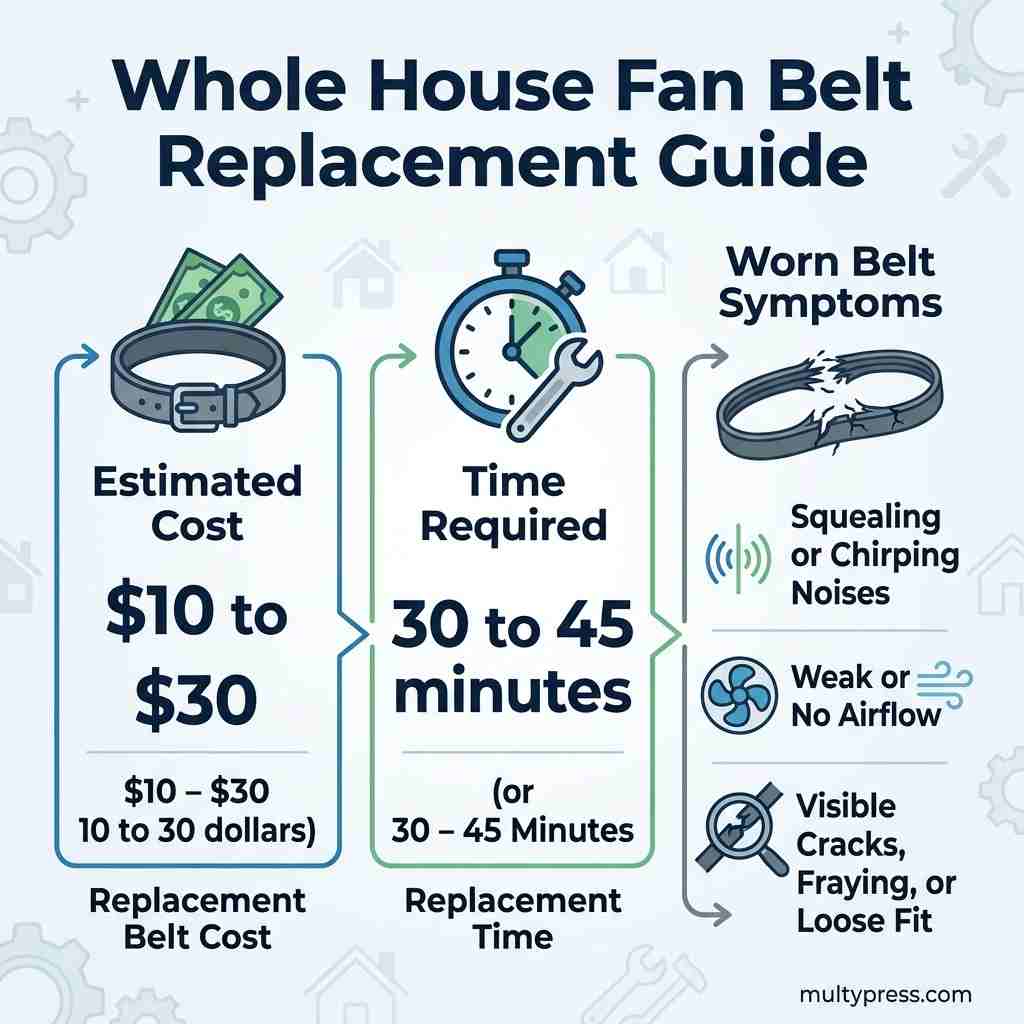
Table of Contents
Quick Answer
Belt replacement involves accessing the fan motor housing, removing the worn belt, and installing a new one with proper tension. Most whole house fans use a straightforward motor-to-blade pulley system. Correct alignment and tension are essential for quiet, effective operation.
Safety note: always turn off power at the breaker before beginning any fan repair work. This prevents accidental startup during the process.
Step-by-Step Replacement Process
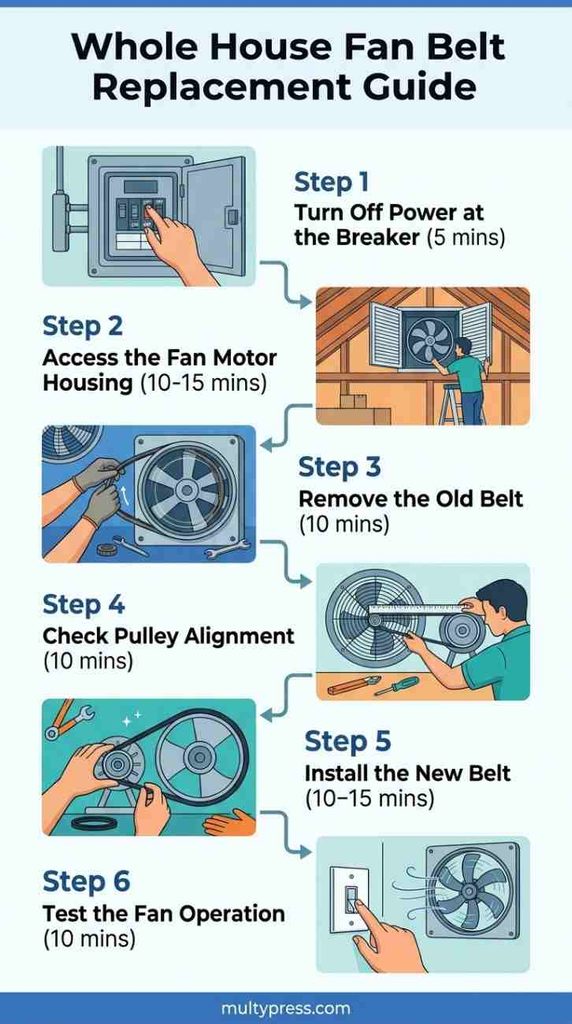
Step 1: Turn Off Power at the Breaker [Time: 5 mins]
Shut off electrical power to the fan completely. This step is essential for safe repair work. Never rely solely on a wall switch for this precaution.
Step 2: Access the Fan Motor Housing [Time: 10-15 mins]
Remove the attic access panel or fan housing cover. Ensure stable footing in the attic before beginning any work. Attic spaces can be hazardous without proper caution.
Step 3: Remove the Old Belt [Time: 10 mins]
Locate the belt connecting the motor and fan blade pulleys. Slide the worn belt off carefully, noting its routing path. Inspect both pulleys for wear or misalignment.
Step 4: Check Pulley Alignment [Time: 10 mins]
Verify both pulleys line up properly with each other. Misalignment causes premature belt wear even with new parts. Adjust the motor mount if alignment appears off.
Step 5: Install the New Belt [Time: 10-15 mins]
Route the new belt around both pulleys exactly as before. Ensure proper tension without over-tightening the connection. Confirm the belt sits evenly within pulley grooves.
Step 6: Test the Fan Operation [Time: 10 mins]
Restore power and run the fan through its speed settings. Listen for unusual noise or signs of slipping. Confirm smooth, quiet operation before closing the access panel.
Why pulley alignment matters most: misaligned pulleys cause belts to wear unevenly and fail prematurely, even when properly tensioned. This often gets overlooked during quick belt swaps. Checking and correcting alignment ensures your new belt lasts as long as it should.
Repair Comparison Table
| Approach | Time Required | Best For |
|---|---|---|
| DIY belt-only replacement | 30-45 mins | Basic belt wear |
| DIY belt plus alignment check | 45-60 mins | Older fans, visible wobble |
| Professional HVAC service | 1-2 hours | Complex motor issues |
Home maintenance insight: “Alignment gets ignored more than any other step,” says HVAC technician Daryl Fenton. “A misaligned belt will fail again within months.”
Maintenance Tips to Prevent Future Issues
Inspect the belt seasonally before heavy summer fan use begins. Clean dust and debris from the motor and pulley area regularly. Listen for squealing or slipping sounds, which signal early wear.
Address unusual noises promptly before complete belt failure occurs. Early attention often means a simpler, less costly repair. Routine seasonal checks extend the lifespan of your whole house fan system.
The Bigger Picture
Whole house fans remain a popular, energy-efficient cooling option in many climates. Belt replacement remains one of the most common maintenance needs for these systems. Understanding proper technique helps homeowners save on professional service costs.
Careful, methodical repair work ensures lasting results and quiet operation. Following correct routing and alignment specifications prevents repeat failures. This guide equips you to handle fan belt replacement confidently at home.
FAQs on Whole House Fan Belt Replacement
Why does my whole house fan sound louder right after I install a new belt?
New belts sometimes run slightly louder until they fully seat into the pulley grooves. This break-in noise typically decreases after a short period of use. Persistent loud noise beyond this initial period suggests tension or alignment problems. Check both factors if the noise doesn’t improve within the first few uses. This distinction helps you know when further adjustment is needed.
Can extreme attic heat during summer affect how long my fan belt lasts?
Yes, sustained high attic temperatures accelerate rubber belt degradation significantly. This explains why fan belts often need replacement more frequently than other home belts. Improving attic ventilation generally can help moderate this extreme heat exposure. This is a genuine environmental factor affecting belt longevity in whole house fan systems. Consider this when budgeting for periodic seasonal maintenance.
Why did my fan belt break again just one season after replacement?
Repeat failures often indicate an underlying pulley alignment or motor mount issue. Check that both pulleys line up properly and the motor mount remains secure. Attic heat exposure, as noted, also contributes to faster wear generally. Addressing alignment thoroughly during this replacement helps prevent another quick failure. This combination approach targets the actual root cause more effectively.
Does the size of my whole house fan affect belt replacement difficulty?
Yes, larger fans often have bigger, heavier components requiring more careful handling. Access can also be more challenging in larger fan housings within tight attic spaces. Smaller residential fans typically offer more straightforward access and lighter components. Budget extra time and caution for larger, more powerful whole house fan systems. This consideration helps set realistic expectations before starting the repair.
Why do some whole house fans use two belts instead of just one?
Larger or higher-capacity fans sometimes use dual belts for increased power transfer. This design distributes the mechanical load across two belts rather than one. Check your specific fan’s configuration before ordering replacement parts. Dual-belt systems typically need both replaced together if one shows significant wear. This design difference matters for accurate parts ordering and repair planning.
Can I test belt tension without specialized tools during a whole house fan repair?
Yes, a basic manual check works well for most residential whole house fans. Press down on the belt midway between pulleys with moderate finger pressure. Proper tension typically allows slight give without excessive looseness or rigidity. This simple manual check provides a reasonable assessment without specialized equipment. This approach works well for most DIY attic fan repairs.
Why does attic dust and debris affect my fan belt’s lifespan significantly?
Dust accumulation on pulleys can cause uneven belt wear and reduced grip. This buildup happens naturally in attic environments over time. Regular cleaning of the motor and pulley area helps mitigate this effect. This simple maintenance step is often overlooked but genuinely extends belt life. Consider this part of routine seasonal whole house fan maintenance.
Does running my whole house fan on the highest setting wear out belts faster?
Yes, consistently high-speed operation puts more stress on the belt system overall. This doesn’t mean avoiding high settings entirely, since that’s often necessary for cooling. It does mean expecting somewhat faster wear with frequent high-speed use. This is a reasonable trade-off between cooling effectiveness and component longevity. Regular inspection helps you catch wear before complete failure regardless of usage pattern.
Why do some whole house fan manufacturers recommend annual belt inspection?
Seasonal use patterns and attic heat exposure make annual checks a reasonable precaution. This timing typically aligns with pre-summer preparation before heavy cooling season use. Catching wear early through this routine check often prevents mid-summer breakdowns. This proactive approach ensures reliable cooling exactly when you need it most. Following this manufacturer guidance is a worthwhile seasonal habit.
Can I access my whole house fan belt from inside the house instead of the attic?
This depends on your specific fan’s installation and housing design significantly. Most whole house fans require attic access for belt and motor maintenance. Some ceiling-mounted models may offer limited access from below in certain cases. Check your specific installation manual to confirm the correct access method. This confirmation prevents unnecessary attic trips if alternative access exists for your model.