
The Russian Gymnast Diet has fascinated fitness enthusiasts worldwide. Russian gymnasts are known for their lean physiques, immense strength, and extraordinary agility. Their diet is a critical factor behind their elite performance.
Have you ever wondered how these athletes maintain such incredible physiques while performing demanding routines? The secret lies in a carefully structured diet that balances energy, recovery, and overall health.
Table of Contents
What is the Russian Gymnast Diet?
The Russian Gymnast Diet is a structured eating plan focused on high-quality protein, complex carbohydrates, and essential fats. It emphasizes nutrient-dense foods, proper hydration, and timing meals to optimize energy and recovery.
Unlike crash diets, this diet fuels intense training sessions while supporting long-term health. It is not about extreme restriction but about strategic nutrition.
“Nutrition is the backbone of athletic performance. You cannot out-train a poor diet.” – Dr. Elena Petrova, Sports Nutritionist.
Russian Gymnast Diet Meal Planner
Key Principles of the Russian Gymnast Diet
The Russian Gymnast Diet follows several core principles that can benefit athletes and fitness enthusiasts alike:
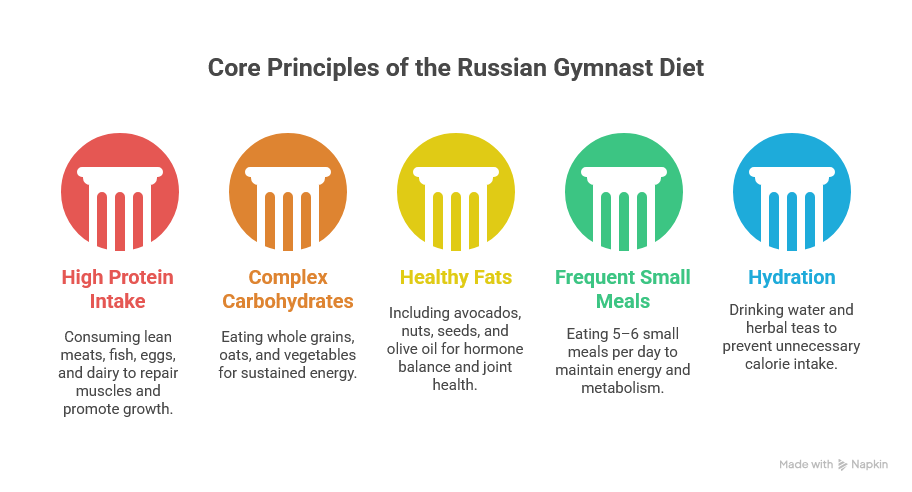
- High Protein Intake
Protein helps repair muscles and promotes lean muscle growth. Gymnasts consume lean meats, fish, eggs, and dairy. - Complex Carbohydrates for Energy
Whole grains, oats, and vegetables provide sustained energy. Simple sugars are limited to prevent energy crashes. - Healthy Fats
Avocados, nuts, seeds, and olive oil support hormone balance and joint health. - Frequent Small Meals
Gymnasts eat 5–6 small meals per day to maintain energy and metabolism. - Hydration is Essential
Water and herbal teas are preferred. Sugary drinks are avoided to prevent unnecessary calorie intake.
Sample Russian Gymnast Daily Meal Plan
Here’s a simplified example of a typical Russian Gymnast’s Diet day:
| Meal | Food Choices | Purpose |
|---|---|---|
| Breakfast | Oats with berries, scrambled eggs | Energy + protein |
| Mid-morning Snack | Greek yogurt, almonds | Protein + healthy fats |
| Lunch | Grilled chicken, quinoa, vegetables | Balanced macros |
| Afternoon Snack | Smoothie with protein, spinach | Recovery + vitamins |
| Dinner | Baked fish, sweet potato, broccoli | Protein + slow carbs |
| Evening Snack | Cottage cheese, fruit | Muscle repair overnight |
This structure emphasizes nutrient timing for energy, recovery, and optimal performance.
Russian Gymnast Diet Snack & Meal Suggestions
Benefits of Following the Russian Gymnast Diet
Following the Russian Gymnast Diet can offer numerous benefits:
- Enhanced Muscle Strength: High protein supports muscle repair.
- Lean Physique: Balanced macronutrients reduce excess fat.
- Sustained Energy: Complex carbs prevent energy spikes and crashes.
- Improved Recovery: Proper nutrients help muscles recover faster.
- Overall Health: Vitamins, minerals, and hydration support immune health.
“Proper nutrition is not optional. It is the foundation for success in gymnastics.” – Natalia Ivanova, Olympic Coach.
Expert Tips for Implementing the Russian Gymnast Diet
- Plan Meals: Avoid last-minute unhealthy choices.
- Track Macros: Ensure protein, carbs, and fats meet energy demands.
- Use Whole Foods: Minimize processed foods for better nutrient absorption.
- Meal Timing Matters: Eat before and after training for optimal performance.
- Listen to Your Body: Adjust portions based on activity levels.
Pro Tip: Include anti-inflammatory foods like turmeric, berries, and fatty fish to reduce muscle soreness.
Common Misconceptions About the Russian Gymnast Diet
Some believe gymnasts survive on minimal food. This is false. Energy needs are high due to intense training.
Another myth is that fats are avoided altogether. Healthy fats are essential for hormone production and joint lubrication.
Balanced nutrition is key. Extreme restriction can hinder performance and long-term health.
How to Adapt the Russian Gymnast Diet for Everyday Life?
Even non-athletes can benefit from this approach:
- Replace processed snacks with nuts or yogurt.
- Incorporate lean proteins and vegetables in every meal.
- Hydrate throughout the day.
- Follow smaller, frequent meals for energy stability.
By adapting these principles, anyone can enhance energy levels, maintain a lean physique, and improve overall wellness.
What is the Best Diet for a Gymnast?
Gymnasts require a well-balanced diet to give their bodies the proper nutrients for optimal performance. The best diet for gymnasts should include healthy carbohydrates, lean proteins, and beneficial fats to fuel muscle growth and repair. Carbohydrates are necessary because they provide energy to fuel workouts.
Complex carbs such as whole grains, starchy vegetables, legumes, fruits, and dairy products are excellent sources of long-lasting energy. Proteins from foods like eggs, fish, chicken breast and tofu help build strong muscles that can support graceful movements in gymnastics routines. Healthy fats found in nuts and seeds also play an important role by providing essential fatty acids for hormone balance and joint lubrication.
Additionally, gymnasts must stay hydrated throughout the day to reduce fatigue during practice sessions or competitions.
How Many Hours Do Russian Gymnasts Train?
Russian gymnasts put in incredible work and dedication to their craft, training for hours on end. The average Russian gymnast trains between 25-30 hours each week. This includes time spent in the gym doing drills and conditioning exercises, and time spent at home stretching and doing flexibility exercises.
They also practice their competition routines multiple times a day to perfect them before competitions. As you can imagine, this is no easy feat, but it’s worth it considering the success some Russian gymnasts have experienced throughout the years.

What an Elite Gymnast Eats in a Day?
Being an elite gymnast requires more than hours of hard work and dedication. It also demands a strict nutrition plan to fuel the body for training and competition. Elite gymnasts must be sure they are giving their bodies the right balance of macronutrients (carbohydrates, protein, and fat) throughout each day.
A typical day’s diet for an elite gymnast will include three meals plus snacks or mini-meals between meals, with plenty of fluids throughout the day to make sure they stay hydrated during intense workouts.
Breakfast is usually a combination of complex carbohydrates such as oatmeal or whole grain toast with nut butter, healthy proteins such as eggs or Greek yogurt, some fresh fruit and vegetables like spinach or kale added into smoothies or omelettes, and healthy fats such as nuts like almonds or walnuts.
Lunch might consist of lean proteins such as chicken breast and quinoa salad, with various vegetables tossed in an olive oil dressing.
Snacks could involve trail mix including nuts, seeds, dried fruit; hummus paired with crunchy carrots; Greek yogurt parfaits layered with oats, granola; cottage cheese topped off with berries; energy bites made from almond butter, date mixtures, etc.
Dinner typically contains starches such as sweet potatoes mashed with cooked beans/lentils, steamed salmon/tuna fish served alongside roasted vegetables drizzled with extra virgin olive oil, etc. Lastly, before bedtime, any remaining nutritional requirements can be met by having low-fat dairy products like low-fat milk/yogurt blended with bananas, strawberries, chia seeds, dates, honey, etc.
All these foods provide essential nutrients and help maintain optimal health for high-level performance in competitions.
Russian Diet to Lose Weight
The Russian diet is a popular weight loss plan that emphasizes eating whole foods and avoiding processed items, refined sugars, and fats. It also advises cutting out alcohol consumption and focusing on lean proteins like fish, eggs, nuts, and legumes. Eating plenty of fruits and vegetables is also encouraged as part of this healthy diet.
The Russian diet limits portion sizes to help promote weight loss while still allowing for satisfying meals with flavorful ingredients.

Russian Athlete Diet
The diet of Russian athletes is based on the principles of a balanced diet that includes proteins, carbohydrates, and fats. A typical day’s menu for a Russian athlete will include foods such as oatmeal with honey for breakfast, boiled potatoes or buckwheat groats for lunch, grilled fish or chicken with vegetables for dinner, and various fruits and nuts throughout the day as snacks. In addition to eating healthy meals regularly, these athletes drink plenty of water to stay hydrated during their training sessions.
Yana Kudryavtseva’s Diet
Yana Kudryavtseva is a Russian rhythmic gymnast with great success in the sport. Her diet consists of lean proteins, complex carbohydrates, and plenty of fruits and vegetables for essential nutrients. She also incorporates healthy fats such as nuts, avocados, and olive oil into her daily meals to ensure she gets all the nutrients she needs to fuel her performance.
Yana emphasizes the importance of staying hydrated throughout the day by drinking at least 2 litres of water or herbal teas daily. Additionally, she encourages her fans to eat mindfully and not overindulge in unhealthy foods like fried snacks or sugary drinks.
Final Verdict
The Russian Gymnast Diet is more than just a meal plan. It is a science-based nutrition system supporting performance, recovery, and lean muscle growth.
Athletes, fitness enthusiasts, and health-conscious individuals can gain tremendous benefits by following its principles.
In short, focus on nutrient-dense foods, proper hydration, and balanced macros for long-term health. This diet is not a fad—it’s a tried-and-tested blueprint for elite performance.
“Nutrition fuels champions. The right diet turns effort into excellence.” – Dr. Sergey Orlov, Sports Dietitian
The Russian Gymnast Diet is an intense program focused on achieving maximum performance. Sticking with it and receiving its full benefits requires a lot of discipline and dedication. Although this diet may not be for everyone, it has many advantages when followed correctly.
From providing high energy levels to helping gymnasts reach their potential, the Russian Gymnast Diet has been proven time and again to be effective for those seeking intense athletic performance.
FAQs
What is the Russian Gymnast Diet?
The Russian Gymnast Diet is a nutrition plan tailored for elite gymnasts, focusing on high protein intake, controlled carbohydrates, and essential fats. It emphasizes nutrient timing to support intense training and recovery.
What foods are staples in the Russian Gymnast Diet?
Staple foods include lean proteins like chicken, fish, and eggs; complex carbohydrates such as buckwheat and whole grains; and healthy fats from sources like olive oil, nuts, and seeds. Vegetables and fruits are also integral for vitamins and minerals.
Why is buckwheat favored in the Russian Gymnast Diet?
Buckwheat is rich in protein and fiber, making it a preferred carbohydrate source. It provides sustained energy and aids in maintaining a lean physique, which is crucial for gymnasts.
How many meals do Russian gymnasts eat daily?
Russian gymnasts typically consume 5–6 small meals per day. This frequent eating pattern helps maintain energy levels and supports muscle repair throughout the day.
Do Russian gymnasts follow any specific eating schedule?
Yes, meal timing is strategic. They often eat a light meal in the morning, followed by balanced meals and snacks before and after training sessions to optimize performance and recovery.
How do Russian gymnasts stay hydrated?
Hydration is crucial. Gymnasts primarily drink water and herbal teas, avoiding sugary drinks. Proper hydration supports energy levels and aids in muscle function during intense workouts.
Are there any foods that Russian gymnasts avoid?
Yes, they limit or avoid processed foods, sugary snacks, and excessive dairy. These can lead to energy crashes and may affect performance.
Is the Russian Gymnast Diet suitable for non-athletes?
While the diet is designed for high-performance athletes, its principles—such as balanced meals and nutrient timing—can benefit non-athletes aiming for a healthy lifestyle.
How does the Russian Gymnast Diet support muscle recovery?
The diet’s high protein content aids in muscle repair, while its balanced carbohydrate intake replenishes glycogen stores. Healthy fats support joint health and reduce inflammation.
Do Russian gymnasts use supplements?
Supplements are used cautiously and under professional guidance. Common supplements may include multivitamins, omega-3 fatty acids, and vitamin D, depending on individual needs.
How does the diet impact a gymnast’s physique?
The diet helps maintain a lean physique by promoting fat loss while preserving muscle mass. This is essential for agility and performance in gymnastics.
Are there any risks associated with the Russian Gymnast Diet?
If not properly balanced, the diet can lead to nutrient deficiencies or an energy imbalance. Gymnasts must work with nutritionists to ensure their dietary needs are met.
How does the diet vary during competition season?
During competition season, the diet may include slightly higher carbohydrate intake to support increased energy demands. However, the focus remains on maintaining a lean physique and optimal performance.
Can the Russian Gymnast Diet be adapted for other sports?
Yes, the diet’s principles can be adapted for other sports that require strength, agility, and endurance. However, adjustments may be needed based on the specific demands of the sport.