
Ginger hair dye gives you a warm, fiery look in one afternoon. You can achieve salon-level results at home with the right prep and products. This guide breaks down every step, so your color turns out even and vibrant. Before coloring, follow the FDA’s hair-dye safety precautions, including performing a patch test every time and following the product label. If you are also managing heat-related damage, our Straightened Hair Damage Risk Score Calculator can help you assess styling-related stress. For another common hair-care concern, see our hair product buildup guide.

Real talk from experience: ginger shades fade faster than darker colors. Expect noticeable fading within 4 to 6 weeks without proper aftercare.
Dyeing your hair ginger takes roughly 2 to 3 hours total, including prep, processing, and rinsing. You’ll need a semi-permanent or permanent ginger dye, gloves, and a color-safe shampoo for aftercare.
Safety Note: always do a patch test 48 hours before full application. This prevents allergic reactions to dye chemicals.
Table of Contents
Step-by-Step Process
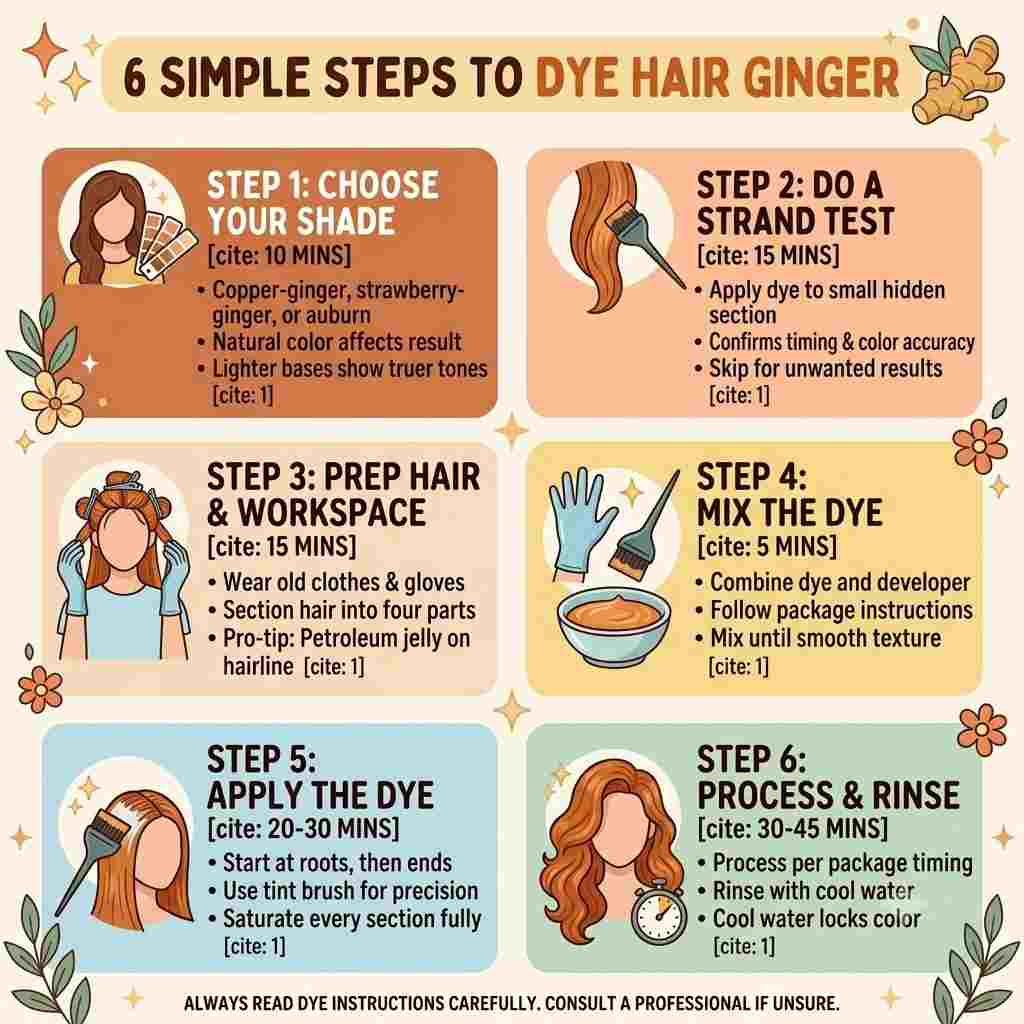
Step 1: Choose Your Shade [Time: 10 mins]
Pick between copper-ginger, strawberry-ginger, or deep auburn-ginger. Your natural hair color affects the final result. Lighter bases show truer ginger tones.
Step 2: Do a Strand Test [Time: 15 mins]
Apply dye to a small hidden section first. This confirms timing and color accuracy. Skipping this step risks unwanted results.
Step 3: Prep Your Hair and Workspace [Time: 15 mins]
Wear old clothes and gloves. Section your hair into four parts using clips. Pro tip: apply petroleum jelly along your hairline to prevent staining skin.
Step 4: Mix the Dye [Time: 5 mins]
Combine dye and developer per package instructions. Mix until the texture is smooth and consistent. Uneven mixing causes patchy color.
Step 5: Apply the Dye [Time: 20-30 mins]
Start at the roots, then work toward the ends. Use a tint brush for precision near the hairline. Saturate every section fully for even coverage.
Step 6: Process and Rinse [Time: 30-45 mins]
Let the dye sit per package timing, usually 30 to 45 minutes. Rinse with cool water until it runs clear. Cool water helps seal the cuticle and lock in color.
Why this step matters most: rinsing with cool, not hot, water prevents premature fading. Hot water opens the hair cuticle, letting color molecules escape fast. This single mistake shortens your ginger color’s lifespan significantly.
Method Comparison Table
| Method | Longevity | Best For |
|---|---|---|
| Semi-permanent dye | 4-6 weeks | Testing the shade first |
| Permanent dye | 6-8 weeks + regrowth | Long-term commitment |
| Henna-based dye | 3-5 weeks | Natural, chemical-free option |
Colorist insight: “Ginger tones oxidize faster than cooler shades because copper pigments are larger molecules,” says veteran colorist Maria Chen. “Sulfate-free shampoo slows this breakdown considerably.”
Aftercare Tips
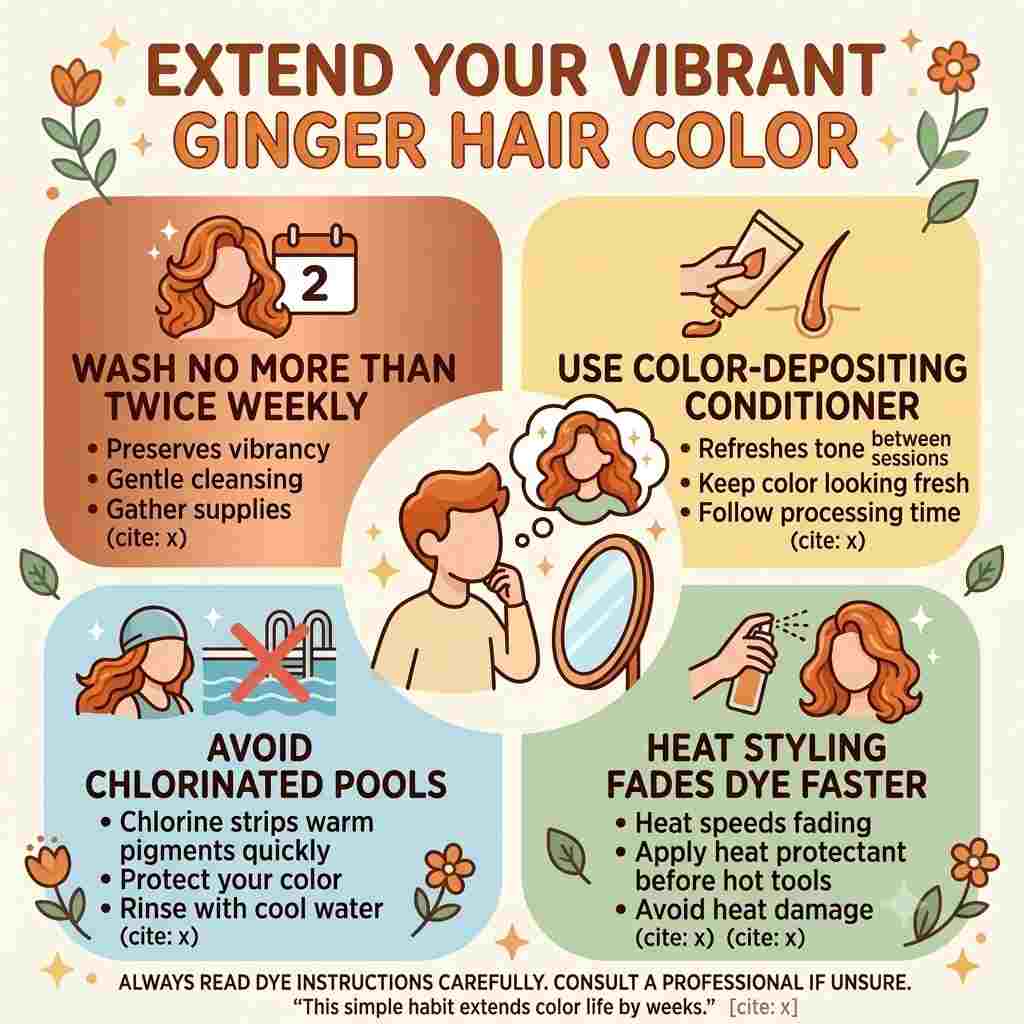
Wash hair no more than twice weekly to preserve vibrancy. Use a color-depositing conditioner to refresh tone between full dye sessions. Avoid chlorinated pools, since chlorine strips warm pigments quickly.
Heat styling also fades ginger dye faster. Always apply a heat protectant before using hot tools. This simple habit extends color life by weeks.
The Bigger Picture
Ginger remains one of 2026’s most requested warm hair shades, according to salon industry trend reports. Its versatility across skin tones drives consistent demand. More at-home dye kits now include ginger-specific formulas due to this rising popularity.
Proper technique matters more than product price. Following each step in order prevents uneven color and premature fading. With correct prep and aftercare, your ginger hair color can stay vibrant and healthy for weeks.
FAQs On How To Dye Hair Ginger
Can a home dehumidifier dry structural water damage?
No, standard residential units lack the CFM airflow and extraction capacity needed for structural drying. Standard home units remove 30 to 50 pints daily. Meanwhile, commercial LGR units pull over 100 pints per day.
- Extraction capability: Home units cannot lower humidity below 30% efficiently.
- Bound moisture: They fail to draw trapped water from deep inside drywall studs.
- Overheating risk: Continuous duty will overheat domestic compressor motors quickly.
How many dehumidifiers do you need per flooded room?
You need one commercial LGR unit for every 500 square feet of affected floor space. Additionally, place one air mover every 10 to 16 linear feet along walls.
- Measure the total square footage of the damaged room first.
- Divide the total area by 500 to determine equipment counts.
- Add one extra unit if water contains sewage or contaminants.
Should you keep windows open or closed while running a dehumidifier?
Keep all windows and exterior doors tightly closed during the entire drying process. Opening windows introduces humid outdoor air continuously into the space. Consequently, this fresh moisture overloads the machine and delays structural drying.
- Closed system: Creates a controlled microclimate for maximum moisture extraction.
- Vapor pressure: Maintains high vapor differential to pull moisture from walls.
What relative humidity level stops mold growth after water damage?
Maintain relative humidity below 50% to stop mold spores from germinating entirely. Mold thrives when relative humidity levels exceed 60% consistently.
- Set your digital humidistat between 30% and 45% for rapid drying.
- Monitor ambient levels using a calibrated thermo-hygrometer twice daily.
- Keep equipment running until structural materials reach baseline moisture readings.
Where should you place a dehumidifier for maximum water extraction?
Place the dehumidifier in the center of the room with top airflow clearance. Ensure at least 24 inches of space around all intake grilles.
- Avoid pushing units directly against wet plaster or drywall surfaces.
- Direct warm dry exhaust air toward the dampest structural materials.
- Elevate the unit slightly if standing water covers the floor.
How long must a dehumidifier run after a pipe burst?
Run industrial dehumidifiers continuously for 3 to 5 days after a pipe burst. Moisture meters must confirm normal levels before you turn off equipment.
- Days 1–2: Extract bulk water and surface moisture aggressively.
- Days 3–4: Draw deep bound water from interior wall framing.
- Day 5: Verify dry standards against unaffected building materials.
Why is your dehumidifier running but not collecting water?
The surrounding air temperature is either too cold or relative humidity dropped severely. Refrigerant compressors freeze up when room temperatures fall below 65°F.
- Inspect coils for ice buildup and defrost the unit immediately.
- Check for clogged air filters restricting essential intake airflow.
- Verify if relative humidity fell below the target setpoint.
Can you drain a dehumidifier continuously during flood cleanup?
Yes, connect a heavy-duty bypass hose to the gravity drain port or condensate pump. Emptying manual collection buckets wastes time and stops the unit during overflows.
- Route the drain hose into a functioning floor drain or sink.
- Ensure the hose slopes downward completely without any kinked sections.
- Secure the discharge outlet firmly to prevent accidental room flooding.
Do air movers dry water damage faster without a dehumidifier?
No, air movers only evaporate water into the surrounding air without removing it. Using fans alone increases relative humidity levels and causes secondary mold damage.
- Air movers pull moisture out of wet materials into air.
- Dehumidifiers condense that air moisture and pump it away permanently.
- Always pair air movers with commercial dehumidifiers for safe drying.
How do you know when drywall is completely dry inside?
Use a penetrating pin-type moisture meter to test internal wood studs and gypsum. Surface touch tests are unreliable because outer paint layers dry long before inner cores.
- Safe reading: Drywall moisture content must measure below 1% WME.
- Comparative test: Measure dry unaffected walls in another room first.
- Action point: Replace drywall if moisture readings stay high after five days.