
A car misfire occurs when one or more cylinders fail to ignite fuel properly, causing jerking, poor acceleration, and engine vibrations. Common causes include faulty spark plugs, bad ignition coils, fuel delivery issues, or low compression. Ignoring misfires can damage your engine, so prompt diagnosis is crucial. You can also use our car misfire symptoms checker to review common symptoms.
Table of Contents
The Mystery of a Misfiring Engine
Ever felt your car shudder unexpectedly or heard strange pops from the exhaust? That’s likely an engine misfire—a frustrating yet common issue. But what exactly happens when your car misfires, and why should you care?
A misfire disrupts your engine’s smooth operation, leading to poor performance, reduced fuel efficiency, and even long-term damage. Let’s dive into the causes, symptoms, and fixes to keep your ride running smoothly.
What Is an Engine Misfire?
An engine misfire happens when the air-fuel mixture in a cylinder doesn’t burn correctly or at all. This disrupts the engine’s rhythm, causing:
- Jerking or hesitation while accelerating
- Rough idling or vibrations
- Check Engine Light (often flashing)
- Unusual exhaust sounds (popping or backfiring)
Expert Insight:
“Misfires shouldn’t be ignored—they strain the engine and catalytic converter, leading to costly repairs.” — John Davis, Master Automotive Technician.

Top Causes of a Car Misfire
🛠️ Car Misfire Cause Quiz
Answer a few quick questions to discover the possible reason behind your car’s misfire:
Understanding why misfires happen helps in quick diagnosis. Here are the most common culprits:
1. Ignition System Problems (Most Common Cause)
- Faulty spark plugs (worn or fouled)
- Bad ignition coils (weak or no spark)
- Damaged spark plug wires (cracked or corroded)
Pro Tip: Replace spark plugs every 30,000–100,000 miles, depending on type.
2. Fuel Delivery Issues
- Clogged fuel injectors (restricted spray pattern)
- Weak fuel pump (low pressure)
- Contaminated fuel (water or debris)
3. Airflow or Compression Loss
- Vacuum leaks (unmetered air entering engine)
- Worn piston rings/valves (low compression)
- Faulty EGR valve (excess carbon buildup)
4. Sensor or ECU Malfunctions
- Failing oxygen (O2) sensor
- Faulty mass airflow (MAF) sensor
- ECU/PCM software glitches
Symptoms of a Misfire
Recognizing these signs early can prevent further damage:
✅ Rough Idling – The Engine shakes or stalls at stoplights.
✅ Hesitation During Acceleration – Lack of power when pressing the gas.
✅ Engine Vibrations – Uneven power delivery causes shaking.
✅ Check Engine Light – Flashing light indicates an active misfire.
✅ Unusual Exhaust Sounds – Popping or backfiring from incomplete combustion.
Did You Know? A single misfire can increase emissions by up to 10,000 times the normal level.
🔧 Car Misfire Symptom Checker
Select the symptoms you’re experiencing to find possible causes of your car’s misfire:
How to Diagnose a Misfire?
| Step | Action |
|---|---|
| 1. Check Engine Light | Scan for trouble codes (P0300-P0312 indicate misfires). |
| 2. Inspect Spark Plugs & Coils | Look for wear, cracks, or carbon deposits. |
| 3. Test Fuel Pressure | Ensure proper fuel delivery. |
| 4. Perform a Compression Test | Rule out internal engine damage. |
| 5. Check for Vacuum Leaks | Listen for hissing sounds or use a smoke test. |
Quick Fix: Swapping ignition coils between cylinders can help identify a bad coil.
How to Fix a Misfiring Engine?
- Replace spark plugs & ignition coils if worn.
- Clean or replace fuel injectors for proper spray.
- Fix vacuum leaks with new gaskets or hoses.
- Update ECU software if sensors are faulty.
Warning: If misfires persist, seek professional help to avoid engine damage.
🚗 OBD-II Code Analyzer Tool
Select an OBD-II trouble code from the list to learn what it means and how to fix it:
Preventive Measures to Avoid Misfires
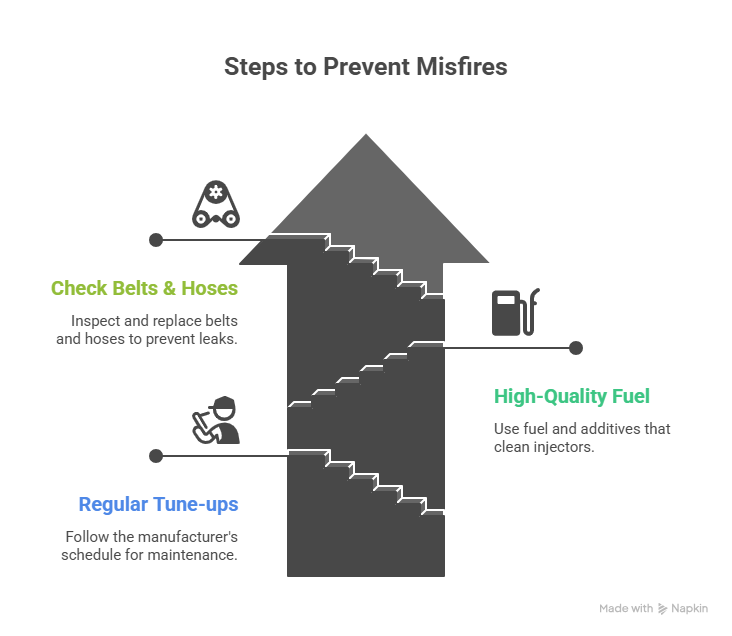
✔ Regular tune-ups (follow manufacturer’s schedule)
✔ Use high-quality fuel & additives (cleans injectors)
✔ Check engine belts & hoses (prevents vacuum leaks)
Final Thoughts: Don’t Ignore the Signs!
A misfiring engine is more than just an annoyance—it’s a warning. Early diagnosis saves money and keeps your car running smoothly. If you notice jerking, strange noises, or a flashing Check Engine Light, act fast!
Got a misfire? Start with simple fixes like spark plugs before diving deeper. Your engine will thank you. 🚗💨
FAQs What Does It Mean When a Car Misfires? Causes & Fixes
1. What Exactly Is a Car Misfire?
A misfire happens when one or more engine cylinders fail to ignite fuel properly, causing incomplete combustion. This leads to rough running, power loss, and increased emissions.
2. What Does a Misfire Feel Like?
You’ll notice:
✔ Jerking or hesitation (especially when accelerating)
✔ Engine vibrations (steering wheel or seat shaking)
✔ Rough idling (car feels unstable at stops)
✔ Popping or backfiring from the exhaust
3. Can a Misfire Fix Itself?
Rarely. Temporary misfires (e.g., bad fuel) may improve, but most require repairs. Ignoring it can damage the catalytic converter or engine.
4. What’s the Most Common Cause of a Misfire?
Faulty spark plugs or ignition coils cause ~70% of misfires (according to auto repair data).
5. Can Bad Gas Cause a Misfire?
Yes. Water-contaminated or low-quality fuel can disrupt combustion. Try a fuel system cleaner or drain the tank if suspected.
6. Why Does My Car Misfire When Cold but Not When Warm?
This often points to:
✔ Failing ignition coils (weaker spark when cold)
✔ Sticky fuel injectors (poor spray pattern until warm)
✔ Faulty engine coolant temp sensor (messes with fuel mixture)
7. Can a Misfire Damage My Engine?
Absolutely. Prolonged misfires can:
- Melt the catalytic converter ($1,000+ repair)
- Warp valves or pistons (major engine damage)
- Cause oil dilution (fuel leaks into oil, reducing lubrication)
8. Why Is My Check Engine Light Flashing During a Misfire?
A flashing (not solid) Check Engine Light means severe misfires that can damage the catalytic converter. Stop driving immediately and diagnose.
9. Can a Dirty Air Filter Cause a Misfire?
Indirectly. A clogged filter restricts airflow, leading to a rich fuel mixture, which can foul spark plugs and cause misfires.
10. How Do I Know Which Cylinder Is Misfiring?
Use an OBD-II scanner to read the trouble code:
- P0301 = Cylinder 1 misfire
- P0302 = Cylinder 2 misfire
- And so on…
11. Can a Misfire Cause My Car to Fail Emissions?
Yes. Misfires increase hydrocarbon (HC) emissions by up to 10,000x, leading to an automatic fail.
12. Why Does My Car Misfire at High RPMs?
Common causes:
✔ Weak ignition coils (can’t keep up at high speeds)
✔ Clogged fuel injectors (not enough fuel delivery)
✔ Valve float (mechanical engine issue)
13. Can a Vacuum Leak Cause a Misfire?
Yes. Unmetered air from a vacuum leak leans out the fuel mixture, leading to misfires, especially at idle.
14. How Much Does It Cost to Fix a Misfire?
| Issue | Estimated Cost |
|---|---|
| Spark Plug Replacement | $50 – $200 |
| Ignition Coil Replacement | $150 – $400 |
| Fuel Injector Cleaning | $100 – $300 |
| Catalytic Converter Replacement | $1,000 – $2,500 |
15. How Can I Prevent Future Misfires?
✔ Change spark plugs on time (check owner’s manual)
✔ Use fuel injector cleaner every 5,000 miles
✔ Fix vacuum leaks ASAP
✔ Avoid cheap gas (stick with Top Tier fuel)
Final Answer: Don’t Ignore a Misfire!
Misfires won’t go away on their own and can lead to expensive repairs. If your car is jerking, shaking, or showing a Check Engine Light, diagnose it ASAP to avoid bigger problems.
Got a misfire? Start with spark plugs and ignition coils—the most common culprits. 🚗💨
Need More Info? Check out:
- National Institute for Automotive Service Excellence (ASE) – Engine Misfires and What They Mean
Trusted resource for understanding engine misfires from the professionals who certify auto technicians. - U.S. Environmental Protection Agency (EPA) – Causes of Engine Misfire and Emissions Impact
Explains how misfires affect emissions and how onboard diagnostics detect them. - National Highway Traffic Safety Administration (NHTSA) – Vehicle Safety Recalls Related to Misfires
Search your vehicle for misfire-related recalls and safety issues using your VIN.