
A fuel leak is one of the most hazardous issues a vehicle owner can face. A small drip beneath your engine can turn a routine drive into a sudden fire hazard within seconds. Understanding what causes a fuel leak risk and knowing how to evaluate it can save your vehicle—and your life.
Table of Contents
Fuel Leak Risk Checker
What Is Fuel Leak Risk?
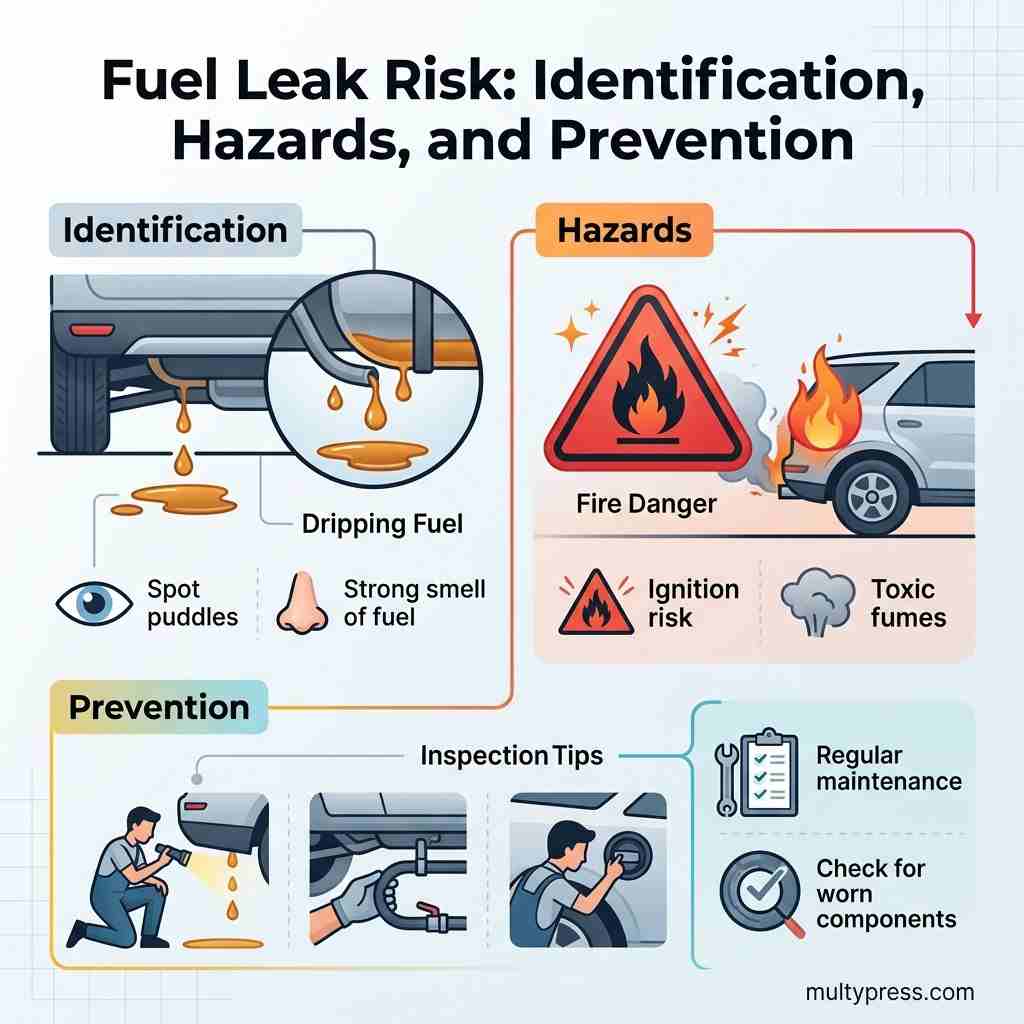
Fuel leak risk refers to the likelihood of gasoline or diesel escaping from a vehicle’s fuel delivery system. This system includes the fuel tank, lines, injectors, pumps, and vapor seals. When fuel escapes, it quickly vaporizes into flammable gas. A single spark from an electrical wire or hot engine part can trigger a devastating fire.
Common Causes of Fuel Leaks
- Corroded Fuel Lines: Moisture, road salt, and dirt rust metal fuel lines over time, creating pinhole leaks.
- Degraded Rubber Hoses: Heat and engine oil rot rubber hoses, causing them to crack and split.
- Damaged Fuel Tank: Punctures from road debris or underside corrosion lead to dangerous tank leaks.
- Faulty Fuel Injectors: Worn injector seals or cracked bodies spray pressurized fuel directly into the engine bay.
- Loose Fuel Cap: A loose or cracked gas cap lets hazardous fuel vapors leak into the surrounding air.
Warning Signs You Should Never Ignore
Spotting a fuel leak early prevents catastrophic engine damage and serious injury. Drivers should watch for several clear warning signs:
| Warning Sign | Primary Cause | Immediate Risk Level |
| Strong Gasoline Smell | Evaporating fuel from lines or injectors | High |
| Puddle Under Vehicle | Punctured tank or severed line | Critical |
| Rapid Fuel Gauge Drop | Major leak in pressurized line | Critical |
| Engine Misfires | Low fuel pressure to injectors | Medium |
| Check Engine Light | EVAP system leak detected | Low to Medium |
What Is a Fuel Leak Risk Checker?
A Fuel Leak Risk Checker is an essential diagnostic system or digital tool designed to detect fuel system vulnerabilities before catastrophic failures occur. Modern checkers combine onboard electronic diagnostics, physical inspection tools, and database recall checks to evaluate vehicle safety.
How a Fuel Leak Risk Checker Works
- Evaporative Emission (EVAP) Monitoring: Modern cars feature built-in EVAP leak checkers. The engine control unit (ECU) tests system pressure to spot escaping fuel vapors.
- Pressure Testing: Mechanics use manual pressure testing checkers to find drops in fuel line pressure.
- Safety Recall Databases: Digital risk checkers cross-reference your Vehicle Identification Number (VIN) against safety recall databases. Manufacturers issue safety recalls when factory defects increase fire risks.
Expert Insight: According to National Highway Traffic Safety Administration (NHTSA) safety records, fuel system failures trigger hundreds of vehicle safety recalls each year, making regular VIN checks vital for driver safety.
The Danger of Ignoring a Fuel Leak
Ignoring fuel smells or leaks carries massive risks. Gasoline ignites at roughly 495°F (257°C), while an engine exhaust manifold routinely exceeds 1,000°F. When pressurized fuel sprays onto hot engine components, ignition occurs instantly.
- Vehicle Fires: Gasoline fires spread rapidly and are extremely difficult to extinguish without professional equipment.
- Toxic Fumes: Inhaled fuel vapors cause dizziness, headaches, and long-term health risks.
- Environmental Damage: Spilled fuel contaminates soil and local waterways.
- Engine Ruin: Loss of fuel pressure leads to lean engine burn, causing severe internal damage.
Expert Recommendations and Maintenance Tips
Auto safety experts strongly recommend proactive fuel system checks during every routine service interval. Taking action early prevents costly repairs and dangerous breakdowns.
- Inspect Fuel Lines Regularly: Check rubber hoses and metal lines for cracks, rust, or soft spots during oil changes.
- Check for Recalls Annually: Run your VIN through an online recall checker to see if your model has active fuel system warnings.
- Replace Fuel Filters on Time: Clogged filters cause excessive pressure build-up, straining fuel lines and pump seals.
- Park on Clean Surfaces: Parking over clean concrete makes it easy to spot fresh fluid drips immediately.
- Act Fast on Smells: Never drive a car that smells strongly of gas inside the cabin or around the engine bay.
Automotive Safety Tip: If you see liquid fuel leaking beneath your car, do not start the engine. Turn off the ignition, step away from the vehicle, and call a professional towing service immediately.
How to Protect Your Vehicle Today?
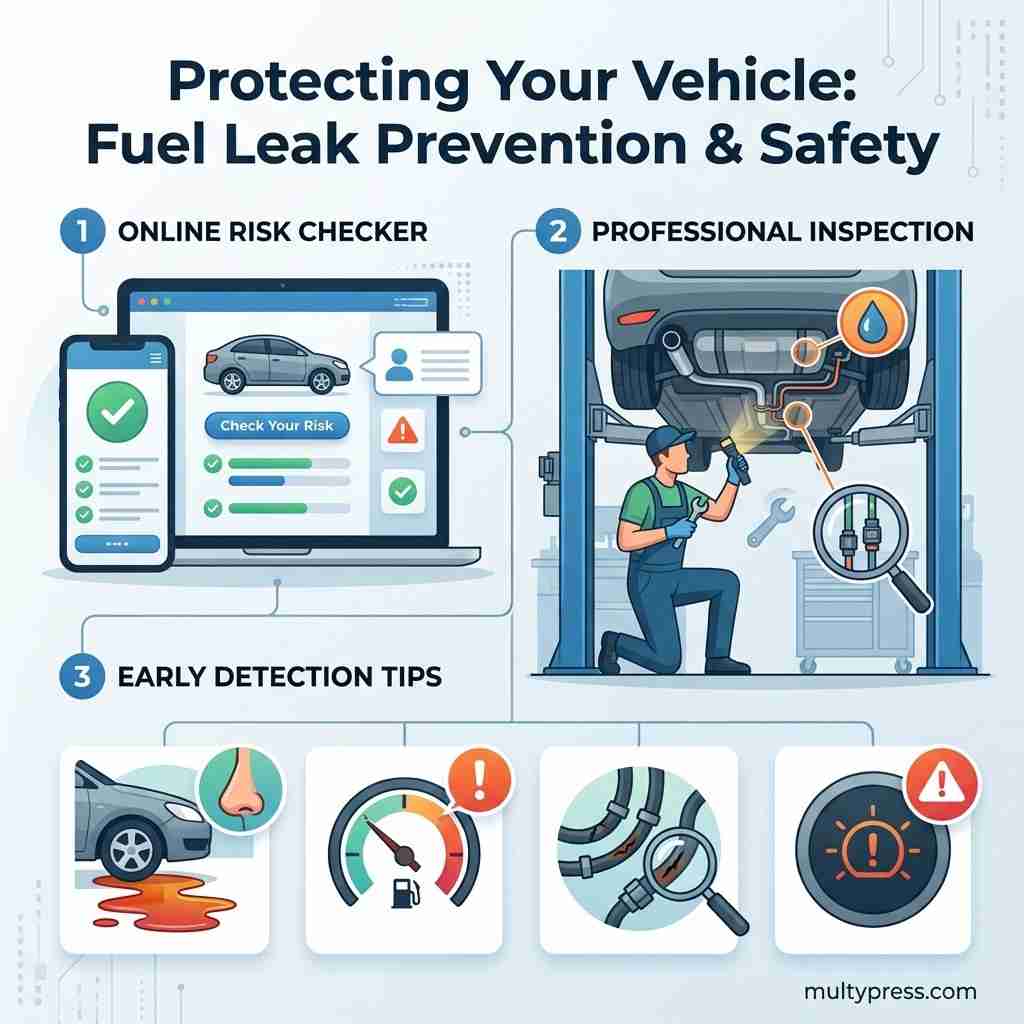
Protecting your vehicle requires minimal effort but offers massive peace of mind. Use an online risk checker to review your car’s safety record, schedule a comprehensive fuel system inspection with a certified mechanic, and address any sweet or pungent gas smells without delay. Early detection remains your best defense against fuel leaks and fire hazards.
FAQs About Fuel Leak Risk
Why does my car smell like gas only when I turn on the heater or air conditioning?
Vapors enter your HVAC intake cabin vents directly from small high-pressure leaks near the engine bay or fuel rail.
A micro-crack in an injector seal or a leaking quick-connect fitting releases pressurized fuel spray. The fresh air intake pulls those trapped vapors inside long before liquid droplets drip onto the driveway.
Can a microscopic fuel leak trigger a Check Engine Light without any visible liquid drips?
Yes, modern vehicle EVAP systems detect pressure drops as small as 0.020 inches using built-in leak monitoring algorithms.
The engine control unit pressurizes or pulls a vacuum on the fuel tank to measure sealed integrity. Escaping gasoline vapors trigger diagnostic trouble codes like P0442 or P0456 without leaving a single wet mark on your garage floor.
What exact temperature inside an engine bay ignites leaking liquid gasoline?
Gasoline auto-ignites at approximately 536°F (280°C), while exhaust manifolds easily operate between 800°F and 1,200°F.
If pressurized liquid fuel sprays onto a hot exhaust header or catalytic converter, ignition occurs instantly without needing an electrical spark.
How do I safely test fuel line pressure drops to confirm an internal system leak?
Attach a mechanical fuel pressure gauge to the Schrader valve test port located directly on your engine fuel rail.
Key the ignition on to prime the pump, note the peak PSI, and turn the ignition back off. If system pressure drops rapidly within 20 minutes, an injector, check valve, or line is actively leaking.
Why does my fuel tank leak liquid only when I fill it past three-quarters full?
This issue stems directly from degraded filler neck hose seals, cracked tank roll-over valves, or rusted upper seam welds.
When fuel levels sit below three-quarters, the liquid remains safely beneath the seam line or damaged upper neck assembly. Filling the tank elevates the fluid level, forcing fuel out through top-mounted structural defects.
Does insurance cover repairs for a fuel leak caused by rust or underbody corrosion?
Standard auto insurance policies explicitly exclude wear, tear, rust, and gradual mechanical breakdown from coverages.
However, comprehensive coverage will cover repairs if a road hazard, flying debris, or an accident physically punctures your tank or line.
What is the difference between a high-pressure line leak and a low-pressure vapor leak?
High-pressure line leaks release liquid gasoline at 40 to 90+ PSI, creating immediate atomized spray and extreme fire risks.
Vapor leaks occur inside sealed low-pressure evaporative control lines, escaping as invisible gases that trigger emission alerts without spraying liquid fuel.
Why do rubber fuel hoses degrade faster on modern vehicles using E10 or E85 fuel?
Ethanol attracts atmospheric moisture and acts as a strong chemical solvent against non-fluorinated, legacy rubber compounds.
It breaks down older nitrile or neoprene rubber inner linings, causing hoses to swell, crack, and fail prematurely from the inside out.
How can I check if my vehicle has an open safety recall for a known fuel leak defect?
Locate your 17-character Vehicle Identification Number (VIN) stamped on your dashboard or driver door jamb.
Input that VIN directly into the official NHTSA Safety Recall Lookup tool to view active manufacturer recalls regarding fuel components.
Can a failing fuel pressure regulator leak gasoline directly into the engine intake manifold?
Yes, an internal diaphragm rupture inside a vacuum-assisted regulator allows fuel to pass straight through the vacuum hose.
The engine sucks liquid fuel into the combustion chamber, causing hard starts, dark exhaust smoke, oil dilution, and serious fire risks.
Is it safe to temporarily fix a pinhole fuel line leak with epoxy or rubber tape?
No, temporary epoxies and electrical tapes dissolve rapidly when exposed to high-pressure chemical solvents in gasoline.
Fuel lines run under high system pressure; temporary patches blow off quickly and create extreme fire hazards while driving.
What symptoms indicate that a fuel injector o-ring is leaking fuel externally?
You will spot wet fuel residue pooling near the intake manifold and notice a strong raw fuel odor during cold starts.
As the engine warms up, heat expands the seal slightly, often diminishing the smell while increasing raw vapor accumulation under the hood.
How does a charcoal canister failure cause fuel vapors to leak out near the gas cap?
A saturated or clogged charcoal canister can no longer absorb evaporating fuel vapors inside the sealed tank system.
Excess pressure forces raw vapors out past the fuel cap pressure relief valve, releasing strong fuel odors around the rear wheel well.
Why does a fuel leak cause engine misfires and severe hesitation during acceleration?
Leaking fuel lines reduce fuel pressure supplied directly to the engine’s fuel injectors.
Without proper pressure, injectors deliver an overly lean air-fuel mixture, causing engine misfires, rough idling, and lost acceleration power.
How much does a professional fuel line replacement typically cost for standard passenger vehicles?
Replacing a damaged fuel line costs between $250 and $600 depending on location, line accessibility, and vehicle make.
Replacing complete metal fuel lines from front to back requires extensive labor, pushing total repair costs toward the higher end.