
Replacing a patio heater glass tube typically takes 20 to 30 minutes with basic tools. Cracked or broken tubes commonly result from impact, thermal stress, or age. Replacement tubes generally cost between $20 and $60 depending on heater size and brand.
Outdoor equipment maintenance experience shows glass tube damage often happens during storage, transport, or cleaning. Prompt replacement restores safe, proper heater function.
Table of Contents
Quick Answer
Glass tube replacement involves removing the outer mesh guard, extracting the damaged tube, and installing a correctly sized replacement. Most patio heaters use a standard quartz or borosilicate glass tube design. Correct sizing and careful handling ensure safe reassembly.
Safety note: always allow the heater to cool completely and disconnect the propane supply before beginning repair. This prevents burns and gas-related hazards.
Step-by-Step Replacement Process
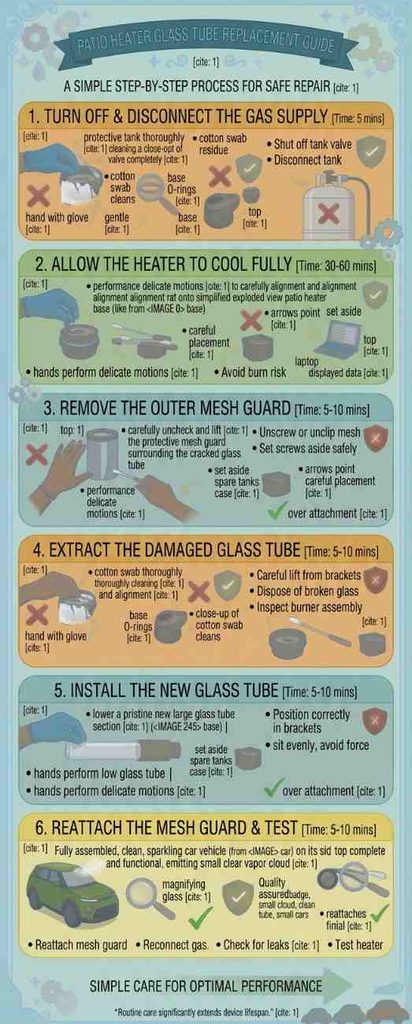
Step 1: Turn Off and Disconnect the Gas Supply [Time: 5 mins]
Shut off the propane tank valve completely. Disconnect the tank from the heater unit. This step is essential for safe repair work.
Step 2: Allow the Heater to Cool Fully [Time: 30-60 mins]
Wait until all components reach room temperature. Handling hot glass or metal risks serious burns. Rushing this step compromises your safety during repair.
Step 3: Remove the Outer Mesh Guard [Time: 5-10 mins]
Unscrew or unclip the protective mesh surrounding the glass tube. Set screws and hardware aside safely. This provides access to the damaged tube.
Step 4: Extract the Damaged Glass Tube [Time: 5-10 mins]
Carefully lift the cracked tube away from its mounting brackets. Dispose of broken glass safely and properly. Inspect the burner assembly for any residue or damage.
Step 5: Install the New Glass Tube [Time: 5-10 mins]
Position the replacement tube carefully within the mounting brackets. Ensure it sits evenly without excessive pressure on any point. A proper fit should feel secure but not forced.
Step 6: Reattach the Mesh Guard and Test [Time: 5-10 mins]
Secure the mesh guard back over the new glass tube. Reconnect the propane supply and check for leaks using soapy water. Test the heater briefly before regular use.
Why cooling time matters most: attempting repair on a hot heater risks severe burns from both the glass and surrounding metal components. This waiting period feels inconvenient but protects against serious injury. Patience here ensures a safe, successful repair every time.
Replacement Tube Comparison Table
| Tube Type | Heat Resistance | Best For |
|---|---|---|
| Standard borosilicate | High | Most residential patio heaters |
| Quartz glass tube | Very high | Premium or commercial-grade heaters |
| Generic universal tube | Moderate, variable fit | Budget-conscious replacement |
Outdoor equipment specialist insight: “Matching the exact tube diameter matters as much as the material,” says patio heater technician Gary Voss. “A loose fit creates uneven heating and stress cracks.”
Maintenance Tips to Prevent Future Cracks
Cover your patio heater during storms or when not in use for extended periods. Avoid transporting the heater while the glass tube remains installed. Clean the tube gently, avoiding sudden temperature changes during cleaning.
Check the mounting brackets periodically for looseness or wear. Loose brackets allow the tube to vibrate and crack over time. Routine inspection catches problems before complete tube failure occurs.
The Bigger Picture
Patio heaters remain popular for extending outdoor living space use into cooler months. Glass tube replacement remains one of the most common maintenance needs for these units. Understanding proper technique helps owners save on professional service costs.
Careful, methodical replacement ensures lasting results and safe operation. Following proper cooling and handling precautions prevents injury during repair. This guide equips you to handle glass tube replacement confidently at home.
FAQs on Patio Heater Glass Tube Replacement
Why does my patio heater glass tube crack most often in early spring?
Heaters stored outdoors through winter face repeated freeze-thaw temperature cycling. This seasonal stress weakens glass gradually, often revealing cracks with the first spring use. Covering heaters properly during winter storage helps reduce this seasonal damage pattern. Inspecting the tube before your first use each season catches problems early. This proactive check prevents an unexpected failure during your first warm-weather gathering.
Can I use a heat-resistant glass tube from a different heater brand as a replacement?
This isn’t recommended without confirming exact diameter and length specifications match. Even visually similar tubes can have subtle dimensional differences affecting fit. A mismatched tube risks uneven heating, instability, or premature cracking. Verify compatibility explicitly rather than assuming based on visual similarity alone. This verification prevents wasted money on an incompatible replacement part.
Why did my new glass tube develop a cloudy appearance after just a few uses?
Cloudiness often results from mineral deposits or combustion residue building up gradually. This is typically a cosmetic issue rather than a functional or safety problem. Gentle cleaning with appropriate glass cleaner usually restores clarity effectively. Avoid abrasive cleaning methods that could scratch or weaken the tube. This buildup is a normal part of regular patio heater operation.
Does wind exposure affect how often patio heater glass tubes need replacement?
Yes, strong winds can cause vibration and stress on the glass tube over time. This applies particularly to heaters used frequently in exposed, windy locations. Securing your heater properly and using windscreens when available reduces this stress. This consideration matters most for patio heaters in consistently breezy environments. Regular inspection helps catch wind-related stress before it causes complete failure.
Why do some patio heaters use a taller glass tube than others of similar wattage?
Design variations across manufacturers affect tube height even at similar heat output levels. This reflects different approaches to heat distribution and aesthetic design choices. Confirm your specific model’s exact tube dimensions rather than assuming standard sizing. This variation explains why direct comparison between different heater brands can mislead. Always measure or reference your specific model when ordering replacement tubes.
Can I test my new glass tube installation before fully reassembling the mesh guard?
Yes, a brief low-flame test before full reassembly can confirm proper seating. This lets you verify even heating and stability before completing the repair. Address any wobbling or uneven flame pattern before reattaching the mesh guard. This precaution catches installation issues while access remains convenient. This extra step takes just a few minutes but prevents needing to redo work.
Why does my patio heater take longer to heat up after installing new glass?
New glass tubes sometimes require a brief adjustment period for optimal performance. This is rarely a significant delay and typically resolves after a few uses. Check that the tube is properly seated and the gas connection is secure. Persistent, significant delays warrant checking the burner and gas flow separately. This distinction helps identify whether the glass or another component needs attention.
Does storing my patio heater indoors during winter eliminate the need for a protective cover?
Indoor storage significantly reduces but doesn’t completely eliminate protective needs. Temperature fluctuations in unheated garages or sheds can still stress glass somewhat. A light cover still offers modest additional protection even in indoor storage. This combination approach provides the most comprehensive protection for your glass tube. Consider this extra precaution valuable regardless of your storage location.
Why do some patio heater manufacturers recommend replacing the tube annually regardless of visible damage?
This conservative recommendation accounts for cumulative thermal stress not always visible externally. Manufacturers prioritize consistent safety over maximizing individual tube lifespan. Following this guidance suits users prioritizing safety over minimizing replacement costs. This isn’t universal advice, so check your specific manufacturer’s recommendations directly. This approach reflects a cautious, safety-first maintenance philosophy some brands adopt.
Can extreme heat during summer storage affect an unused replacement glass tube?
Yes, storing spare tubes in extreme heat, like a hot garage, can weaken glass. Sudden temperature swings stress glass even without direct use or installation. Store spare parts in a stable, moderate temperature environment when possible. This simple precaution protects your backup tube’s integrity until needed. Avoid storing spares in direct sunlight or near other heat sources.