
A gas smell in your car usually points to a fuel leak, a loose gas cap, or a faulty evaporative emissions (EVAP) part. The simplest car gas smell fix is to tighten or replace the gas cap. Strong fumes, visible drips, or a fuel puddle mean you should stop driving and call a mechanic. Gasoline vapors are flammable, so never ignore them.
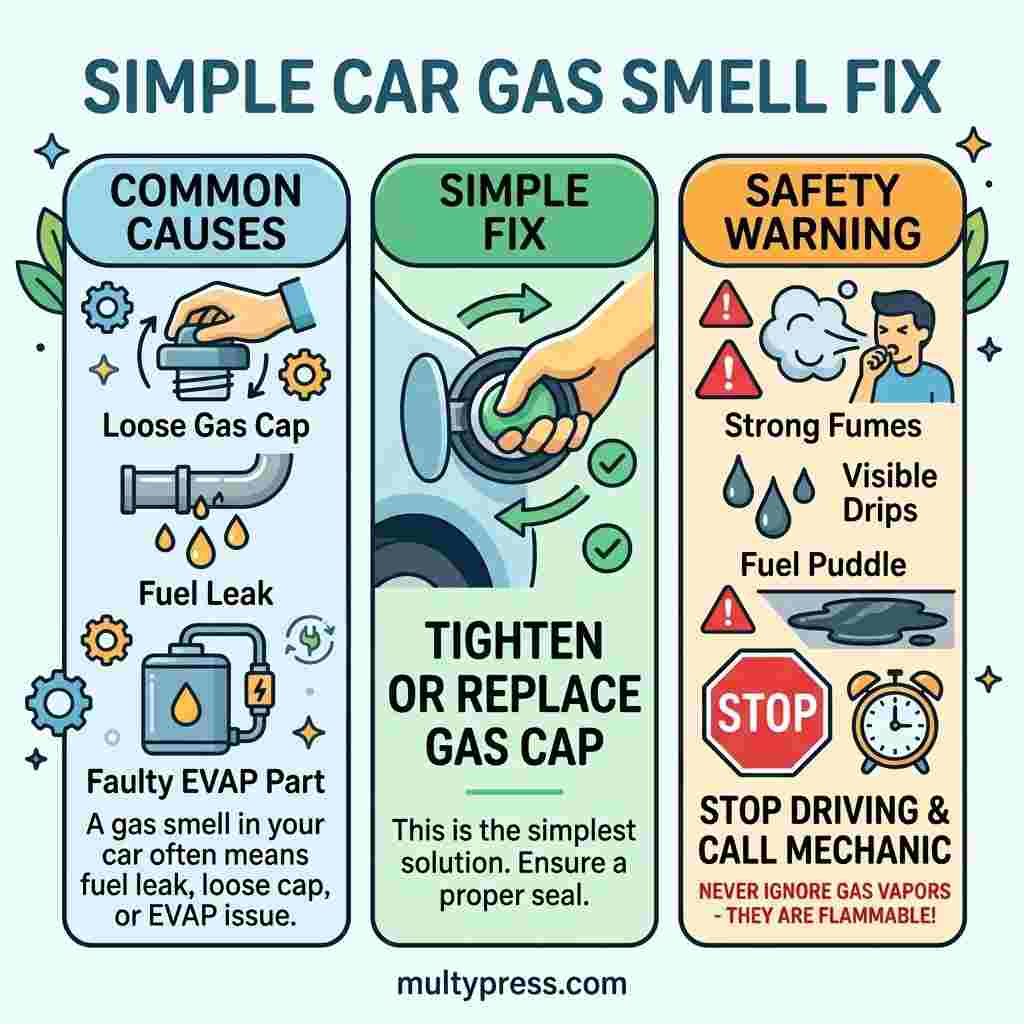
Table of Contents
Car Gas Smell Fix Recommendation Tool
Car Gas Smell Fix: How to Stop the Odor Fast and Safely
Have you ever opened your car door and caught a sharp whiff of gasoline? That smell is more than an annoyance. It can signal a real safety risk. This car gas smell fix guide shows you how to find the source, solve it, and stay safe. First, let’s see why this odor matters.
Why a Gasoline Odor Is Never Normal
A healthy car keeps fuel sealed inside a closed system. Fuel stays in the tank, lines, and engine. Therefore, you should never smell raw gasoline inside the cabin.
Gasoline vapors ignite easily. The U.S. Environmental Protection Agency notes that fuel vapors contribute to air pollution and smog. They also pose a fire hazard near heat or sparks.
Expert tip: The National Highway Traffic Safety Administration (NHTSA) advises drivers to treat any fuel leak as a fire risk and to have it inspected promptly.
So, how do you tackle the problem? Start with the easiest check.
Quick Car Gas Smell Fix: Start With the Gas Cap
A loose gas cap is the most common and cheapest culprit. The cap seals the tank and holds vapors inside. When it fails, fumes escape near the rear of the car.
Follow these steps:
- Park on a flat surface and turn off the engine.
- Remove the cap and inspect the rubber seal.
- Look for cracks, dryness, or missing pieces.
- Reinstall the cap until it clicks.
- Replace the cap if the seal looks worn.
A new cap is inexpensive. Moreover, this simple step often solves the problem completely. Still, if the smell stays, keep reading.
7 Common Causes of a Gas Smell in Your Car
Many drivers ask, “why does my car smell like gas?” The answer depends on where and when you notice the odor. The table below compares the most frequent causes.
| Cause | Typical Sign | Difficulty | Suggested Action |
|---|---|---|---|
| Loose or damaged gas cap | Smell near the rear; check engine light | Easy | Tighten or replace the cap |
| Leaking fuel line | Strong odor, wet spots under the car | Hard | Professional repair |
| Leaking fuel injector | Smell under the hood; rough idle | Medium | Inspect and replace seals |
| Cracked EVAP hose or canister | Faint odor; EVAP trouble codes | Medium | Replace the damaged part |
| Fuel tank leak or damage | Puddle beneath the tank | Hard | Stop driving; tow the car |
| Faulty fuel pressure regulator | Gas smell with black exhaust smoke | Medium | Test and replace |
| Rich fuel mixture | Gas odor from the exhaust | Medium | Check sensors and tune-up |
Next, you need to pinpoint which cause applies to you.
How to Find the Source of the Leak?
Pinpointing the leak makes any car gas smell fix faster and cheaper. Use your senses and a few safe checks.
Notice when the smell appears. A smell at startup often points to injectors. A smell after refueling suggests the cap or filler neck. Meanwhile, a constant odor may mean a leaking line or tank.
Check the ground. Slide a piece of clean cardboard under the car overnight. Then look for dark, oily spots. Gasoline evaporates quickly, so the stain may look faint.
Inspect under the hood. Look at the fuel rail, hoses, and injector connections. Note any wet areas or cracked rubber. However, only do this when the engine is cool.
Scan for codes. An OBD-II scanner reads trouble codes. EVAP-related codes often appear when vapors escape the system. Indeed, a lit check engine light combined with a gas smell is a strong clue.
Expert tip: AAA recommends that drivers who smell fuel avoid starting the engine again and seek professional help if they cannot find a simple cause.
Car Gas Smell Fix for Each Cause
Once you know the likely source, you can choose the right repair. Some jobs suit a confident DIYer. Others demand a certified technician.
Easy DIY Fixes
You can handle the gas cap, loose clamps, and cracked small vacuum hoses. Use quality parts that match your vehicle. Additionally, wipe away any spilled fuel with a clean cloth. Work outdoors in fresh air.
Jobs for a Professional
Leave fuel lines, tanks, and injector replacements to a trained mechanic. These parts carry pressurized fuel. Therefore, a small mistake can cause a serious fire. A shop also has the tools to test the system for leaks.
Repair costs vary by vehicle and region. A gas cap may cost very little. In contrast, a fuel tank or line replacement can run into hundreds of dollars. Ask for a written estimate before work begins.
When to Stop Driving Immediately?
Some warning signs demand urgent action. Pull over safely and turn off the engine if you notice any of the following:
- A strong, sharp gasoline odor inside the cabin
- Visible fuel dripping or pooling under the car
- Fuel smell with smoke or sparks
- Dizziness or headache while driving
Next, move everyone away from the vehicle. Avoid smoking or using open flames. Finally, call roadside assistance or a tow service. Never gamble with fuel vapors.
Expert tip: The Centers for Disease Control and Prevention (CDC) warns that inhaling gasoline vapors can cause headaches, dizziness, and nausea. Ventilate the car and seek fresh air.
How to Prevent Gas Smells in the Future?
Prevention beats repair every time. Build these simple habits into your routine:
- Tighten the gas cap until you hear it click.
- Stop filling the tank after the pump shuts off.
- Service your car on schedule.
- Inspect fuel lines and hoses during oil changes.
- Fix a check engine light quickly.
Furthermore, avoid parking on slopes that stress the tank during refueling. Small habits protect your car for years.
FAQs Car Gas Smell Fix
Can a gas smell go away on its own?
Sometimes, a spill at the pump fades within hours. However, a smell that returns signals a real problem.
Is it safe to drive with a faint gas smell?
A faint smell after refueling is often minor. Still, schedule an inspection if it continues.
Why does my car smell like gas after it sits?
Fuel vapors can escape from a failing EVAP part or a small leak. The smell builds up when the car stays closed.
Final Thoughts
A gasoline odor is your car’s early warning. Start with the gas cap, then check hoses, lines, and injectors. Remember that the best car gas smell fix is a fast, safe response. When in doubt, call a professional. Acting today protects your car, your wallet, and the people inside it.