
Maintaining marital intimacy after kids can be difficult as daily responsibilities and parenting demands take center stage. Between sleepless nights, busy schedules, and endless to-do lists, couples often find less time for each other. However, keeping intimacy alive doesn’t require grand gestures—just small, consistent efforts. This guide offers simple and effective ways to reconnect emotionally and physically, helping you strengthen your relationship and prioritize marital intimacy after kids in everyday life.
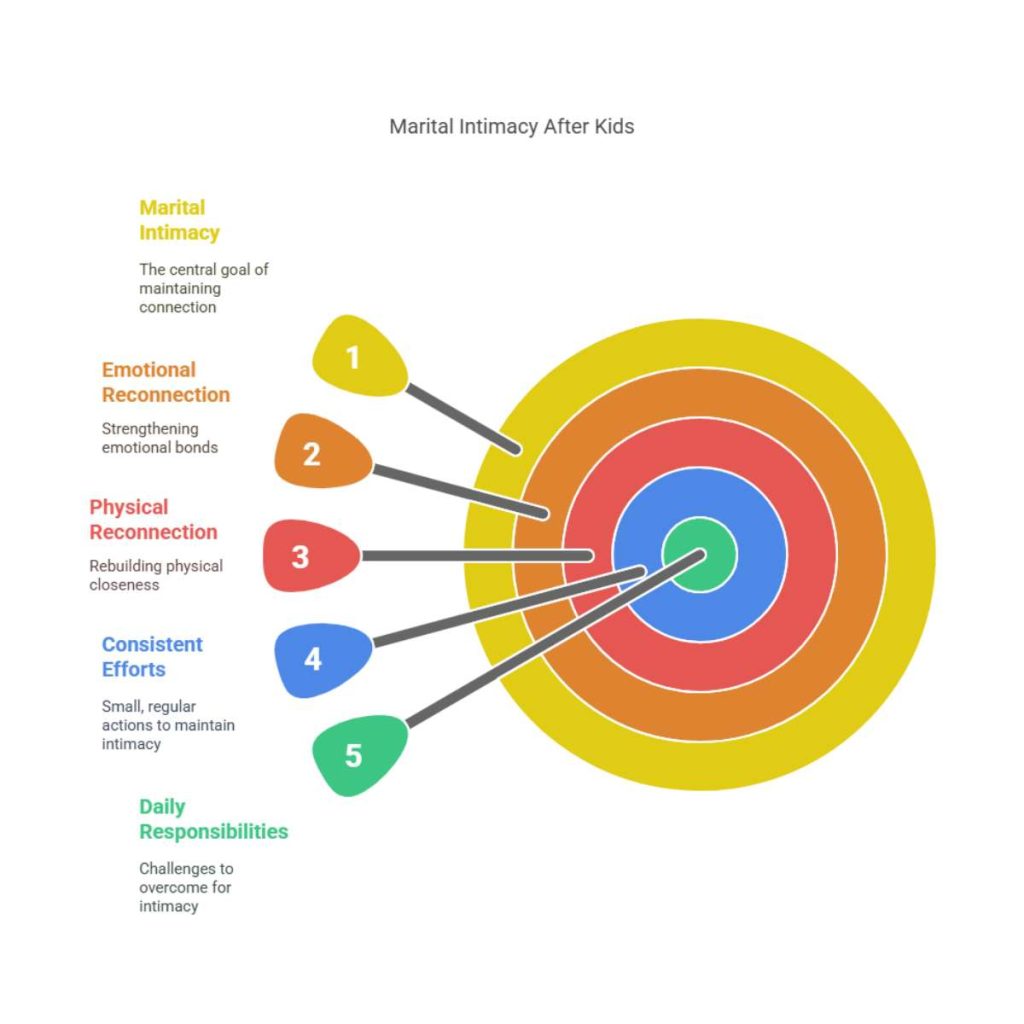
Lets discuss in details about marital intimacy after kids.
Table of Contents
Why Marital Intimacy Declines After Childbirth — And How to Rebuild It
In many families across our culture, the bond between husband and wife often weakens after the birth of a child. When there are two or three children, the intimacy in the relationship almost vanishes. Romantic interactions are replaced by parental responsibilities and endless household chores. As a result, bitterness begins to grow in the relationship.
The Hidden Barrier: Co-Sleeping With Children
A common trend in many households is co-sleeping with children—even when the child is 5, 6, or 7 years old. However, experts strongly recommend transitioning the child to a separate bed by the age of 2.5 or 3.
| Age of Child | Recommended Sleeping Arrangement |
|---|---|
| 0 – 2.5 years | Co-sleeping with parents |
| 2.5+ years | Separate bed in same or nearby room |
| 5+ years | Separate room with comfort setup |
Why This Matters:
- By age 3, children begin to perceive adult behavior more clearly.
- If a child wakes at night and sees their parents in an intimate or unexpected situation, it may cause confusion or emotional discomfort.
- Prolonged co-sleeping often leads to disruptions in marital intimacy.
Expert Tip: Dr. Lina Rahman, a family counselor, suggests, “Maintaining privacy in marital relationships is crucial for emotional bonding. Separate sleeping arrangements help both the couple and the child develop independence and respect for boundaries.”
How to Transition Your Child Smoothly
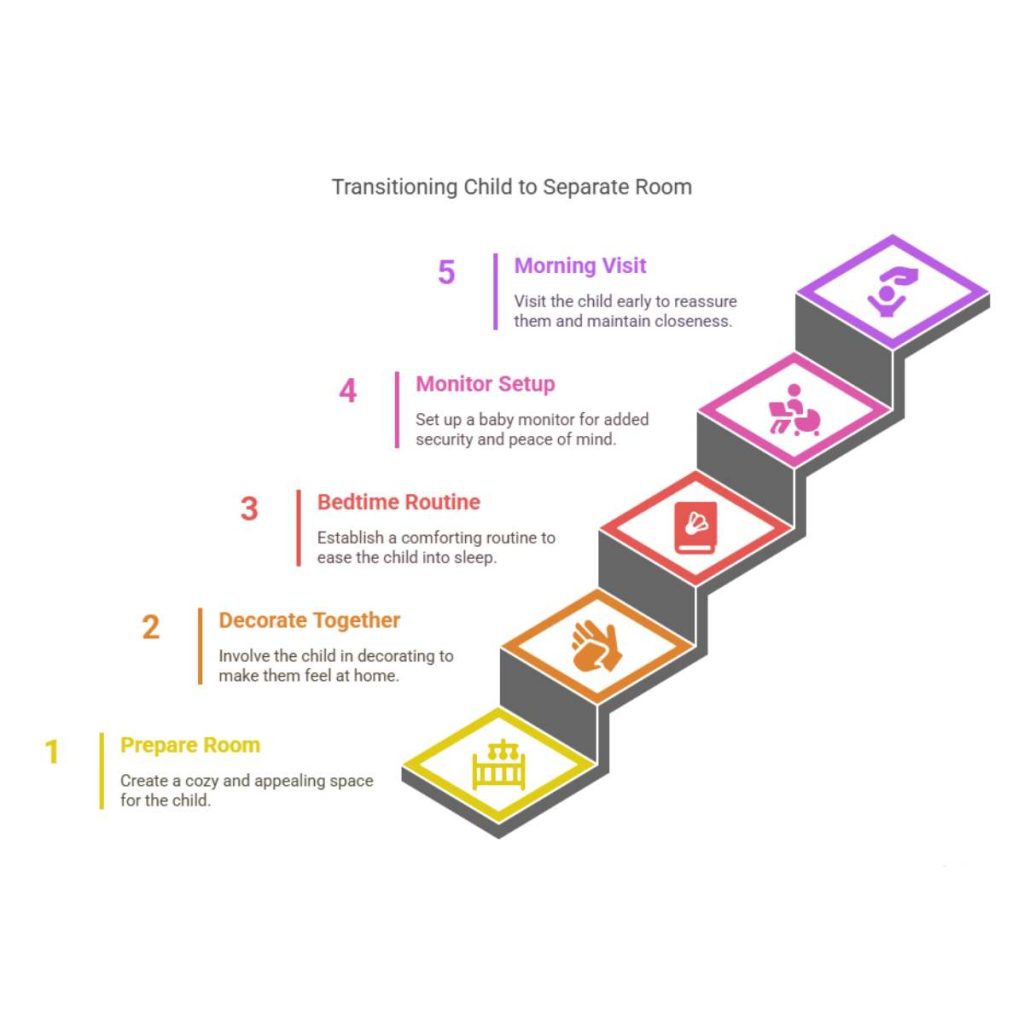
- Prepare a cozy, appealing bed for your child in a separate room.
- Decorate the room with themes they love—let them help in the process.
- Use bedtime routines such as storytelling or soft music to make them feel safe.
- Once asleep, return to your room.
- Consider using a baby monitor for added peace of mind. Keep the monitor near the child and the receiver close to your bed. You’ll be alerted if the child wakes up.
- Visit your child early in the morning so they still find you nearby.
Stat Insight: According to a 2023 survey by the Global Parenting Institute, 76% of parents who transitioned children by age 3 reported improved marital intimacy and stronger emotional bonding.
🧠 Conflict to Connection Converter
Don’t Neglect the Firstborn After the Second Child Arrives
After the birth of a second child, many mothers unintentionally begin to neglect their firstborn. All the affection gets directed toward the newborn, while the older child—who actually understands more—receives scolding or commands. This often breeds resentment.
Advice from Experts: “The older child can experience emotional abandonment,” says psychologist Sarah Malik. “They might think, ‘If the younger sibling wasn’t here, mom would still love me like before.’”
What You Should Do:
- Shower more affection on the firstborn during this time.
- Regularly assure them that your love has not decreased.
- Involve your spouse in making the older child feel included and appreciated.
Avoid Comparing Siblings or Creating Double Standards
Each child is unique, with different needs and personalities. Avoid comparing them or establishing different rules.
Don’ts:
- Don’t feed one child using devices (e.g., mobile/tablet) while restricting it for the other.
- Don’t give a gift to one child while ignoring the other.
- Don’t allow one to sleep alone and the other with you.
Do’s:
- Ensure both children have the same bedtime.
- Buy gifts in pairs, or distribute fairly.
- When the younger child turns 2.5, let them sleep with the older sibling in a shared room or separate beds in the same room.
💖 Weekly Intimacy Planner
💑 Marital Intimacy Score Booster
Set Daily Family Bonding Time
Reserve 1 to 1.5 hours daily where the entire family spends quality time together.
Activities May Include:
- Playing group games
- Sharing stories or daily highlights
- Participating in collaborative hobbies
During this time:
- Smile, laugh, and engage with each other.
- Look at your spouse with love and gratitude.
If you feel overwhelmed or irritable:
- Step away instead of snapping at loved ones.
- Go to a quiet room, balcony, or rooftop.
- Try meditation or deep breathing exercises.
- Ask yourself if your anger is truly justified.
Emotional Health Fact: Research by Family First Foundation reveals that families who spend at least one hour of shared daily time experience 42% fewer conflicts.
Conclusion: Don’t Let the Most Important People Become the Most Neglected
A family is made of love between spouses and their children. But in the rush of responsibilities, these essential relationships often get neglected. It is our duty to nurture them with care, respect, and conscious effort.
Let love stay alive.
Let relationships remain strong.
Because a peaceful home begins with a peaceful bond.
Have any questions about marital intimacy after kids? Please feel free to submit your questions at comment section.
FAQs How to Maintain Marital Intimacy After Kids in Daily Life
How can couples maintain intimacy after having children?
Small, consistent moments of connection can help couples maintain intimacy after children arrive.
How often should couples spend private time together?
Aim for regular private time, even when schedules are busy. Quality matters more than a fixed number of hours.
Can co-sleeping affect marital intimacy?
Co-sleeping can reduce privacy for some couples. Families should choose safe sleeping arrangements that fit their needs.
How can parents reconnect when they feel exhausted?
Use brief rituals such as talking before bed, sharing a meal, or taking a short walk together.
How can couples discuss intimacy without creating pressure?
Choose a calm time and describe your feelings without blame. Ask your partner what support would feel helpful.
Does emotional closeness matter for physical intimacy?
Yes. Emotional safety, affection, communication, and mutual respect can support a healthy intimate relationship.
How can parents protect couple time with a busy schedule?
Schedule short connection periods and share household responsibilities. Treat agreed couple time as an important commitment.
What should couples do when parenting disagreements reduce intimacy?
Discuss disagreements privately and focus on shared goals. Avoid criticizing each other in front of children.
Can stress after childbirth affect a couple’s relationship?
Yes. Sleep loss, workload, financial pressure, and emotional changes can strain relationships. Open communication can help.
When should couples seek professional relationship support?
Consider professional support when conflict stays intense or communication repeatedly breaks down. Counseling can provide structured guidance.