
Yes, you can bring your own parts to a dealership. When it comes to getting your vehicle serviced at a dealership, there are often questions about whether or not you can bring your own parts.
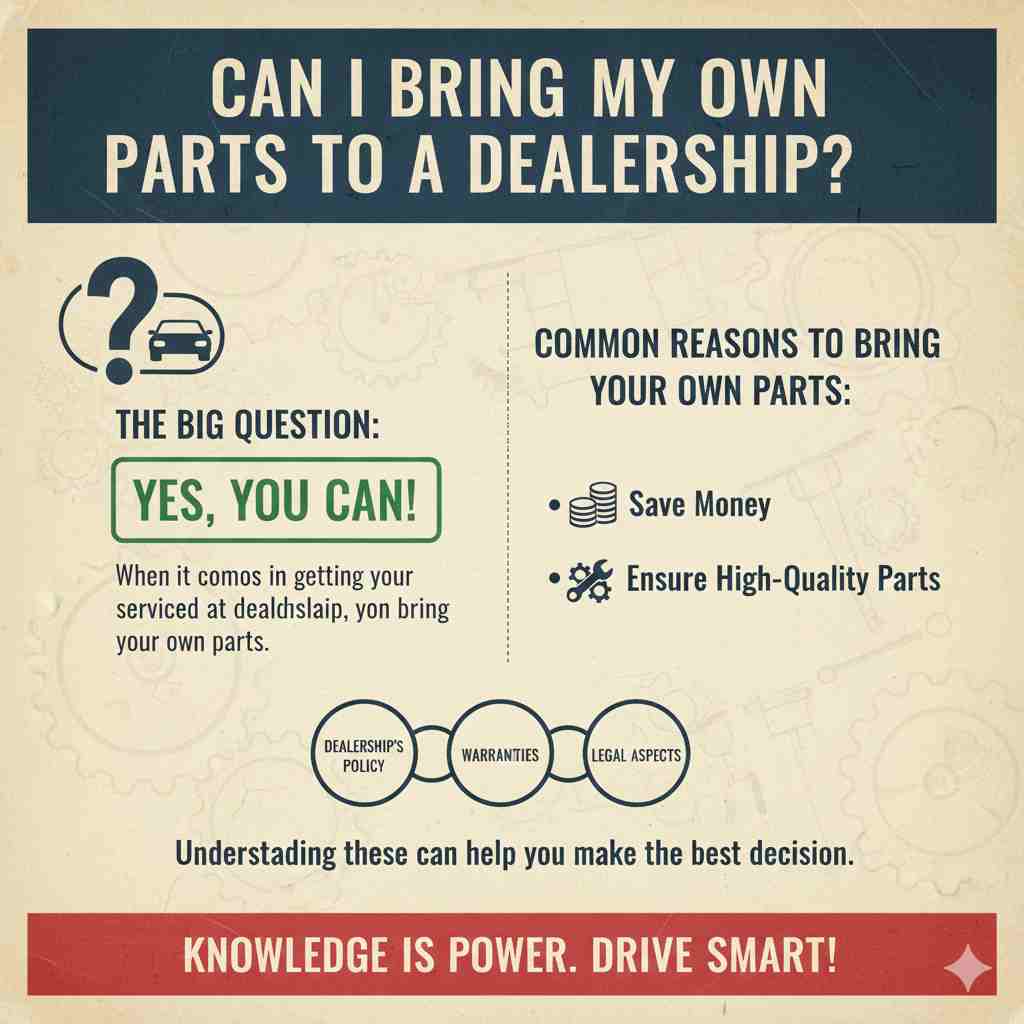
When it comes to car maintenance or repairs, many car owners ask: “Can I bring my own parts to a dealership?” This question is common among those wanting to save money or ensure high-quality parts. Understanding the dealership’s policy, warranties, and legal aspects can help you make the best decision.
In this article, we explore whether you can bring your own parts to a dealership, what the potential challenges are, and how to handle the process smoothly.
Your Part Cost
Dealership Labor Cost Per Hour
Estimated Labor Hours
Dealership OEM Part Price (If They Provided It)
Estimated Results
Table of Contents
Understanding Dealership Policies on Customer-Supplied Parts
Most dealerships have strict policies regarding car repairs. They often prefer using OEM (Original Equipment Manufacturer) parts or parts they source themselves. Why? Because dealerships guarantee the quality and performance of these parts.
However, policies can vary depending on the dealership and location. Some dealerships may allow you to bring your own parts to a dealership, while others may refuse outright.
Expert Tip: “Always call ahead and ask about their policy on customer-supplied parts. Some dealerships allow it under specific conditions,” says John Peterson, an automotive service manager with 15 years of experience.
Reasons You Might Want to Bring Your Own Parts
Bringing your own parts to a dealership can be tempting for several reasons:
| Reason | Explanation |
|---|---|
| Cost Savings | Aftermarket parts or parts bought online may be cheaper than dealership prices. |
| Higher Quality | Some car owners prefer high-performance or specialty parts. |
| Warranty Control | Choosing your own parts can sometimes avoid manufacturer price markups. |
| Availability | Certain rare or discontinued parts might not be stocked at the dealership. |
Despite these benefits, dealerships often have valid reasons to be cautious.
Potential Challenges of Bringing Your Own Parts
While the idea sounds convenient, there are potential challenges to consider:
- Warranty Issues: Many dealerships may refuse to install parts you supply. Doing so could void parts or service warranties.
- Liability Concerns: If a customer-supplied part fails or damages the vehicle, the dealership might avoid responsibility.
- Compatibility Problems: Some aftermarket parts may not be fully compatible with your car model.
- Labor Costs: Even if you supply the part, labor charges still apply, which might reduce your overall savings.
Expert Insight: “Dealerships are bound by manufacturer agreements. Installing parts not sourced through them could create legal and warranty issues,” says Angela Lee, automotive repair expert.
How to Successfully Bring Your Own Parts?
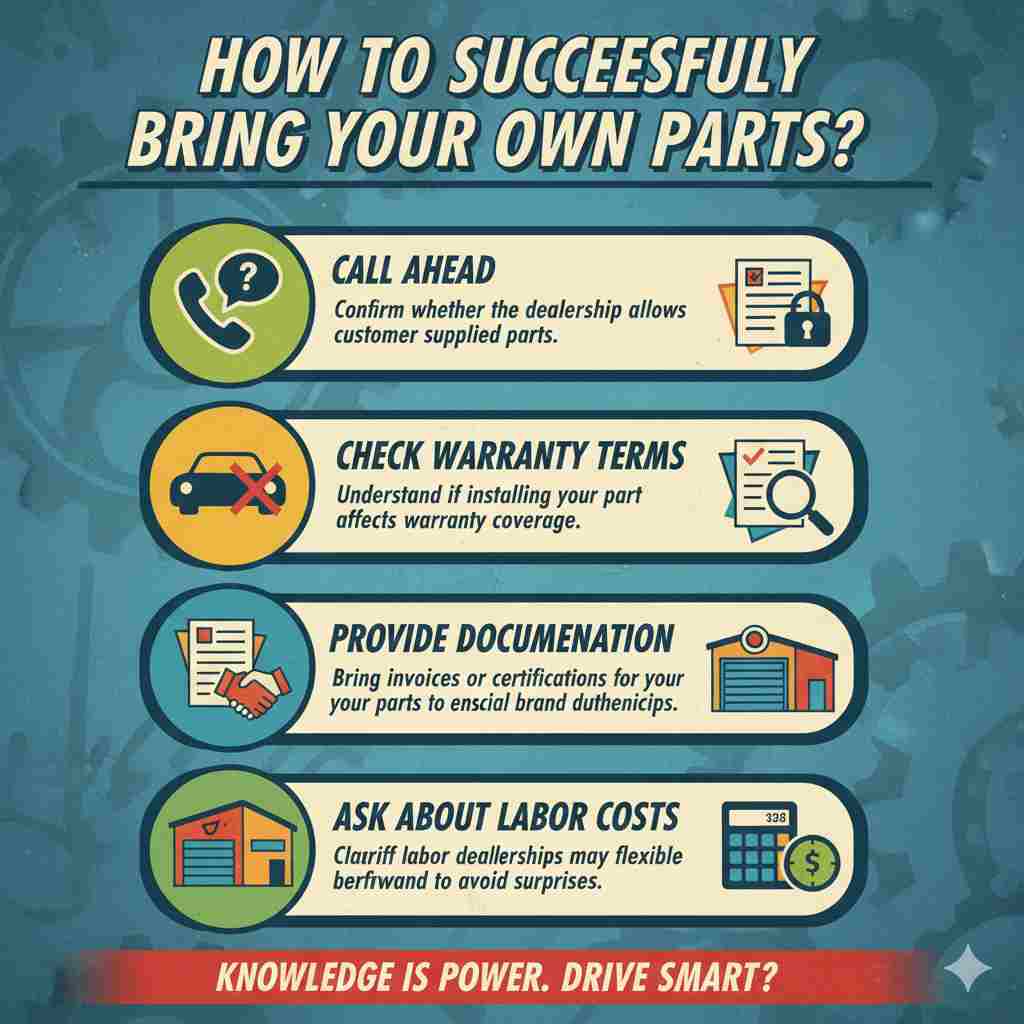
If you decide to bring your own parts to a dealership, follow these steps to increase your chances of acceptance:
- Call Ahead: Confirm whether the dealership allows customer-supplied parts.
- Check Warranty Terms: Understand if installing your part affects warranty coverage.
- Provide Documentation: Bring invoices or certifications for your parts to ensure authenticity.
- Choose Reputable Dealerships: Some independent dealerships may be more flexible than official brand dealerships.
- Ask About Labor Costs: Clarify labor charges beforehand to avoid surprises.
Pro Tip: Always bring high-quality or OEM-compatible parts. Dealerships are more likely to accept them.
Legal Considerations
It’s important to know your legal rights when supplying parts. In the United States, for example, the Magnuson-Moss Warranty Act protects consumers. According to this act, a dealer cannot void your car warranty just because you used aftermarket parts, unless the part caused damage.
Key Point: Always keep records of your parts, receipts, and installation documentation. It can protect you in case of warranty disputes.
Alternatives to Bringing Your Own Parts
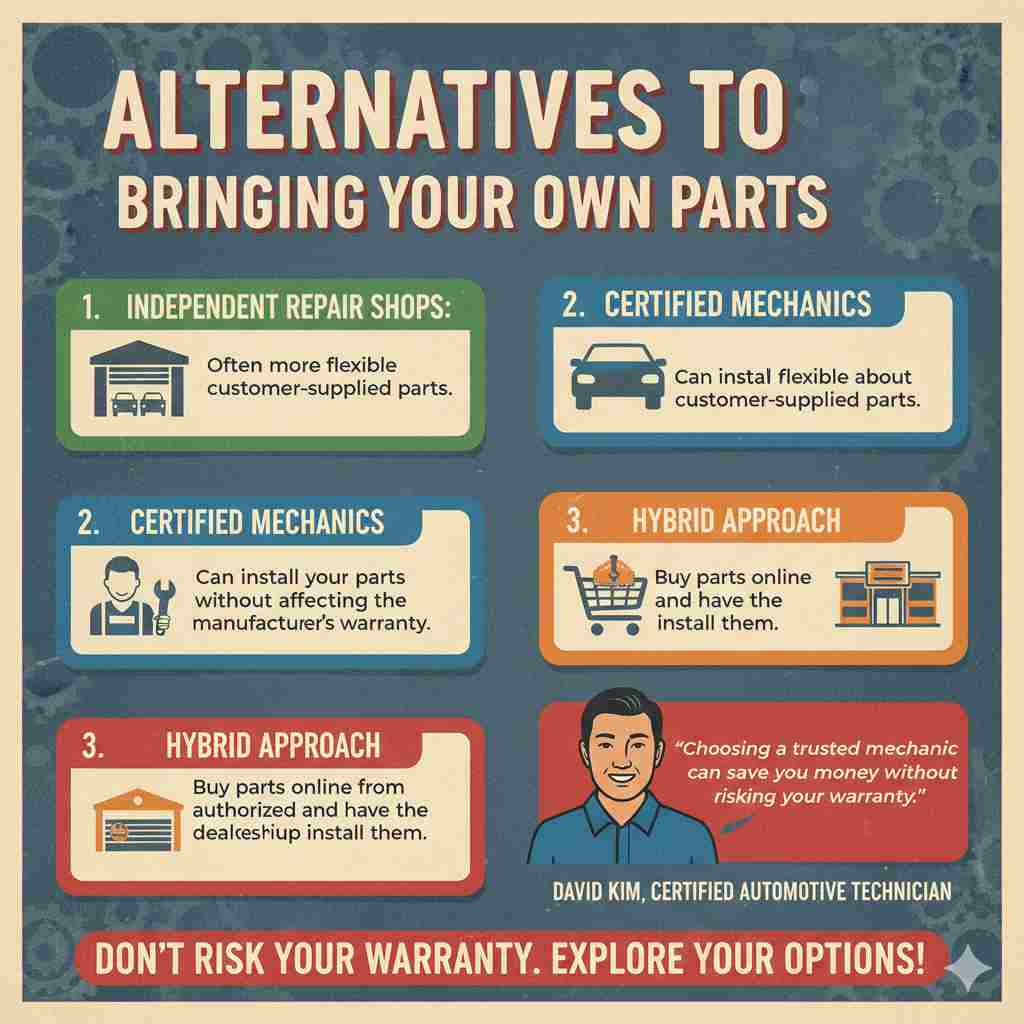
If the dealership refuses your parts, consider alternatives:
- Independent Repair Shops: Often more flexible about customer-supplied parts.
- Certified Mechanics: Some mechanics can install your parts without affecting the manufacturer's warranty.
- Hybrid Approach: Buy parts online from authorized resellers and have the dealership install them.
Expert Advice: “Choosing a trusted mechanic can save you money without risking your warranty,” says David Kim, certified automotive technician.
Questions to Ask Before Supplying Parts
Before you bring your parts, ask the dealership these crucial questions:
- Do you allow customer-supplied parts?
- Will installing my part affect my warranty?
- Do you charge a fee for installing non-dealership parts?
- Are there specific parts you cannot install?
- Can you provide a written agreement confirming installation and warranty terms?
Final Thoughts
Bringing your own parts to a dealership is possible, but it comes with challenges. Always research the dealership’s policy, check warranty implications, and choose high-quality parts. With proper preparation, you can save money and get the performance you want.
Summary Table: Pros and Cons
| Pros | Cons |
|---|---|
| Potential cost savings | Warranty may be affected |
| Access to high-quality parts | Dealership may refuse installation |
| Choice of specialized parts | Labor costs still apply |
| Availability of rare parts | Compatibility issues may arise |
Bottom Line: Always communicate openly with the dealership. Ask questions, document everything, and make informed decisions. Doing so ensures you safely enjoy the benefits of supplying your own parts.
FAQ on Can I Bring My Own Parts To A Dealership
Can I Bring My Own Parts To A Dealership For Repairs?
Yes, you can bring your own parts to a dealership. However, the dealership may charge you a fee for installing them. Be sure to check their policies before bringing parts to them.
Will The Dealership Warranty Still Apply If I Bring My Own Parts?
It depends on the dealership and the parts. In most cases, dealership warranties only cover parts that they supply and install. Bringing your own parts may void the warranty.
Is It A Good Idea To Bring My Own Parts To A Dealership?
It can be a good idea if you are knowledgeable about parts and can save some money. However, it can also be risky as the parts may not be compatible or the quality may be inferior.
Can I Bring Used Or Refurbished Parts To A Dealership?
Some dealerships may not allow used or refurbished parts, while others may accept them. It's important to check with the dealership beforehand and ensure that the parts meet their standards.
What If The Dealership Refuses To Install My Own Parts?
If the dealership refuses to install your own parts, you may need to consider taking your business elsewhere or finding a reputable mechanic who is willing to install them.
Final Verdict
It's clear that bringing your own parts to a dealership is a bit of a mixed bag. While it's possible to do and can save you some money in certain cases, it's not always the best course of action. In some instances, it may be more difficult or expensive to install outside parts, and there's always the chance that the dealership won't even allow it.
At the end of the day, it's best to talk to your dealership and see what their policy is, as well as weigh the pros and cons of bringing your own parts versus having them ordered through the dealership. By doing so, you can make an informed decision about what’s best for your car and your wallet.
Remember, always prioritize safety and reliability over savings, and you’ll be sure to have a car that’s ready and raring to go.