
Yes, you can apply Bondo over primer, but only over the right type of primer. Bondo adheres best to bare metal, epoxy primer, or self-etching primer. It should never be applied over regular sandable primer or paint because that reduces adhesion and increases failure risk. Proper surface preparation is the key to long-lasting results.

When repairing a vehicle body, many beginners ask, “Can I Bondo Over Primer?” This question matters because the quality of adhesion determines whether your repair lasts years or fails within weeks. In this research-based automotive guide, you will discover the correct way to use Bondo, which primers work, which ones fail, and what professionals recommend.
Let’s break it down with clarity, curiosity, and expert-level insight.
Table of Contents
🔧 Introduction: Can I Bondo Over Primer?
If you have ever worked on a car repair project, you may have wondered, “Can I Bondo Over Primer?” This question seems simple, yet the wrong decision can lead to cracks, peeling, and wasted effort. Surprisingly, many DIY users apply Bondo on the wrong primer type without knowing the science behind adhesion.
This article explains the truth, backed by real auto-body experience, expert opinions, and essential steps you must follow.
Primer-Checker Quiz
Answer the questions below to see if you can safely apply Bondo over your primer.
🛠️ Can I Bondo Over Primer? The Short but Crucial Explanation
You can apply Bondo over certain primers, but not every primer works. Some primers help the filler bond stronger, while others become a weak barrier that causes repair failure.
Below is a simple table to guide you:
Table 1: Primer Types & Whether You Can Apply Bondo Over Them
| Primer Type | Can You Apply Bondo? | Reason |
|---|---|---|
| Bare Metal | ✔ Yes | Best adhesion for Bondo. |
| Epoxy Primer | ✔ Yes | Strong chemical bond and corrosion protection. |
| Self-Etching Primer | ✔ Yes | Acid bites into metal and improves grip. |
| 2K Urethane Primer | ✖ No | Designed for paint, not filler adhesion. |
| Lacquer or Spray Can Primer | ✖ No | Weak, chalky, easily peels under filler. |
| Painted Surface | ✖ No | Poor adhesion; risk of delamination. |
🧲 Why Primer Type Matters for Bondo Adhesion
Bondo is a polyester body filler that needs a mechanical or chemical bond. Cheap primers block that bond. If you ever see cracked filler on old bodywork, improper surface preparation is usually the cause.
An experienced collision expert once said:
“Bondo sticks to metal. It only sits on cheap primer.” – Mike Robins, Auto Body Technician (20+ years)
This statement explains why so many beginners struggle with failed repairs.
🔍 Can I Bondo Over Primer? Understanding Each Primer in Detail

1. Bondo Over Epoxy Primer – The Best Option
Modern professionals prefer epoxy primer under Bondo because it seals the metal and prevents rust. Epoxy offers a strong chemical bond with fillers.
Benefits include:
- High corrosion protection
- Strong adhesion
- Works even on thin metal
- Prevents moisture penetration
This makes it the safest option when repairing classic cars or coastal-region vehicles.
2. Bondo Over Self-Etching Primer – Acceptable but Not Ideal
Self-etching primer contains acid that “bites” into bare metal. It is acceptable for Bondo, but many experts still prefer epoxy.
Important note:
Self-etching primer must be fully cured and sanded before applying filler.
3. Bondo Over Bare Metal – The Traditional Method
Many old-school technicians still say:
“Filler belongs on clean, sanded metal.”
While this method works, it lacks the corrosion protection that epoxy provides. Still, it remains the standard in many shops for quick repairs.
☠️ Primers You Should Never Apply Bondo Over
A. Regular Spray Can Primer
Cheap primer from aerosol cans contains chalky solids. Bondo does not bond well to these surfaces.
B. Paint or Clear Coat
Paint is too smooth for filler to grip. Filler on paint peels off like a sticker.
C. Urethane or Sandable Primer
These primers are designed for improving paint finish—not bonding filler.
🔧 Step-by-Step: How to Properly Apply Bondo Over Primer
If you decide to apply Bondo over primer, follow these expert steps.

Step 1: Choose the Right Primer
Only use:
- Epoxy primer, or
- Self-etching primer
Step 2: Sand the Surface
Use 80-grit or 120-grit sandpaper. This creates mechanical scratches for better adhesion.
Step 3: Clean the Surface
Wipe with:
- Wax and grease remover
- Lint-free cloth
This step prevents pinholes and bubbles.
Step 4: Mix Bondo Correctly
Incorrect mixing causes cracking.
Use the manufacturer-recommended ratio.
Step 5: Apply Thin Layers
Apply in thin coats of 1/8 inch. Thick layers cause heat buildup and failure.
Step 6: Let It Cure Fully
Bondo needs full curing before sanding or priming.
Bondo Surface Prep Checklist
Follow these steps to properly prepare your surface before applying Bondo.
📣 Expert Tip You Should Never Ignore
Never apply Bondo over wet or uncured primer.
Moisture trapped under filler is the #1 cause of rust and cracking.
As automotive refinishing trainer Jason Lee says:
“Patience in preparation guarantees the durability of your finish.”
🔥 Can I Bondo Over Primer? Myth vs Reality
| Myth | Reality |
|---|---|
| You can apply Bondo on any primer. | Only certain primers support strong adhesion. |
| Filler covers imperfections no matter what lies underneath. | Poor base = weak repair that cracks later. |
| Sanding is optional. | Sanding is mandatory for filler bonding. |
🧪 The Science Behind Bondo Adhesion
Bondo cures by a chemical reaction. For long-lasting results, it must bond to:
- Exposed metal, or
- Chemically active primers like epoxy
Primers designed only for filling do not react properly with filler. This leads to weak bonds and failure.
Tips To Ensure A Smooth Finish
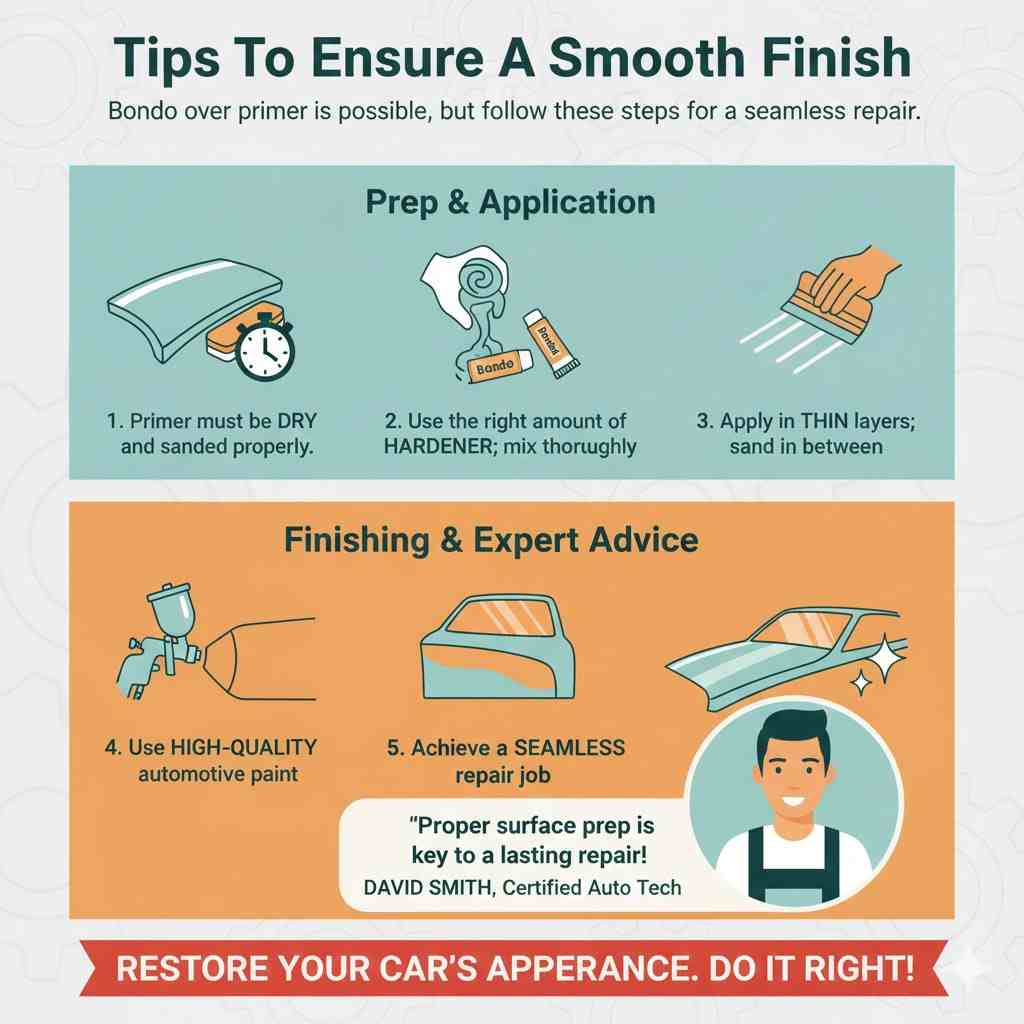
Bondo is a common material used for repairing dents and damages on a car’s body. If you have already applied primer and are wondering if you can bondo over it, the answer is yes. However, to ensure a smooth finish, there are a few tips you need to keep in mind.
Firstly, make sure the primer is completely dry and sanded properly before applying bondo. Use the right amount of hardener and mix it thoroughly. Apply bondo in thin layers and sand it down in between. Finally, use a high-quality automotive paint to finish off the repair job.
By following these guidelines, you can achieve a seamless repair job and restore your car’s appearance to its former glory.
🤔 Final Verdict: Can I Bondo Over Primer?
Yes, you can apply Bondo over primer, but only over:
- Epoxy primer
- Self-etching primer
Avoid applying Bondo over:
- Spray can primer
- Sandable primer
- Paint
For the most durable repair, use epoxy primer or apply Bondo directly on clean, bare metal.
🏁 Conclusion
So, Can I Bondo Over Primer?
Yes, but only when you use the right type of primer and prepare the surface correctly. Choosing the wrong primer can ruin your repair, while the right primer ensures long-term durability.
If you want professional-level results, follow the guidelines in this article. Proper preparation transforms an average repair into a flawless one.
FAQ on Can I Bondo Over Primer
Can Bondo Be Applied Over Primer?
Yes, bondo can be applied over primer. However, you should ensure that the primer is clean, dry, and sanded with fine-grit sandpaper before applying bondo to ensure good adhesion.
How Long Should I Wait Before Applying Bondo Over Primer?
It is recommended to wait for at least 24 hours after applying primer before applying bondo. The waiting time may vary depending on the type of primer used, humidity, and temperature.
Do I Need To Sand The Primer Before Applying Bondo?
Yes, it is recommended to sand the primer with a fine-grit sandpaper (around 220 grit) before applying bondo. This will create a better surface for the bondo to adhere to and ensure smooth application.
Can Bondo Be Applied Directly To Bare Metal?
Yes, bondo can be applied directly to bare metal. However, it is generally recommended to apply a coat of primer before applying bondo for better adhesion and protection against rust.
Is It Necessary To Wear A Respirator When Applying Bondo?
Yes, it is recommended to wear a respirator when applying bondo, as the fumes can be harmful if inhaled. Additionally, it is important to work in a well-ventilated area to reduce the risk of exposure to fumes.
Final Thought
After diving into the topic, it’s safe to say that bonding over a primer is a viable option in some cases, but not always the best. Before attempting this process, consider the level of damage or unevenness on the surface, the type of primer you’ve used, and the kind of bondo you plan on using.
Sanding down the surface and applying a base coat could also be an alternative solution depending on the specific situation. Ultimately, remember to read and follow the manufacturer’s instructions for both the primer and bondo to ensure a successful outcome.
Overall, while bondo over primer can be possible, it requires a certain level of skill and expertise to achieve satisfactory results. With proper research and caution, you can determine whether this is the appropriate solution for your situation.