
The primary distinction between internal medicine and family medicine lies in the patient population each specialty serves and the specific scope of their clinical training. While both are primary care disciplines that emphasize preventative health, internal medicine physicians, known as internists, focus exclusively on the comprehensive care of adults. In contrast, family medicine physicians are trained to provide primary care to patients of all ages, from newborns to the elderly, often managing the health of entire family units over several generations.
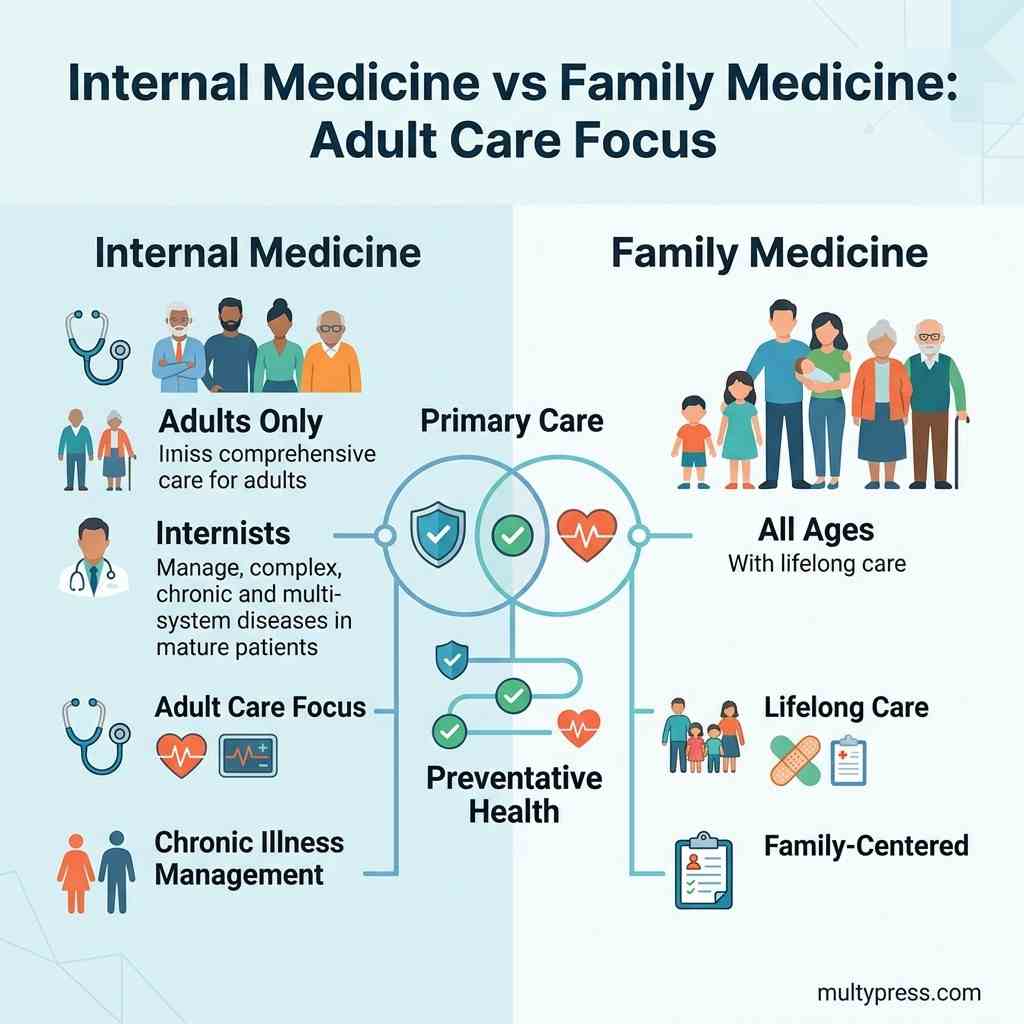
Table of Contents
Key Takeaways
- Choose an internal medicine doctor if you want a specialist focused solely on complex adult health issues.
- Select a family medicine doctor if you prefer a single physician to treat your entire family, including children.
- Both specialties are board-certified primary care providers capable of managing chronic conditions like hypertension and diabetes.
- Internists typically spend more clinical time in hospital settings compared to family medicine practitioners.
- Check your insurance provider network to verify if your preferred clinic includes both adult and pediatric services.
Understanding Internal Medicine Versus Family Medicine
Internal medicine doctors undergo a three-year residency focusing on adult medicine, covering internal organ systems and the management of multi-system diseases. Because their training is dedicated entirely to adults, they often possess deeper experience in managing complex, overlapping chronic conditions. If you have significant comorbidities or require specialized management of adult-onset disorders, an internist may provide a more tailored approach to your unique health profile.
The Scope of Family Medicine
Family medicine practitioners receive comprehensive training that spans the human lifespan. Their residency includes rotations in pediatrics, obstetrics, gynecology, and geriatrics, alongside traditional internal medicine. This breadth allows them to handle childhood vaccinations, developmental screenings, and prenatal care, alongside the standard chronic disease management expected of primary care physicians.
Comparison of Clinical Focus
| Feature | Internal Medicine | Family Medicine |
|---|---|---|
| Patient Age Range | Adults only (18+) | All ages (infant to elderly) |
| Core Focus | Adult internal organ systems | Lifespan and family health |
| Pediatric Care | Not provided | Included in training |
| Obstetric Care | Not provided | Often included |
| Hospital Work | Common in many settings | Variable based on practice |
Which Doctor Should You Choose?
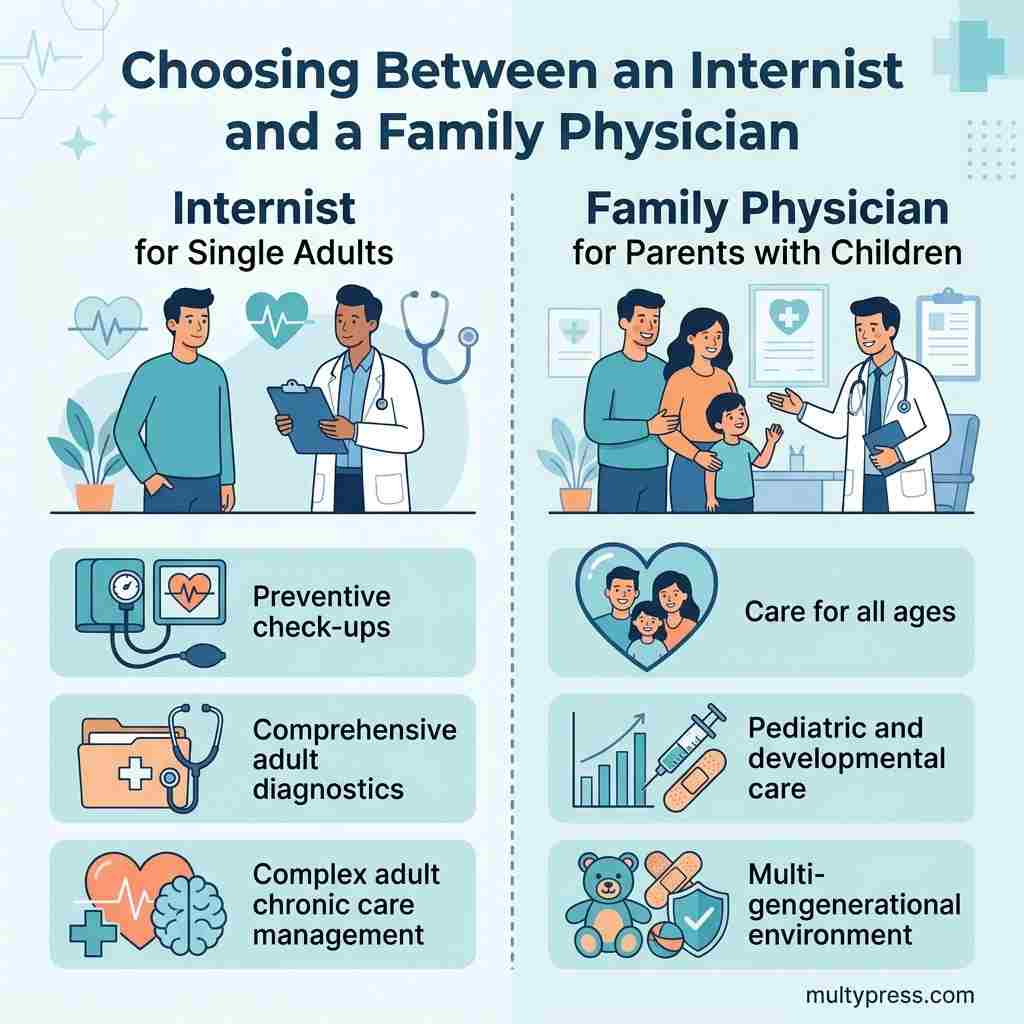
Choosing the right provider often comes down to your personal life stage and family structure. If you’re a single adult or a household of adults, an internist offers a specialized perspective on adult-specific health trends. If you’re a parent, having a family physician allows you to consolidate your appointments and your children’s visits into one practice, which simplifies record-keeping and improves continuity of care for the entire household.
Are There Differences in Training?
Both specialties require a medical degree followed by a three-year residency program. The divergence occurs during those three years. An internist spends the entirety of their residency deepening their knowledge of adult physiology, cardiology, and endocrinology. A family medicine resident must split their time across various departments to ensure they’re competent in treating everything from a toddler’s ear infection to an elderly patient’s cardiovascular health.
How to Check Your Provider’s Credentials?
Always verify that your chosen doctor is board-certified. Certification ensures that the physician has met rigorous standards in their specific field. You can usually find this information on the doctor’s official clinic website or through state medical board registries.
Pro Tip: Look for a provider who emphasizes “preventative care” rather than just sick visits to ensure you have a partner in long-term wellness.
Managing Chronic Conditions Effectively
Both internists and family medicine physicians are highly qualified to manage chronic conditions such as high cholesterol, thyroid disorders, and asthma. The choice between them rarely depends on their ability to treat these conditions but rather on the environment of the clinic and the age range of the patients they accept. If your chronic condition is highly specialized, such as advanced kidney disease, both types of doctors will likely refer you to a sub-specialist like a nephrologist.
What Is the Difference in Cost?
Insurance billing for primary care is generally consistent regardless of the specialty. However, out-of-pocket costs can vary based on your specific insurance plan’s copay structure and network status.
| Service Type | Typical Cost Range (USD) |
|---|---|
| Annual Physical | $150 – $350 |
| Standard Office Visit | $100 – $250 |
| Chronic Disease Follow-up | $80 – $200 |
Warning: Always confirm your insurance coverage before booking an appointment, as some plans restrict coverage based on the “primary care” classification of the provider.
Common Myths About Primary Care
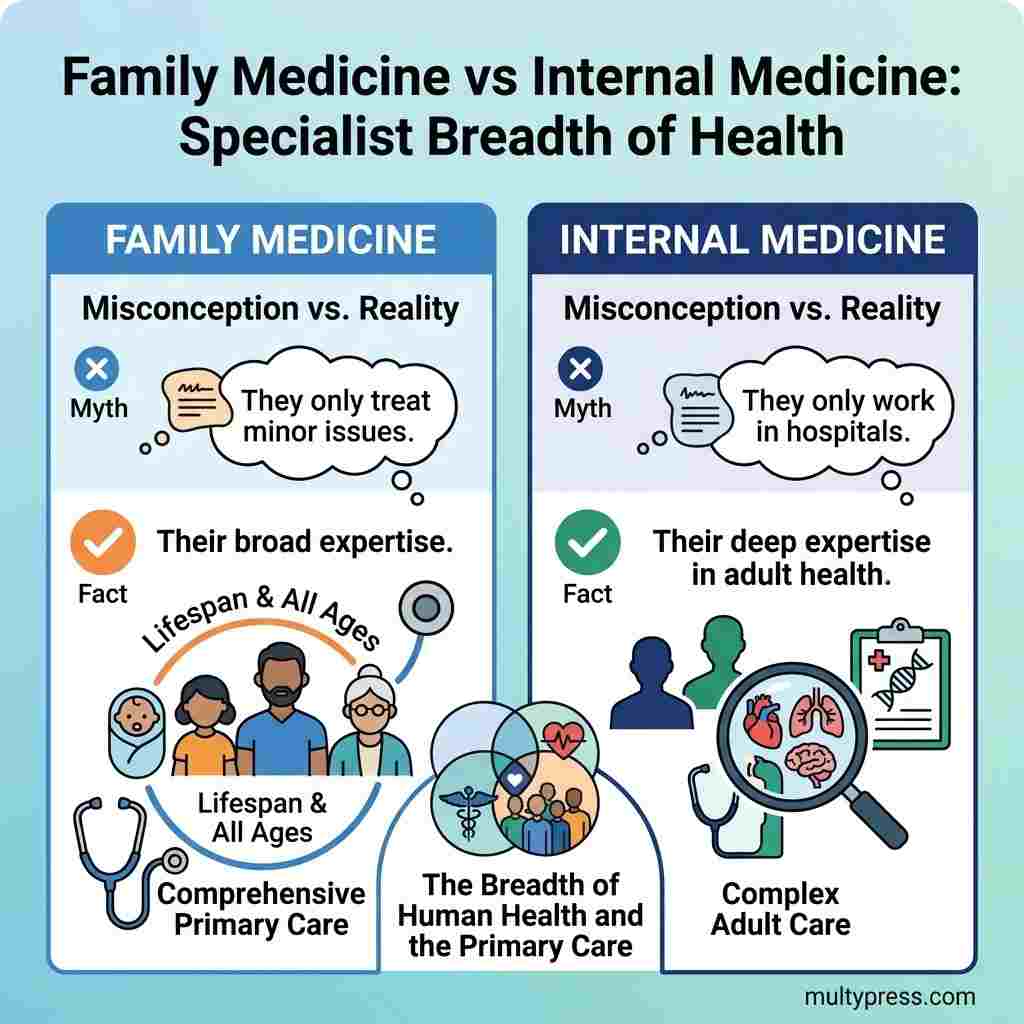
A common misconception is that family medicine doctors are “generalists” who know less than internists. This is false; they’re specialists in the breadth of human health. Conversely, people often assume internists are “specialists” like cardiologists. While they’re specialists in adult medicine, they remain primary care providers. Both roles are essential pillars of the healthcare system, providing the first point of contact for patients.
FAQs On Difference Between Internal Medicine and Family Medicine
What is the fundamental difference in clinical focus between internal medicine and family medicine?
Internal medicine focuses exclusively on adult disease processes, while family medicine covers lifespan care from newborns to elderly patients.
Internists dedicate three full residency years strictly to adult organ systems, pathophysiology, and complex multisystem disease management under American Board of Internal Medicine (ABIM) standards. Consequently, they complete extensive inpatient hospital rotations, intensive care unit (ICU) management, and subspecialty Consult services.
In contrast, family physicians divide three years of Accreditation Council for Graduate Medical Education (ACGME) training across pediatrics, obstetrics, gynecology, and adult outpatient care. Therefore, family medicine emphasizes community health, multi-generational continuity of care, and outpatient preventive medicine.
Which physician type manages multi-system chronic illnesses like diabetes with renal failure better?
Internists generally offer deeper expertise for complex multi-system disease management involving overlapping organ dysfunction.
Their residency emphasizes intensive inpatient medicine and subspecialty rotations. For example, internists spend extensive time in nephrology, cardiology, and endocrinology units managing end-stage renal disease (ESRD), glycemic volatility, and heart failure concurrently.
Family physicians manage routine chronic conditions effectively. However, internists excel when complex drug interactions, declining estimated glomerular filtration rates (eGFR), and cardiovascular complications intersect. Consequently, patients with brittle type 2 diabetes, Stage IV chronic kidney disease, and congestive heart failure benefit from an internist’s subspecialty focus.
Can a family medicine doctor deliver babies and perform minor surgical procedures in clinical practice?
Yes, family physicians receive formal training in low-risk obstetrics and outpatient minor surgical procedures during ACGME residency.
Their mandatory curriculum includes minimum requirements for labor and delivery rotations, prenatal evaluations, and postpartum care. Therefore, family doctors frequently perform vaginal deliveries, routine prenatal visits, and newborn exams.
Additionally, family physicians perform routine office-based procedures including punch and excisional skin biopsies, intra-articular joint injections, vasectomies, and abscess incision and drainage.
Internists do not receive obstetrical training during residency. Thus, internists refer pregnant patients directly to obstetrician-gynecologists (OB-GYNs).
How do residency training rotations differ between internal medicine and family medicine programs?
Internal medicine residencies prioritize hospital inpatient floors, medical intensive care units (MICU), and subspecialty consult services.
Internists spend up to twenty-four months of their thirty-six-month residency in inpatient hospital settings. They complete rotations in cardiology, pulmonology, gastroenterology, infectious disease, and acute adult care.
Family medicine residencies divide training across diverse clinical demographics. Residents complete roughly twelve months of adult medicine, alongside required rotations in pediatric inpatient/outpatient units, maternity wards, emergency medicine, and continuity clinics.
Therefore, family medicine residency builds demographic breadth, while internal medicine builds organ-system depth.
What is the exact distinction between a general internist and a hospitalist in modern healthcare?
A hospitalist is typically an internal medicine physician who practices exclusively within acute-care hospital settings.
General internists often maintain longitudinal outpatient clinics, building long-term therapeutic relationships with adult patients over many years.
Hospitalists focus on acute stabilization, inpatient admission workups, diagnostic imaging, and complex discharge planning. They do not maintain an outpatient clinic panel.
However, both physicians complete the exact same three-year internal medicine residency and earn ABIM certification. The key distinction rests in their practice environment rather than their fundamental medical degree or residency structure.
Can an internal medicine physician treat adolescent patients under eighteen years old in an outpatient setting?
No, board-certified internal medicine physicians generally do not treat patients under eighteen years of age.
Internal medicine residencies exclude pediatric growth, development, and pathology from their curriculum. Consequently, general internists lack board qualification for pediatric immunization schedules, developmental milestones, and weight-based pediatric dosing calculations.
Family medicine physicians treat pediatric populations daily across all age brackets. Alternatively, combined Internal Medicine-Pediatrics (Med-Peds) physicians complete four years of dual residency training. Med-Peds physicians hold dual board certification to treat both children and complex adult patients.
Why do rural communities rely more heavily on family medicine physicians than internal medicine specialists?
Rural healthcare systems require broad-spectrum clinical capabilities to offset severe shortages of specialized medical personnel.
Family medicine physicians manage pediatric acute care, deliver babies, perform minor surgical procedures, and manage chronic adult diseases within a single facility.
This broad clinical scope bridges geographic healthcare access gaps efficiently. Internists lack pediatric and obstetrical credentials under ABIM rules. Therefore, a rural clinic relying solely on internists would still require separate pediatricians and obstetricians. Thus, family medicine remains the cornerstone of rural public health infrastructure.
Which specialty handles geriatric care and age-related cognitive decline more comprehensively in primary care?
Both specialties manage basic geriatric conditions, but internists receive heavier inpatient exposure to complex, multi-organ geriatric pathology.
Internists manage frail elderly patients presenting with acute delirium, severe polypharmacy, multi-organ system failure, and atypical disease presentations on inpatient hospital wards.
Family physicians excel at community-based, long-term cognitive tracking and family dynamics assessments over time. However, internists manage advanced vascular dementia or Alzheimer’s disease complicated by systemic physiological decompensation seamlessly due to their extensive inpatient training.
What subspecialty fellowship options become available after completing an internal medicine residency vs family medicine?
Internal medicine opens pathways to major organ-system subspecialty fellowships accredited by the ACGME.
After internal medicine residency, physicians can pursue competitive three-year fellowships in cardiology, gastroenterology, pulmonary/critical care, hematology-oncology, rheumatology, and nephrology.
Family medicine fellowship options focus on broad operational skills or specific population niches. Family physicians pursue one-to-two-year fellowships in sports medicine, maternal-child health, hospice and palliative medicine, geriatrics, and addiction medicine. Consequently, internists specialize in single organ systems, while family physicians expand clinical modalities.
How does chronic pain management approach differ between family medicine clinics and internal medicine practices?
Family physicians approach chronic pain through a biopsychosocial model that integrates physical function, home environment, and lifestyle factors.
They frequently utilize outpatient physical therapy referrals, trigger point injections, and functional movement restoration strategies.
Internists evaluate chronic pain by investigating underlying systemic autoimmune, metabolic, or neurological etiologies. They analyze inflammatory biomarkers (e.g., ESR, CRP, ANA profiles) and complex pharmacological interactions thoroughly. Thus, family medicine prioritizes functional recovery, while internal medicine prioritizes identifying underlying systemic pathology.
Why is well-woman care handled differently by family physicians compared to internal medicine doctors?
Family physicians provide comprehensive well-woman care, including routine Pap smears, bimanual pelvic exams, and contraceptive management directly.
Their residency curriculum requires dedicated gynecology rotations, cervical cancer screening guidelines, and routine breast health training.
Internists focus primary well-woman visits on cardiovascular risk stratification, lipid management, metabolic disease screening, and internal organ function. Many internists routinely refer preventive Pap smears and pelvic examinations to outpatient gynecologists. However, internists manage complex post-menopausal metabolic risks, osteoporosis, and hormone interactions in great detail.
Which doctor is better suited for managing complex autoimmune diseases like lupus or rheumatoid arthritis?
Internists provide superior primary management for complex multi-organ autoimmune conditions like Systemic Lupus Erythematosus (SLE).
Autoimmune disorders frequently target kidneys, lungs, microvascular networks, and hematologic systems simultaneously. Internists train extensively in inpatient rheumatology and immunology consult services during residency. They understand complex immunosuppressive drug profiles, biologics, and systemic inflammatory disease flares.
Family physicians manage stable, mild autoimmune cases effectively. However, internists coordinate complex multi-system autoimmune exacerbations more seamlessly alongside subspecialty rheumatologists.
How do billing codes and preventive exam coverage differ between these two primary care providers?
Medical insurance carriers evaluate medical billing codes based on clinical documentation and service complexity, not specialty credentials.
Both family physicians and internists use identical Current Procedural Terminology (CPT) codes for preventive visits (e.g., 99385–99397) and evaluation/management (E/M) office visits (e.g., 99202–99215).
However, family physicians bill additional procedural CPT codes more frequently during routine care, such as pediatric developmental screens (96110) or gynecological procedures. Internists tend to bill higher-complexity E/M codes (e.g., 99214/99215) due to multi-system disease management.
Can a family medicine doctor work as a hospitalist in a major medical center?
Yes, family physicians can practice as hospitalists, although urban academic medical centers often prefer internal medicine residency training.
Family physicians complete adult inpatient medicine rotations during residency, granting them full legal credentialing rights for hospital privileges.
Rural and suburban community hospitals routinely employ family medicine hospitalists to manage adult admissions. However, tertiary academic medical centers frequently reserve medical intensive care unit (MICU) coverage for internal medicine hospitalists. This preference reflects internal medicine’s higher concentration of complex inpatient subspecialty training.
How does patient continuity differ when choosing family medicine versus internal medicine for lifelong care?
Family medicine provides multi-generational continuity within an entire family unit across several decades.
A family physician treats parents, newborns, and elderly grandparents simultaneously. This continuity model illuminates shared hereditary risks, household environmental factors, and behavioral health patterns efficiently.
Internal medicine provides deep continuity focused strictly on adult life stages. An internist guides patients from young adulthood through senescence, managing progressive physiological evolution over decades. Thus, family medicine tracks generational health, while internal medicine tracks individual adult physiological evolution.
Can an internist treat my child?
Generally, no. Internal medicine residency training is strictly focused on adult patients. Most internists won’t accept patients under the age of 18. If you need a doctor for your children, you must seek out a family medicine physician or a board-certified pediatrician who specializes in the developmental stages of childhood and adolescence.
Which doctor is better for seniors?
Both are excellent choices for senior care. Internists often have extensive experience with the complex, multi-system diseases that arise in older age. However, family medicine physicians are equally trained in geriatrics and are often adept at coordinating care within the context of a senior’s broader family support system.
Do both doctors perform physicals?
Yes, both specialties conduct comprehensive annual physicals. These exams are essential for tracking long-term health trends, updating vaccinations, and screening for early signs of disease. Whether you choose an internist or a family medicine practitioner, the quality of your preventative care will rely more on the specific doctor’s communication style and clinic resources than on their specialty designation.
Can I switch if I am unhappy?
You’re never locked into a provider. If you find that your current physician’s approach doesn’t meet your needs, you’re free to seek a new primary care doctor. Many patients switch from a family physician to an internist as their children grow up and leave the home, or vice versa, depending on their changing life circumstances.
Final Thoughts
Selecting the right healthcare partner is a personal decision that impacts your long-term wellness. Reflect on whether you value the convenience of a single doctor for your entire family or the specialized focus of a physician dedicated solely to adult health. Once you decide, call your insurance company to find a board-certified provider in your network and schedule an initial consultation to discuss your specific health goals.