
The primary difference between a jazz and a ballet pirouette is that the ballet version uses a turned-out leg position with a vertical spine, while the jazz style keeps the legs in parallel and often uses a lower, more grounded center of gravity.
Table of Contents
The difference between jazz and ballet turns
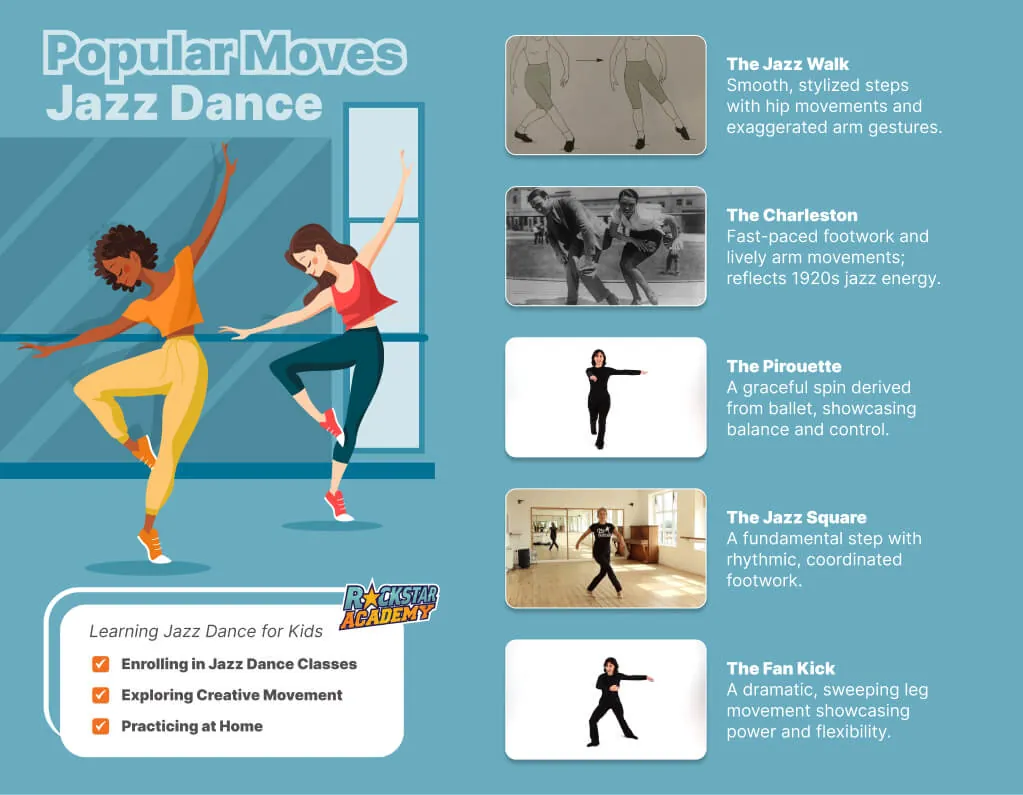
- Leg alignment: Ballet turns require the raised leg to be in a turned-out passé, while jazz turns typically keep the raised leg in a parallel position.
- Torso placement: Ballet dancers maintain a perfectly vertical spine, whereas jazz dancers often tilt the torso slightly off-center to create a specific aesthetic line.
- Arm positions: Ballet arms follow strict classical shapes, but jazz arms are flexible and may change mid-turn to emphasize the rhythm of the music.
- Spotting technique: Both styles use head spotting to maintain balance, but the timing of the spot in jazz is often synced to syncopated musical beats.
- Landing style: Ballet turns end in a clean, high releve or closed position, while jazz turns frequently finish in a low, bent-knee lunge or a floor-bound shape.
Why the technique changes based on style?
The shift in technique happens because the two dance forms serve different artistic goals. Classical ballet focuses on creating an illusion of weightlessness and perfect vertical lines, which demands that the dancer’s bones stay stacked in a precise, turned-out alignment.
This verticality is essential for the aesthetic of classical works where the goal is to defy gravity. If you’re a beginner, note that the Royal Academy of Dance emphasizes this turnout as a fundamental requirement for safe, efficient rotation in classical training.
Jazz dance, by contrast, draws heavily from grounded, rhythmic movements that prioritize individual expression and musicality. Because jazz music often uses syncopation, the turns must be able to break or change direction quickly. A parallel leg position allows for a stronger, more stable base that’s easier to manage when moving across a stage at high speeds. This isn’t for dancers who need to perform in classical ballet competitions, as the judges will penalize parallel legs.
Variations in turn execution
The following table highlights how specific conditions change the way a dancer approaches their turns in either style.
| Situation | What changes | What to do instead |
|---|---|---|
| Floor surface | Friction levels | Adjust force for wood vs marley |
| Musical tempo | Rotation speed | Increase spot speed for faster beats |
| Costume weight | Center of mass | Tighten core for heavy stage dresses |
| Shoe type | Slide potential | Use suede soles for better grip |
| Fatigue level | Balance point | Keep eyes fixed lower to floor |
How to perform a proper turn?
- Stand in your starting position with your weight centered over the ball of your standing foot.
- Prepare by bending both knees in a deep plie to store energy for the push-off.
- Push off the floor through the ball of your foot while snapping your arms into a first position.
- Spot your head by whipping it around quickly to face the front wall, keeping your eyes level.
- Hold your core muscles tight throughout the rotation to stop yourself from wobbling or leaning sideways.
- Finish by landing with your weight evenly distributed and your knees bent to absorb the impact.
The mistakes that ruin your turns
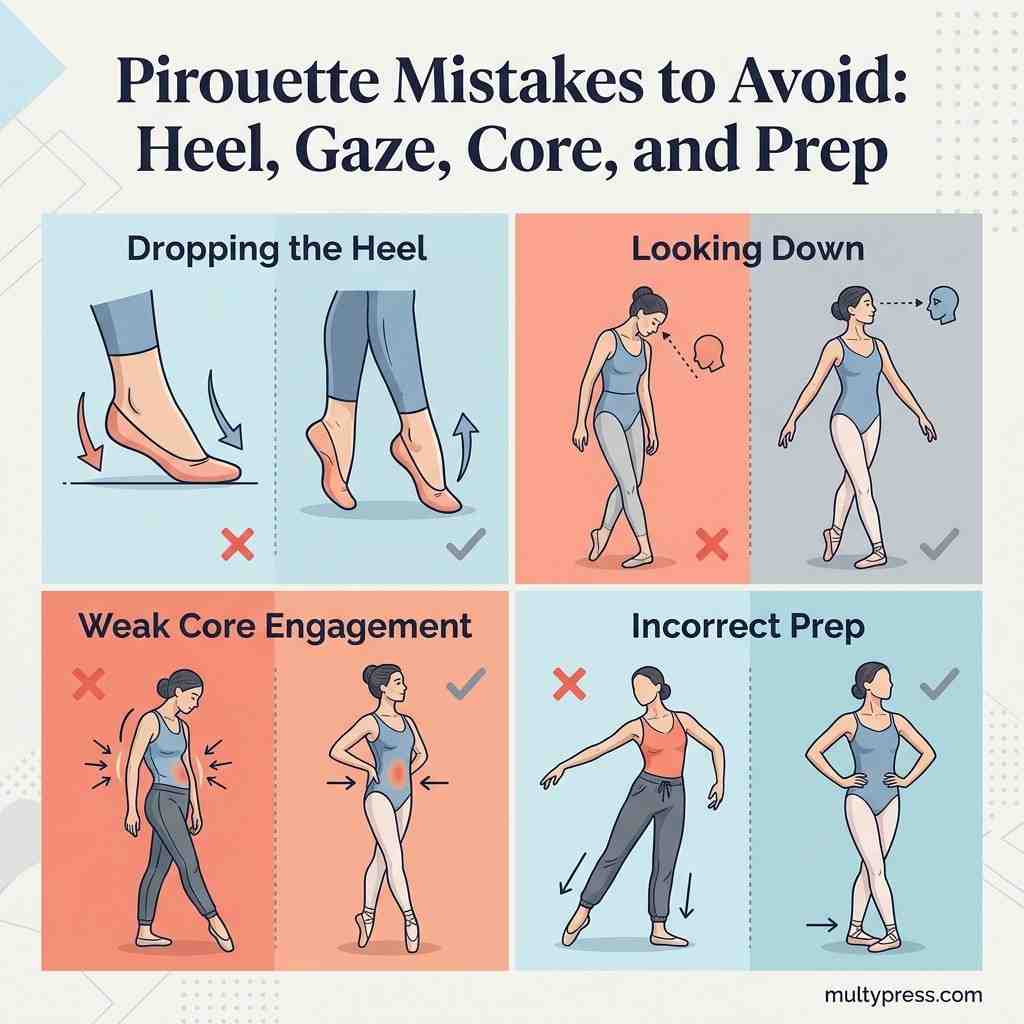
- Dropping the heel: Letting your heel touch the floor during the turn stops your momentum and causes you to fall out of the rotation.
- Looking down: Dropping your chin toward your chest shifts your weight forward, which makes it impossible to maintain a straight vertical axis.
- Weak core engagement: Failing to pull your belly button toward your spine causes your torso to wobble and breaks the line of the turn.
- Incorrect prep: Rushing the plie prevents you from getting enough power to complete your rotations, which leaves you stuck mid-turn.
FAQs
How long does it take to learn a clean pirouette?
Most dancers need 6 to 12 months of consistent practice to master a single, clean turn. This assumes you’re attending at least two technique classes per week, as your progress depends heavily on how often you repeat the muscle memory required for balance.
Is it safe to practice turns on carpet?
No, practicing turns on carpet is dangerous because the high friction can twist your ankle or knee joint. You should always use a hard, smooth floor or a portable dance board to ensure your foot can pivot freely without getting stuck.
Why do I get dizzy when I turn?
Dizziness happens because the fluid in your inner ear keeps spinning after your body stops. You can reduce this by focusing on a sharp, consistent spot with your eyes, which helps your brain recalibrate your orientation during each revolution.
Does it matter which foot is the standing leg?
Yes, it matters because most dancers have a naturally dominant side. You should identify your strong side by testing which leg feels more stable, then spend extra time training your weaker side to ensure your turns look balanced in choreography.
What happens if I lean too far back?
Leaning back shifts your weight off your center, which forces you to take a step out of your turn to regain balance. You can fix this by keeping your ribs knitted together and pulling your navel toward your spine to stabilize your torso.
Can I do a jazz pirouette in ballet shoes?
Yes, you can perform a jazz-style turn in ballet slippers, but the lack of traction might make it harder to control your landing. Always check the floor surface first, as ballet shoes offer less grip than jazz sneakers, which can lead to slipping on slick stages.
Final Thought
Developing a consistent turn requires daily work on your core strength and balance. If you find your turns are inconsistent, focus on your spotting technique first before you try to increase the number of rotations you perform in a single sequence.