
Replacing a Speed Queen washer belt typically takes 30 to 60 minutes. A worn or broken belt often causes the tub to stop spinning during cycles. Replacement belts generally cost between $15 and $35.
Appliance repair experience shows Speed Queen belts are built durable but still wear after years of heavy use. Prompt replacement restores normal spin and wash function.
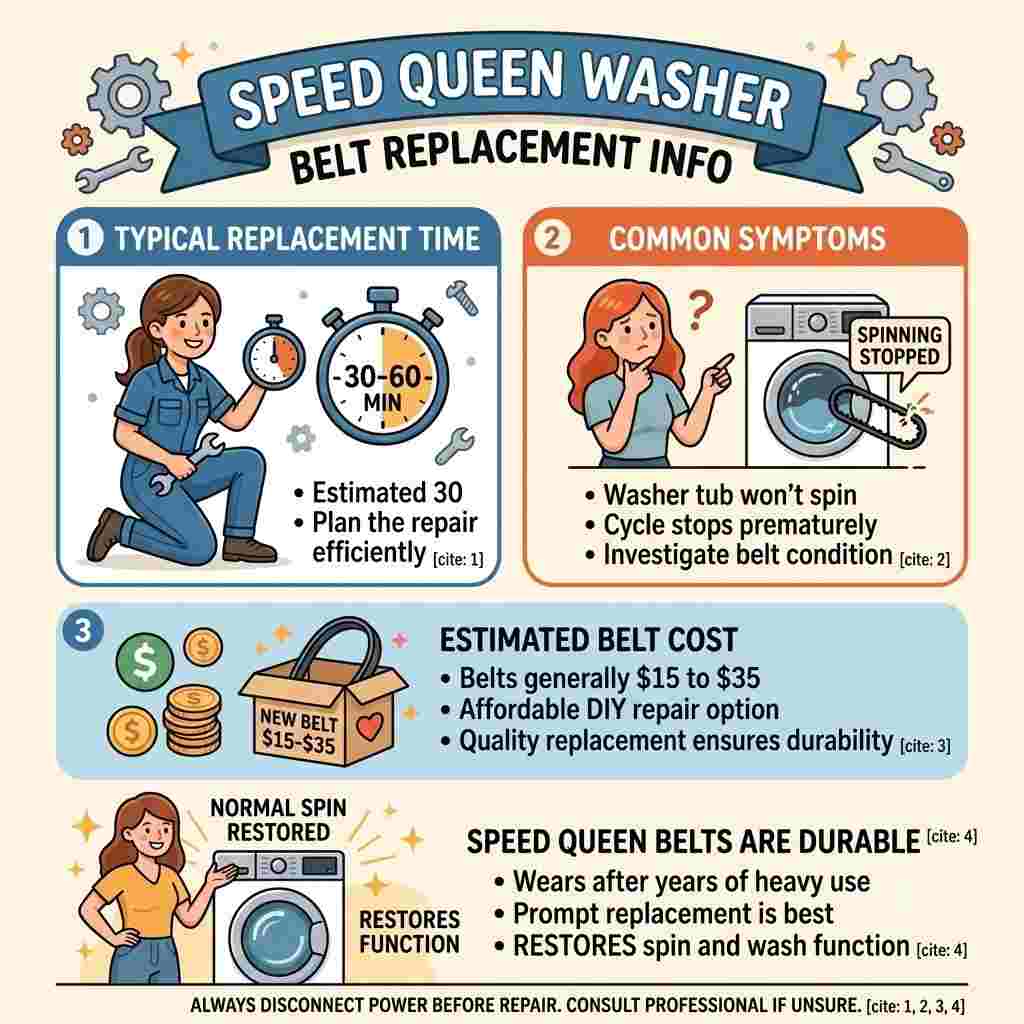
Table of Contents
Quick Answer
Belt replacement involves accessing the motor and tub area, removing the worn belt, and installing a new one with proper tension. Speed Queen’s commercial-grade design uses a straightforward pulley system. Correct routing around the motor and tub pulley is essential for function.
Safety note: always unplug the washing machine before beginning any repair work. This prevents electrical shock during the disassembly process.
Step-by-Step Replacement Process
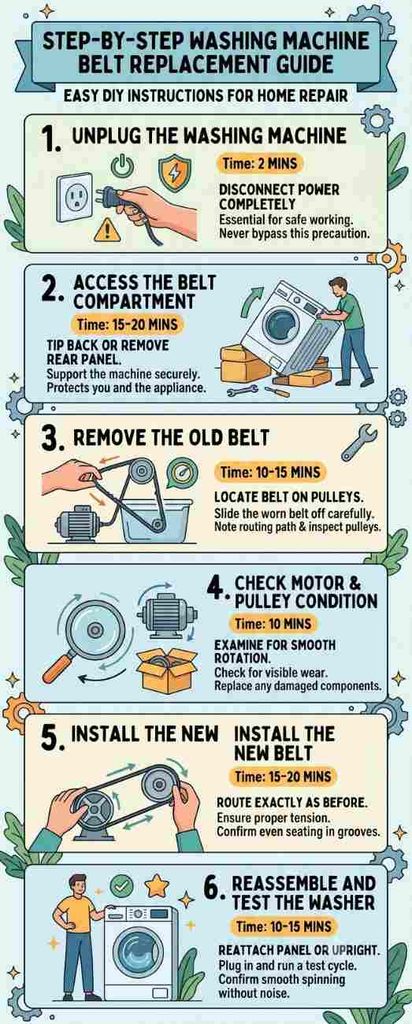
Step 1: Unplug the Washing Machine [Time: 2 mins]
Disconnect power completely before starting any repair. This step is essential for safe working conditions. Never bypass this precaution regardless of experience level.
Step 2: Access the Belt Compartment [Time: 15-20 mins]
Tip the washer back or remove the rear panel per your model. Support the machine securely to prevent tipping during access. This protects both you and the appliance during repair.
Step 3: Remove the Old Belt [Time: 10-15 mins]
Locate the belt around the motor and tub pulley system. Slide the worn belt off carefully, noting its routing path. Inspect the pulleys for wear while you have access.
Step 4: Check the Motor and Pulley Condition [Time: 10 mins]
Examine both pulleys for smooth rotation and visible wear. Replace any damaged components alongside the belt. This prevents premature failure of your new replacement.
Step 5: Install the New Belt [Time: 15-20 mins]
Route the new belt around the motor and tub pulley exactly as before. Ensure proper tension throughout the installation. Confirm the belt sits evenly in all pulley grooves.
Step 6: Reassemble and Test the Washer [Time: 10-15 mins]
Return the washer to its upright position or reattach the panel. Plug the machine back in and run a test cycle. Confirm smooth spinning without unusual noise or slipping.
Why correct belt tension matters most: a belt that’s too loose slips and fails to spin the tub properly. One that’s too tight puts excessive strain on the motor. Achieving proper tension protects both your new belt and surrounding components.
Repair Comparison Table
| Approach | Time Required | Best For |
|---|---|---|
| DIY belt-only replacement | 30-60 mins | Basic belt wear or failure |
| DIY belt plus pulley inspection | 60-75 mins | Older machines, visible wear |
| Professional appliance repair | 1-2 hours | Complex issues, warranty concerns |
Appliance repair insight: “Speed Queen belts last longer than most, but tension still matters just as much,” says appliance technician Robert Kane. “Don’t skip checking it.”
Maintenance Tips to Prevent Future Issues
Avoid overloading the washer with excessively heavy or unbalanced loads. Listen for squealing or slipping sounds, which often signal early belt wear. Check belt condition periodically if your machine sees heavy regular use.
Address unusual noises promptly before complete belt failure occurs. Early attention often means a simpler, less costly repair. Routine care extends the lifespan of your washing machine’s internal components.
The Bigger Picture
Speed Queen washing machines remain known for commercial-grade durability in home settings. This DIY fix continues saving homeowners significant money on service calls. Understanding proper technique makes this repair accessible for most skill levels.
Careful, methodical repair work ensures lasting results and reliable operation. Following correct routing and tension specifications prevents repeat failures. This guide equips you to handle washer belt replacement confidently at home. For model-specific instructions, parts information, and manuals, see Speed Queen’s official manuals and downloads.
FAQs on Speed Queen Washer Belt Replacement
Why does my Speed Queen belt last longer than belts on other washer brands?
Speed Queen designs its machines with commercial-grade components rated for heavier daily use. This includes more durable belt materials than typical consumer-grade washers. This design philosophy reflects the brand’s focus on longevity and reduced maintenance. This explains the generally positive reputation for belt durability specifically. This is a genuine product differentiation many owners come to appreciate over time.
Can I identify a failing Speed Queen belt before it completely breaks?
Yes, listen for a burning rubber smell or unusual squealing during spin cycles. Reduced spin speed or the tub not spinning at all are also key indicators. These warning signs often appear before complete, sudden belt failure occurs. Addressing these signs proactively often means a simpler, planned repair. This early attention prevents an unexpected mid-cycle breakdown.
Why did my Speed Queen technician recommend OEM belts specifically over generic options?
OEM belts match Speed Queen’s exact specifications for their commercial-grade design philosophy. Generic belts may not provide the same durability the brand is known for. This recommendation helps maintain the reliability that Speed Queen owners typically expect. Using OEM parts protects this reputation for long-term dependability specifically. This guidance reflects genuine product-specific compatibility concerns, not just brand preference.
Does Speed Queen’s commercial heritage affect how belt replacement differs from residential brands?
The core replacement process remains similar across most top-load washer brands generally. Speed Queen’s robust construction may mean slightly sturdier components to work around. This doesn’t significantly change the DIY replacement steps themselves though. The fundamental process of accessing, removing, and installing remains consistent. This similarity means general washer repair knowledge transfers well to Speed Queen models.
Why do some Speed Queen models have different belt access points than others?
Design variations across different Speed Queen product lines affect belt accessibility somewhat. Commercial-focused models may differ slightly from residential-focused product lines. Check your specific model’s documentation for the exact access procedure. This variation explains differing repair experiences across the broader Speed Queen lineup. Following model-specific instructions ensures accurate, efficient repair completion.
Can extended warranty coverage affect whether I should DIY this repair myself?
Yes, DIY repair on a machine still under warranty could potentially void coverage. Check your specific warranty terms before attempting any self-repair. If still covered, professional service may protect your warranty investment better. This consideration matters most for newer Speed Queen washer purchases specifically. Weigh this factor against the straightforward nature of this particular repair.
Why does my Speed Queen make a different sound than described when the belt fails?
Sound characteristics can vary based on your specific model and belt configuration. Some models produce more of a grinding sound rather than classic squealing. Trust your overall diagnostic pattern, including the tub not spinning, over sound alone. Sound alone isn’t always a perfectly reliable diagnostic indicator across all models. This combination approach helps confirm belt issues more reliably than sound alone.
Does Speed Queen’s parts availability differ from other washer brands for older models?
Speed Queen has a reputation for supporting older models with parts availability. This reflects the brand’s overall philosophy of long-term product support generally. This can make finding replacement belts for older units easier than some competitors. This is a genuine advantage for owners of longer-owned Speed Queen machines. This support philosophy aligns with the brand’s durability-focused reputation overall.
Why do some Speed Queen owners report needing belt replacement less frequently than expected?
This aligns with the brand’s commercial-grade design and component quality generally. Proper use, avoiding overloading, further extends this already favorable durability. Many owners report their original belts lasting many years under normal use. This experience reflects genuine product design quality, not just anecdotal luck. This durability remains a key selling point for the Speed Queen brand specifically.
Can I use my Speed Queen washer’s self-diagnostic features to confirm belt issues?
Some newer Speed Queen models include basic diagnostic indicators for certain issues. Check your specific model’s manual for any relevant diagnostic codes available. This feature, if present, can help confirm belt-related problems more definitively. Not all models include this feature, so manual diagnosis remains valuable. This capability varies significantly across the different Speed Queen product generations.