
You catch a sudden whiff of cigarette smoke. Yet nobody nearby is smoking. Naturally, you wonder whether something is wrong. Smelling cigarette smoke with no visible source usually points to phantosmia. Phantosmia means your brain registers a smell that does not exist. Doctors link it most often to conditions affecting the sinuses or brain. However, a real source can also hide nearby. Think of lingering thirdhand smoke, drifting neighbor smoke, or damp mold. So start simple. Rule out real causes first, then look inward.
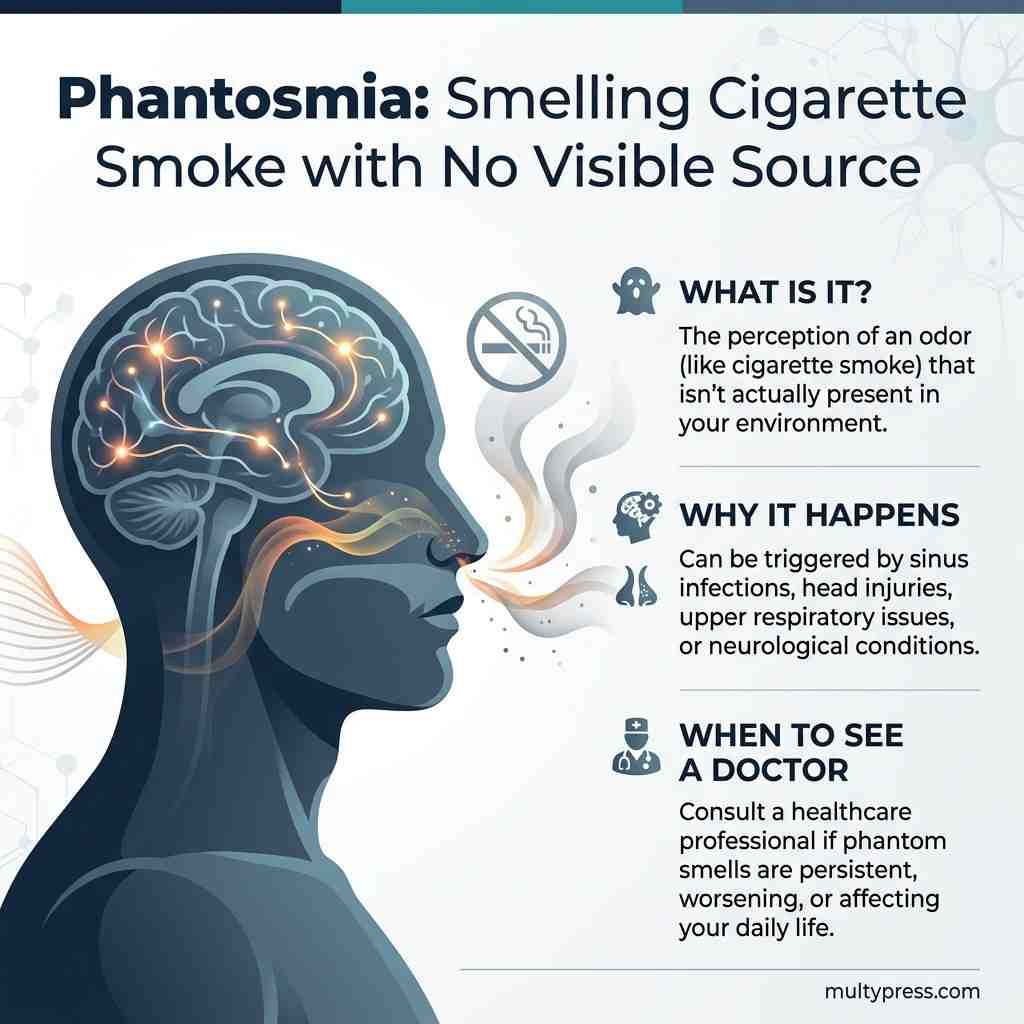
Table of Contents
5 Reasons You Smell Cigarette Smoke
1. A Real Smell You Cannot Spot
Sometimes the smoke is real. Thirdhand smoke clings to fabric, carpet, and car seats. Smoke also travels through vents and shared walls. Mold can give off a similar stale, smoky odor. A burning smell can even signal faulty wiring. Therefore, check your surroundings before you worry.
2. Sinus and Nose Problems
Problems in the nose or nasal cavity are the most common cause of smell disorders like phantosmia. Sinus infections and nasal polyps top the list. Inflamed tissue may disrupt the signals your nose sends to your brain. Consequently, treating the infection often clears the phantom smell.
3. Migraine Aura
Surprisingly, a migraine can start with a smell instead of a headache. Phantosmia can appear as a migraine aura. The smell often arrives shortly before head pain begins. Light sensitivity or nausea may follow.
4. Brain and Nerve Conditions
Neurological causes include seizures and head trauma. Stroke also appears on the list of possible causes. For instance, a seizure in the brain’s temporal lobe can trigger sudden, brief smells. Although these causes are rarer, they deserve attention.
5. Medications and Other Triggers
Some antidepressants and antibiotics may cause phantom smells. Never stop a prescription without talking to your doctor first. Additionally, some people report phantom smells after a COVID-19 infection. Their sense of smell may take time to settle.
How common is this? Phantosmia accounts for up to 20% of smell-related disorders. Even so, it remains relatively uncommon. Most cases trace back to the nose rather than the brain.
Expert Insight
“Most phantom smells start in the nose. Still, a smell that keeps returning deserves a proper exam.”
Quick-Reference Table
| Scenario | Typical Signs | Likely Meaning | Next Step |
|---|---|---|---|
| Real hidden source | Others smell it too; fades when you leave | Thirdhand smoke, mold, neighbors | Inspect, clean, ventilate |
| Sinus problem | Congestion, facial pressure, smell comes and goes | Infection or nasal polyps | See a doctor or ENT |
| Migraine aura | Smell before headache; light sensitivity | Migraine | Track triggers; see a doctor |
| Neurological cause | Sudden, brief smell; confusion or staring | Seizure or head injury | Seek prompt medical care |
| Medication effect | Began after a new prescription | Possible side effect | Call your prescriber |
| After illness | Follows COVID-19 or a cold | Smell nerve irritation | Monitor; see a doctor if it persists |
What to Do Next
- Ask someone else. If they smell it too, the source is real. Search your home, car, and vents.
- Check for hazards. Inspect outlets and appliances for burning odors. Look for hidden mold.
- Keep a symptom log. A log helps you explain your symptoms to your doctor. Note timing, duration, and any headaches.
- Soothe your nose. Try saline rinses if you feel congested. Avoid actual smoke exposure.
- Book a visit if it lingers. Contact your doctor if symptoms last more than a day or two.
- Protect your prescriptions. Do not stop any medication on your own.
- Seek urgent care for red flags. Sudden weakness, trouble speaking, a seizure, or a severe headache need immediate help. So does any phantom smell after a head injury.
The Takeaway
A smoky smell with no smoke feels unsettling. Yet it is usually a treatable signal, not a disaster. Often, a sinus problem or migraine explains it. Occasionally, the brain needs a closer look. Therefore, trust your nose, but verify with a professional. Your sense of smell is an early warning system. Listen when it speaks.
FAQs On What does it mean when you smell cigarette smoke
Does smelling phantom cigarette smoke mean a brain tumor or stroke?
Usually, no. Most phantom smoke smells start in the nose or sinuses. However, possible causes range from nasal polyps all the way to stroke. A brain tumor is a rare cause. It almost always brings other warning signs.
Watch for these red flags:
- Headaches that keep getting worse
- Vision changes or double vision
- Weakness, numbness, or confusion
- Seizures or blackouts
A smoky smell alone rarely signals something dire. Still, a lasting symptom deserves a proper exam.
How can I tell if the cigarette smell is real or phantom?
Ask another person to sniff the same spot. If they smell it too, the source is real. If only you smell it, suspect phantosmia.
Next, look at the pattern:
- Follows you everywhere: This points to a phantom smell.
- Fades outdoors: This points to a real source in the room.
- Strongest near a vent, closet, or seat: This points to trapped residue or mold.
Why do I smell cigarette smoke in only one nostril?
A one-sided smell often points to a problem on that side of the nose. Phantom smells can affect one nostril or both. A polyp, a crooked septum, or local swelling can all cause it.
For instance, an ENT specialist can check inside your nose with a tiny camera. Doctors may order an endoscopy or rhinoscopy to inspect the nasal cavity. That quick test often finds the culprit.
Can a sinus infection make me smell cigarette smoke?
Yes, it can. Sinus infections and nasal polyps rank among the best-known triggers. Swollen tissue and thick mucus can disrupt the signals your smell nerves send.
Clues include:
- Stuffy nose or facial pressure
- Thick discharge or postnasal drip
- Smell that worsens when you lie down
Consequently, the phantom odor often fades as the infection clears. Chronic sinus trouble can last for months, though. Therefore, see an ENT if the smell lingers.
Can migraines cause the smell of cigarette smoke?
Surprisingly, yes. Phantosmia can show up as a migraine aura. The smoky smell often arrives shortly before the head pain starts.
Other aura signs include flashing lights, blind spots, and tingling. If the smell keeps preceding headaches, write down each episode. Note your sleep, stress, and meals. Your doctor can then spot your triggers.
Why do I smell cigarette smoke after COVID-19?
COVID-19 can inflame or injure the smell pathways. During recovery, many people notice smoky or burnt odors. Often, this is parosmia rather than a pure phantom smell. Parosmia distorts real smells instead of inventing new ones.
Recovery usually takes weeks to months. Meanwhile, smell training may help. Sniff four strong scents, such as rose, lemon, clove, and eucalyptus. Repeat twice daily for several months.
Can medications make me smell cigarette smoke?
Yes, some can. Certain antidepressants and antibiotics may trigger phantom smells. Evidence for other drugs varies.
Timing offers the best clue. Did the smell begin after a new drug or a dose change? If so, call your prescriber or pharmacist. Never stop a prescription on your own. Some drugs cause serious problems when you quit suddenly.
How long does a phantom cigarette smell last?
It depends on the cause. Here is a rough guide:
- Migraine aura: Minutes to a few hours
- Sinus infection: Days to a few weeks
- After a viral illness: Weeks to several months
- Neurological causes: Variable, and often repeating
As a rule, contact a doctor if the smell lasts more than a day or two. Brief smells with staring or confusion need faster attention.
When should I see a doctor about smelling smoke that isn’t there?
Book a visit if the smell lasts beyond a couple of days. Do the same if it keeps returning or hurts your appetite.
Go to the emergency room if you notice any of these:
- A phantom smell after a head injury
- Sudden weakness, numbness, or a drooping face
- Trouble speaking or understanding speech
- A seizure or blackout
- A sudden, severe headache
Which doctor should I see first?
Start with your primary care doctor. They can check your ears, nose, and medication list. Then they can refer you onward.
An ENT specialist handles nasal and sinus causes. A neurologist handles seizures, migraines, and head injuries. Bring a symptom log and a full medication list. Consequently, your visit will move faster.
What tests will a doctor run to find the cause?
Expect a physical exam of your head and neck first. Your doctor may then order further tests:
- Nasal endoscopy: A thin camera checks your nasal passages.
- EEG: This test measures electrical activity in your brain.
- MRI or CT scan: These scans look for structural problems.
Most people need only the first step or two. Treatment then follows the cause.
Can stress or anxiety make me smell cigarette smoke?
Stress alone rarely creates a smell from nothing. However, it can trigger migraines and disrupt sleep. It also makes you notice odd sensations more.
Some psychiatric conditions can involve smell hallucinations. If the smoky smell comes with other unusual perceptions, tell your doctor. That conversation is routine and nothing to fear.
Why do I smell cigarette smoke in my car or home when nobody smokes?
Thirdhand smoke is the usual suspect. Residue clings to upholstery, carpets, walls, and ceiling liners. Heat and humidity can release the odor again.
Check these common sources:
- Cars: Dirty cabin filters or mildew in the air conditioning
- Apartments: Neighbor smoke traveling through shared vents or gaps
- Older homes: Smoke trapped by previous tenants
- Damp areas: Mold with a stale, smoky smell
Additionally, an acrid, plastic-like smell may signal an electrical fault. In that case, switch off the power and call an electrician.
Does smelling cigarette smoke mean a deceased loved one is visiting?
Many cultures link sudden scents to departed loved ones. Some people find real comfort in that idea. However, no scientific evidence supports a supernatural cause.
Science does offer a gentler explanation. Smell connects tightly to memory and emotion. A memory cue can therefore trigger a vivid scent. If the smell persists or distresses you, get a medical check. Comfort and care can coexist.
How can I get relief at home?
Home care helps most when the cause sits in your nose. Try these steps:
- Rinse your nose with sterile saline once or twice daily.
- Run a humidifier to keep nasal tissue moist.
- Control allergies with your doctor’s guidance.
- Avoid smoke, strong perfumes, and other irritants.
- Limit decongestant sprays to three days to prevent rebound congestion.
- Sleep well and drink plenty of water.
These steps will not treat neurological causes. Therefore, keep a log and see a doctor if the smell continues.
This content offers general information, not medical advice.