
Replacing wood stove glass typically takes 30 to 60 minutes with basic tools. Cracked panels commonly result from thermal stress, impact, or age-related wear. Replacement ceramic glass generally costs between $30 and $100 depending on stove size and shape.
Home heating maintenance experience shows stove glass damage often happens from improper cleaning or accidental door impacts. Prompt replacement restores safe, efficient stove operation.
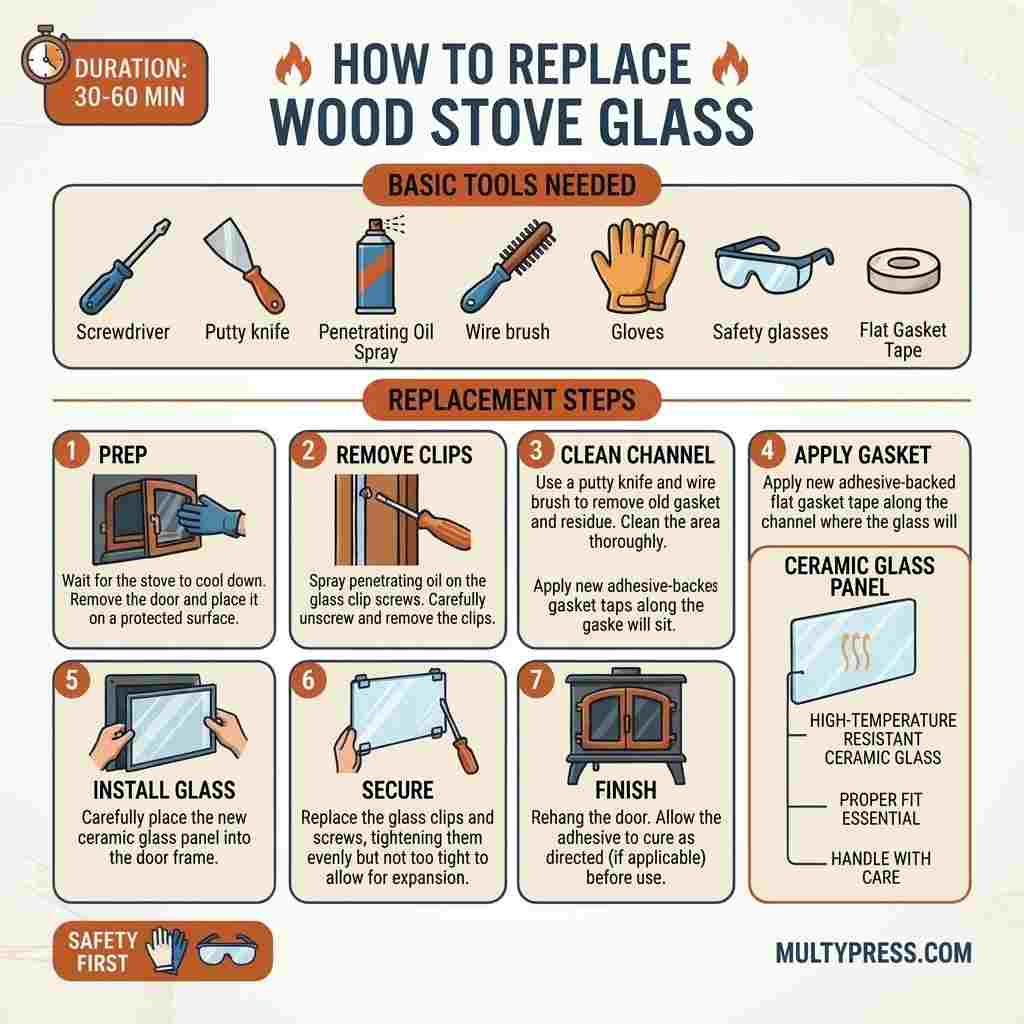
Table of Contents
Quick Answer
Glass replacement involves removing the door retaining hardware, extracting the cracked ceramic panel, and installing a correctly sized replacement with fresh gasket material. Most wood stoves use standardized high-temperature ceramic glass. Correct sizing and gasket sealing ensure safe, efficient operation.
Safety note: always allow the stove to cool completely before beginning any glass replacement work. This prevents burns from hot metal or glass components.
Step-by-Step Replacement Process
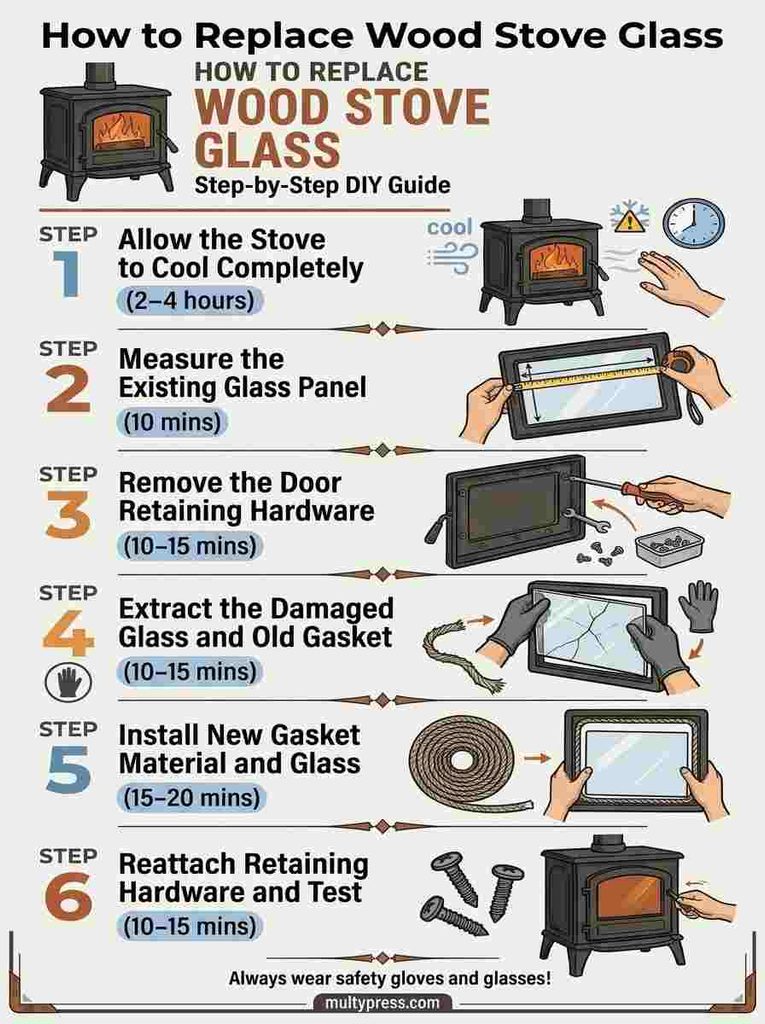
Step 1: Allow the Stove to Cool Completely [Time: 2-4 hours]
Wait until all components reach room temperature. Handling hot glass or metal risks serious burns. Rushing this step compromises your safety during repair.
Step 2: Measure the Existing Glass Panel [Time: 10 mins]
Record exact dimensions of the cracked glass before ordering. Ceramic stove glass requires precise sizing for proper fit. This step prevents ordering an incompatible replacement.
Step 3: Remove the Door Retaining Hardware [Time: 10-15 mins]
Unscrew or unclip the metal brackets securing the glass panel. Set screws and hardware aside safely for reinstallation. This provides access to the damaged glass.
Step 4: Extract the Damaged Glass and Old Gasket [Time: 10-15 mins]
Carefully remove the cracked ceramic glass from the door frame. Dispose of broken glass safely and properly. Remove old, worn gasket material from the frame channel.
Step 5: Install New Gasket Material and Glass [Time: 15-20 mins]
Apply fresh gasket rope or tape around the frame channel. Position the new ceramic glass carefully within the gasket seal. Ensure even placement without excessive pressure on any edge.
Step 6: Reattach Retaining Hardware and Test [Time: 10-15 mins]
Secure the retaining hardware evenly around the new glass panel. Avoid overtightening, which can crack the ceramic glass. Test the door seal before your next fire.
Why gasket material matters most: worn or missing gasket material allows the glass to sit directly against metal, causing stress cracks from expansion and contraction. Fresh gasket material cushions the glass and ensures a proper heat seal. This step protects your new glass from premature failure.
Glass Type Comparison Table
| Glass Type | Heat Resistance | Best For |
|---|---|---|
| Standard ceramic glass | High, rated for wood stoves | Most residential wood stoves |
| Robax-branded ceramic glass | Very high | Premium or high-efficiency stoves |
| Generic universal glass | Variable, verify rating | Budget-conscious replacement |
Home heating specialist insight: “Always confirm the glass is rated for wood stove temperatures specifically,” says stove technician Priscilla Ndoye. “Regular tempered glass simply won’t hold up.”
Maintenance Tips to Prevent Future Cracks
Avoid slamming the stove door shut, which stresses the glass unnecessarily. Clean glass only with stove-specific cleaners, never abrasive materials. Allow the stove to cool before cleaning the glass surface.
Check gasket condition annually before heating season begins. Replace worn gasket material proactively to protect new or existing glass. Routine inspection catches problems before complete glass failure occurs.
The Bigger Picture
Wood stoves remain a popular, efficient heating choice in many rural and suburban homes. Glass replacement remains a common and manageable maintenance task for stove owners. Understanding proper technique helps homeowners save on professional service costs.
Careful, methodical replacement ensures lasting results and safe operation. Following proper cooling and gasket installation prevents premature glass failure. This guide equips you to handle stove glass replacement confidently at home.
FAQs on Replacement Wood Stove Glass
Why did my wood stove glass crack during the very first fire of the season?
Cold glass heated too fast can crack from sudden thermal stress. An older pane may also have a hidden chip or hairline flaw. Start the season with a small, gentle fire to warm the glass gradually. Inspect the pane and gasket before lighting the first fire. Replace any glass that shows chips or cracks.
What thickness of glass does a typical wood stove need?
Most stoves use ceramic glass about 4 or 5 millimeters thick. Some larger or heavier-duty doors use slightly thicker panels. Measure the old glass or the groove in the door to confirm. Match the thickness exactly so the gasket seals evenly. Your stove manual or manufacturer can verify the correct specification.
Can I use a piece of tempered glass from a hardware store in my wood stove?
No, ordinary tempered glass can shatter at stove temperatures. It simply isn’t built for repeated extreme heating cycles. Ceramic glass has a very low expansion rate and stays stable. Using the wrong glass creates a serious fire and injury risk. Always choose glass specifically rated for wood stove use.
Why does the glass in my stove have a slight curve or bend?
Some stoves use bent or curved ceramic glass for style or design reasons. These panels must match the original curve to fit the door frame. A flat replacement won’t seat properly in a curved door. Tell your supplier the exact stove model when ordering. Photos of the original pane also help confirm the shape.
Do I need a special sealant when installing new stove glass?
Most installations use fiberglass gasket rope instead of rigid sealant. The gasket cushions the glass and allows it to expand safely. Some manufacturers also call for a high-temperature adhesive on the gasket. Never use ordinary silicone, which can burn and release fumes. Follow the instructions for your specific stove model.
Why does the glass get so hot even though the door has an air wash?
An air wash directs air across the glass to keep it clear of soot. It cools the surface slightly but cannot stop the glass from heating. Stove glass is designed to handle that temperature safely. Keep flammable items well back from the glass. Check your manual for recommended clearance distances.
Is it normal for my stove glass to have tiny bubbles or lines?
Minor manufacturing marks are common and don’t usually affect strength. Large bubbles or deep scratches near edges can be a weak point. Inspect new panels carefully before installation. Return any pane with obvious defects to the supplier. Handle edges with care to prevent chips that start cracks.
Does my homeowner’s insurance cover a cracked stove glass panel?
Coverage varies, and many policies treat routine wear as maintenance, not a covered loss. Sudden damage from an accident may be covered depending on the policy. Review your policy language or ask your agent directly. The repair cost is often below the deductible anyway. Keep receipts in case you need them later.
How can I tell when my door gasket is worn out?
A worn gasket looks flattened, frayed, or hardened and no longer springs back. Try closing the door on a dollar bill, and see if it slides out easily. Air leaks, hot spots, and heavy soot near the door signal a bad seal. Replace the gasket whenever you replace the glass. Fresh gasket also keeps the fire burning more efficiently.
Can I replace stove glass myself or should I hire a professional?
Many homeowners can do it with basic tools and careful measurements. The key is a fully cooled stove, correct glass, and fresh gasket. Hire a professional if the door frame is warped or the stove is hard to access. A chimney or stove technician can also confirm everything seals safely. Take your time and double-check all fittings.