
Replacing a Scag Tiger Cub drive belt typically takes 30 to 60 minutes with basic tools. This compact zero-turn mower uses a simpler belt system than larger commercial models. Replacement belts generally cost between $25 and $55 depending on deck size.
Mower maintenance experience shows Tiger Cub belts commonly wear from regular residential and light commercial use. Prompt replacement restores full cutting performance quickly.
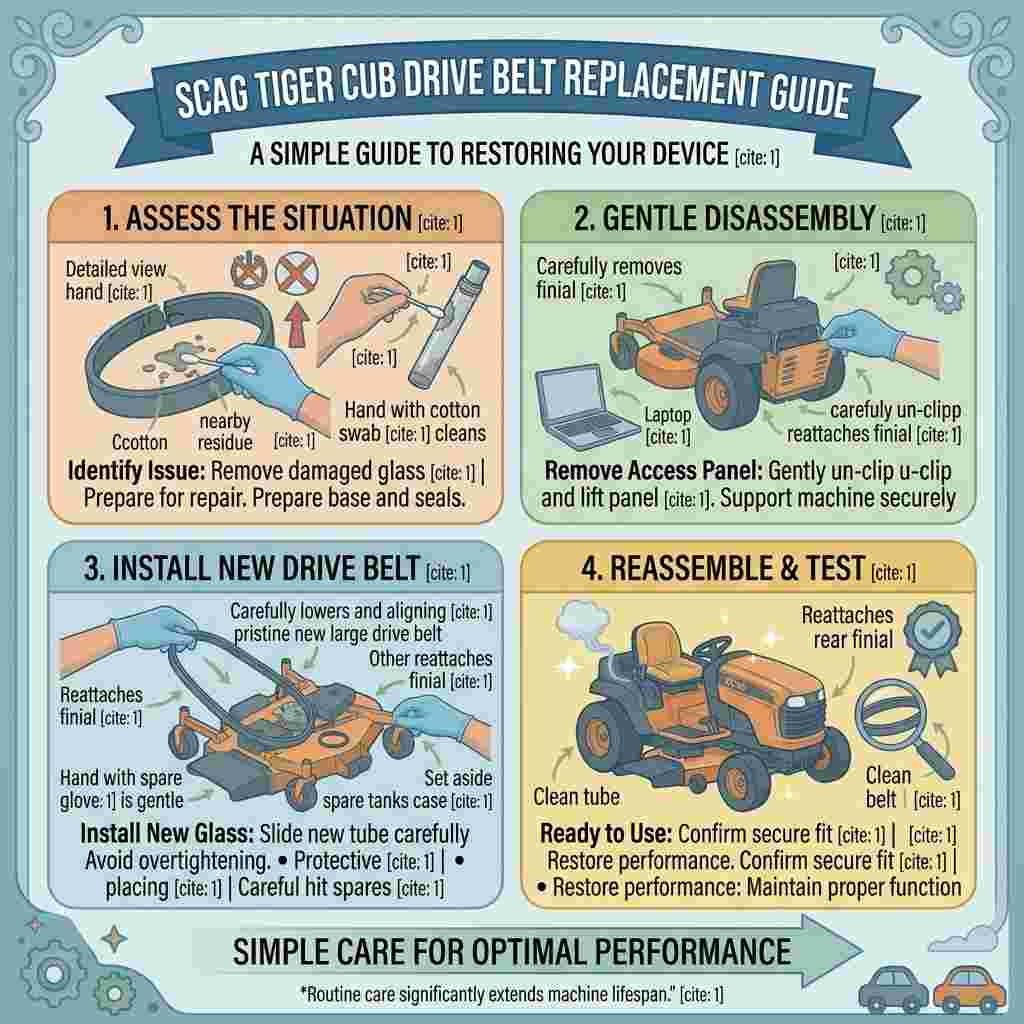
Table of Contents
Quick Answer
Belt replacement involves accessing the deck area, removing the worn belt, and installing a new one with proper tension. The Tiger Cub’s compact design makes this a manageable DIY repair. Correct routing and tension ensure reliable cutting performance.
Safety note: always disconnect the spark plug and engage the parking brake before beginning repair work. This prevents accidental startup during the process.
Step-by-Step Replacement Process
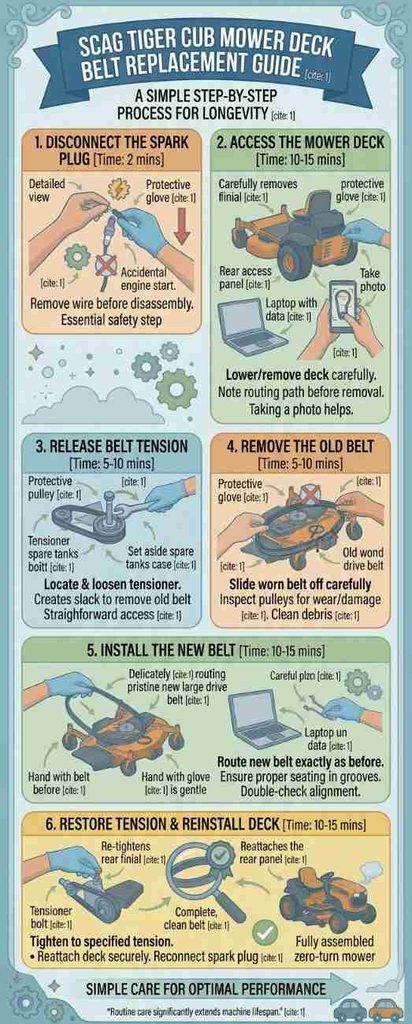
Step 1: Disconnect the Spark Plug [Time: 2 mins]
Remove the spark plug wire before any disassembly begins. This prevents accidental engine startup during repair. Never skip this essential safety step.
Step 2: Access the Mower Deck [Time: 10-15 mins]
Lower or remove the deck following your model’s procedure. Note the belt’s routing path before removal for accurate reinstallation. Taking a photo helps if you’re unfamiliar with the layout.
Step 3: Release Belt Tension [Time: 5-10 mins]
Locate and loosen the tensioner pulley or bracket. This creates enough slack to remove the old belt. Compact models typically have straightforward tensioner access.
Step 4: Remove the Old Belt [Time: 5-10 mins]
Slide the worn belt off the spindle pulleys carefully. Inspect pulleys for wear or damage while access is open. Clean any debris from the pulley grooves.
Step 5: Install the New Belt [Time: 10-15 mins]
Route the new belt exactly along the original path. Ensure it seats properly in all pulley grooves. Double-check alignment before restoring tension.
Step 6: Restore Tension and Reinstall the Deck [Time: 10-15 mins]
Tighten the tensioner to the manufacturer’s specified tension. Reattach the deck securely once satisfied. Reconnect the spark plug before testing the mower.
Why correct belt routing matters most: an incorrectly routed belt can slip, wear prematurely, or fail to engage the spindles properly. This single mistake often causes repeat belt failures shortly after replacement. Careful attention to the original routing path prevents this common error.
Belt Type Comparison Table
| Belt Type | Durability | Best For |
|---|---|---|
| Standard rubber belt | Moderate | Light residential use |
| Kevlar-reinforced belt | High | Frequent or heavier use |
| OEM Scag Tiger Cub belt | Excellent fit | Guaranteed compatibility |
Small engine specialist insight: “The Tiger Cub is one of the more DIY-friendly Scag models,” says mower repair technician Ellen Marsh. “Belt access is straightforward compared to bigger units.”
Maintenance Tips to Extend Belt Life
Clean grass debris from the deck regularly after each mowing session. Store your mower in a dry, covered location when not in use. Check belt tension periodically throughout the mowing season.
Avoid mowing over debris or dense, wet grass excessively. Excessive strain accelerates belt wear significantly. Routine inspection catches wear before complete belt failure occurs.
The Bigger Picture
Scag Tiger Cub mowers remain a popular choice for homeowners wanting commercial-grade quality. Belt replacement remains one of the most common DIY repairs for this equipment. Understanding proper technique helps owners save on professional repair costs.
Careful, methodical replacement ensures lasting results and reliable operation. Following manufacturer routing and tension specifications prevents repeat failures. This guide equips you to handle belt replacement confidently at home.
FAQs on Scag Tiger Cub Drive Belt Replacement
Why is my Tiger Cub’s belt replacement easier than what I’ve read about the Tiger Cat?
The Tiger Cub’s smaller, residential-focused design uses simpler belt routing overall. This compact configuration requires less disassembly for belt access generally. The Tiger Cat’s larger commercial deck involves more complex pathways by comparison. This design difference genuinely makes Tiger Cub maintenance more accessible for homeowners. This is one of the practical benefits of choosing this smaller model.
Can I use Tiger Cat belt specifications for my Tiger Cub by mistake?
No, these models use different belt lengths and specifications despite similar branding. Always confirm your specific model number before ordering replacement parts. Using incorrect specifications leads to improper tension and premature failure. Double-checking your exact model prevents this common, costly ordering mistake. This verification step matters even within the same manufacturer’s product lineup.
Why does my Tiger Cub belt seem to wear faster since I started bagging clippings?
Bagging attachments add modest additional load to the drive system generally. This slight increase in resistance can marginally accelerate belt wear over time. This isn’t usually dramatic, but noticeable with consistent bagging use. Regular inspection helps you monitor this if you bag clippings frequently. This is a reasonable trade-off for the convenience bagging provides.
Does the Tiger Cub’s lighter frame affect belt tension requirements differently?
The lighter, more compact frame doesn’t significantly change belt tension specifications. Tension requirements relate more to pulley design and belt length specifically. Follow the manufacturer’s stated tension specifications regardless of overall mower weight. This standard measurement remains consistent within each specific model’s design parameters. Frame weight isn’t a factor you need to adjust for independently.
Why did my new Tiger Cub belt come with a slightly different part number than expected?
Manufacturers occasionally update part numbers for supersession or minor design improvements. This doesn’t necessarily indicate an incorrect or incompatible part was sent. Verify compatibility through the retailer or manufacturer if you have genuine concerns. Superseded parts typically maintain full functional compatibility with your specific model. This is a normal occurrence in parts supply chains generally.
Can I extend my Tiger Cub belt’s life with any specific storage practices?
Yes, storing the mower in a dry, temperature-moderate location helps significantly. Avoid extreme heat or cold exposure during off-season storage periods. Covering the mower reduces UV exposure that can degrade rubber components. These simple practices meaningfully extend belt lifespan beyond just usage patterns. Consider this part of your complete seasonal mower care routine.
Why do some Tiger Cub owners report easier belt tensioning than other zero-turn brands?
Scag’s tensioner design on the Tiger Cub uses a straightforward spring-loaded mechanism. This design philosophy prioritizes ease of maintenance for residential and light commercial users. Other brands sometimes use more complex tensioning systems requiring additional tools. This design choice reflects Scag’s broader approach to accessible equipment maintenance. This is a genuine advantage worth appreciating during DIY repairs.
Does my Tiger Cub need a different belt for mulching versus side-discharge mowing?
No, the drive belt itself remains the same regardless of discharge configuration. Mulching kits affect blade and deck airflow, not the drive belt system. Confirm this distinction if you’re troubleshooting a specific belt-related issue. This clarifies that discharge configuration and belt specifications are separate considerations. Your drive belt choice doesn’t need to account for this mowing method difference.
Why does my Tiger Cub belt tension feel looser after the first few uses post-replacement?
Slight initial loosening as a new belt seats into pulley grooves is normal. This typically stabilizes after the first few operating cycles complete. Check tension again after this initial break-in period for accuracy. Persistent looseness beyond this point suggests a tensioner adjustment is needed. This distinction helps you know when further action is genuinely necessary.
Can I perform Tiger Cub belt replacement without any prior small engine repair experience?
Yes, this repair is generally considered manageable for motivated first-time DIYers. The Tiger Cub’s straightforward design makes it a reasonable starting point specifically. Having basic tools, patience, and a clear guide matters more than prior experience. Taking photos throughout disassembly helps ensure accurate reassembly afterward. Many homeowners successfully complete this repair on their first attempt.