
When following a Mediterranean diet, people often wonder, “Can you eat honey on a Mediterranean diet?” This is a common question, as honey is widely considered a natural sweetener. The truth is, eating honey on a Mediterranean diet is allowed, but moderation is the key. This article explores the role of honey in the Mediterranean lifestyle, its benefits, expert opinions, and practical tips.

Table of Contents
What Makes the Mediterranean Diet Unique?
The Mediterranean diet emphasizes whole foods, plant-based meals, olive oil, fish, fruits, and vegetables. Unlike restrictive diets, it allows flexibility and promotes a balanced lifestyle rather than focusing only on weight loss.
Can You Eat Honey on a Mediterranean Diet?
Yes, you can eat honey on a Mediterranean diet, but only in small amounts. Honey is not a daily staple; instead, it is considered an occasional sweet treat.
Nutritionists highlight that while honey is natural, it is still a sugar source. Excessive intake may impact blood sugar levels. Dr. Mary Flynn, a nutrition researcher at Brown University, explains:
“The Mediterranean diet is about balance. Natural sweeteners like honey can fit, but portion control is crucial.”
🍯 Honey Intake Calculator
Check if your daily honey intake fits the Mediterranean diet guidelines.
Nutritional Value of Honey
Eating honey on a Mediterranean diet makes sense because it is healthier than refined sugar. Honey contains antioxidants, trace minerals, and antibacterial properties.
Here’s a table comparing Honey vs. Refined Sugar for a better understanding:
| Nutrient | Honey (1 tbsp) | Refined Sugar (1 tbsp) |
|---|---|---|
| Calories | 64 | 49 |
| Antioxidants | High | None |
| Vitamins & Minerals | Trace amounts | None |
| Glycemic Index | 58 | 65 |
Health Benefits of Eating Honey on the Mediterranean Diet
Adding small amounts of honey to your Mediterranean meals can provide unique health advantages.
- Rich in Antioxidants – Helps fight oxidative stress.
- Supports Digestion – Natural enzymes promote gut health.
- Boosts Immunity – Antibacterial properties protect against infections.
- Better Alternative to Sugar – Provides sweetness without processed chemicals.
Dr. Mehmet Oz, a well-known health expert, notes:
“Honey has medicinal properties that processed sugar lacks. In the right diet, it can be healing.”
🍯 Mediterranean Sweetener Checker
Find out if your favorite sweetener fits the Mediterranean diet guidelines.
Practical Tips: Eating Honey on the Mediterranean Diet
While honey is beneficial, portion control matters. Here are expert-backed tips:
- Use honey as a drizzle over Greek yogurt and fruits.
- Add honey to herbal teas instead of sugar.
- Incorporate honey in dressings with olive oil and lemon.
- Limit intake to 1–2 teaspoons per day for best results.
How Honey Fits into a Mediterranean Lifestyle
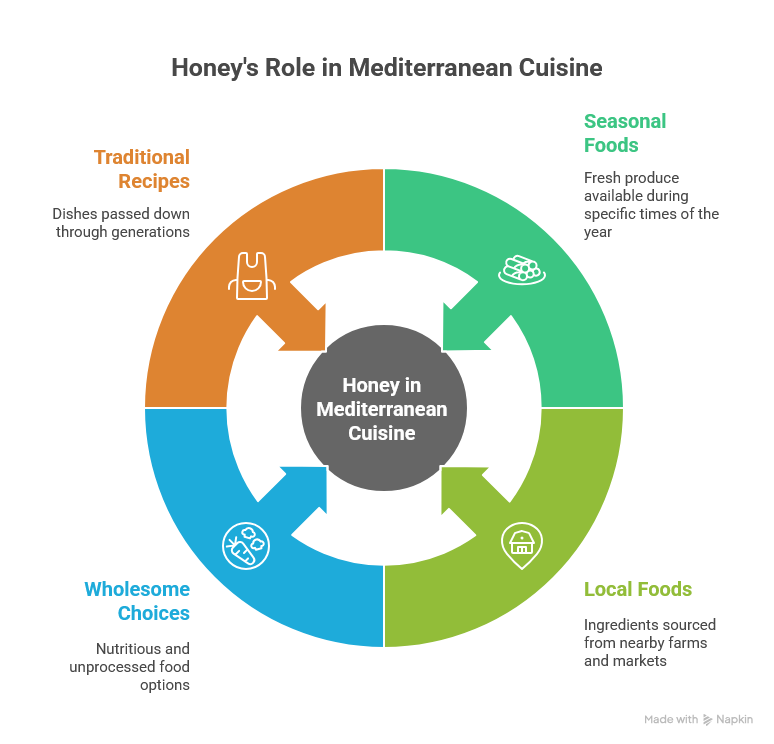
Eating honey on a Mediterranean diet works best when it complements natural foods. The diet focuses on seasonal, local, and wholesome choices. Honey is often consumed during festivals or in traditional recipes.
In Greece, for example, honey is used in baklava and yogurt desserts. Similarly, Italians use it with cheeses and nuts. These traditions show how honey blends naturally with Mediterranean cuisine.
Is Honey Suitable for Everyone on the Mediterranean Diet?
While most people can enjoy honey, some should exercise caution.
- Diabetics – Honey affects blood sugar; consult your doctor before use.
- Weight Watchers – Overeating honey adds calories quickly.
- Children under 1 year – Honey should be avoided due to the risk of botulism.
Alternatives to Honey on the Mediterranean Diet
If you want variety, other natural sweeteners also work in moderation.
| Sweetener | Mediterranean Friendly? | Best Use |
|---|---|---|
| Dates | Yes | Smoothies, snacks |
| Maple Syrup | Occasionally | Baking, oatmeal |
| Molasses | Yes | Sauces, marinades |
These alternatives, along with honey, maintain the diet’s flexibility and richness.
🍯 Mediterranean Honey Alternatives Finder
Compare honey with healthy natural sweeteners for your Mediterranean diet.
Expert Advice on Eating Honey on the Mediterranean Diet
To summarize expert recommendations:
- Honey is acceptable but not essential.
- Choose raw, unprocessed honey for maximum benefits.
- Pair honey with whole foods instead of processed snacks.
- Remember, moderation prevents adverse health effects.
Nutritionist Elena Paravantes states:
“The Mediterranean diet is not about excluding food, but about enjoying real foods mindfully.”
Final Thoughts
So, can you eat honey on a Mediterranean diet? The answer is yes, in moderation. Eating honey on a Mediterranean diet adds flavor, antioxidants, and health benefits when consumed wisely. Use it occasionally, pair it with whole foods, and enjoy it as part of a balanced lifestyle.
The Mediterranean diet thrives on flexibility and tradition. By including honey smartly, you can enjoy sweetness while still protecting your health.
FAQs: About Eating Honey on the Mediterranean Diet
Can you eat honey on a Mediterranean diet every day?
Yes, you can, but in moderation. Experts recommend limiting honey to 1–2 teaspoons daily. Overconsumption may increase calorie intake and affect blood sugar levels.
Is honey considered a Mediterranean food?
Yes. Honey has been a traditional sweetener in Mediterranean cultures for centuries. Greeks, Italians, and Spaniards often use honey in desserts, sauces, and drinks.
Is raw honey better than processed honey on a Mediterranean diet?
Absolutely. Raw honey contains enzymes, antioxidants, and nutrients missing in processed honey. Choosing raw honey aligns better with the natural food philosophy of the Mediterranean diet.
Can honey replace sugar in Mediterranean diet recipes?
Yes, honey is a healthier substitute for refined sugar. It adds sweetness with antioxidants and a lower glycemic index than table sugar.
Is honey allowed if I am trying to lose weight on a Mediterranean diet?
Yes, but carefully. Honey still contains calories, so use it sparingly. Pairing honey with fiber-rich foods like oats or fruit helps with satiety.
Can diabetics eat honey on a Mediterranean diet?
Diabetics must be cautious. Honey affects blood sugar like other sweeteners. Always consult a healthcare provider before including honey regularly in your meals.
Is honey good for gut health in the Mediterranean diet?
Yes. Honey contains natural enzymes and prebiotics that support healthy gut bacteria. Consuming small amounts with yogurt is a widespread Mediterranean practice.
Can honey be used in Mediterranean teas and drinks?
Yes. Adding honey to herbal teas, lemon water, or infusions is common in Mediterranean culture. It offers sweetness without refined sugar.
What is the best time to eat honey on a Mediterranean diet?
Morning and midday are best. Many experts suggest consuming honey with tea, yogurt, or fruit earlier in the day to fuel energy and digestion.
Are there traditional Mediterranean dishes that use honey?
Yes. Classic examples include:
- Greek Yogurt with Honey and Nuts
- Baklava with Honey Syrup
- Cheese with Honey Drizzle
These highlight honey’s cultural importance.
How much honey is too much on a Mediterranean diet?
More than 2 tablespoons daily is considered excessive. That amount can spike sugar intake and reduce the health benefits of the Mediterranean diet.
Is honey safe for children on a Mediterranean diet?
Children over 1 year can eat honey safely. However, infants under 1 year should never consume honey due to the risk of botulism.
Can vegans on a Mediterranean diet eat honey?
No. Strict vegans avoid honey because it comes from bees. However, vegetarians and most Mediterranean diet followers do include it.
What are the alternatives to honey on the Mediterranean diet?
Alternatives include dates, molasses, and maple syrup. These natural sweeteners also fit the Mediterranean principles when consumed in moderation.
Does eating honey on a Mediterranean diet improve immunity?
Yes. Honey’s antibacterial and antioxidant properties support immunity. Combined with a nutrient-rich Mediterranean lifestyle, it may help prevent illness naturally.