
A violent magnitude 7.7 earthquake struck southern Panama on Friday morning. The massive tremor sent terrified residents flooding into the streets of Panama City.
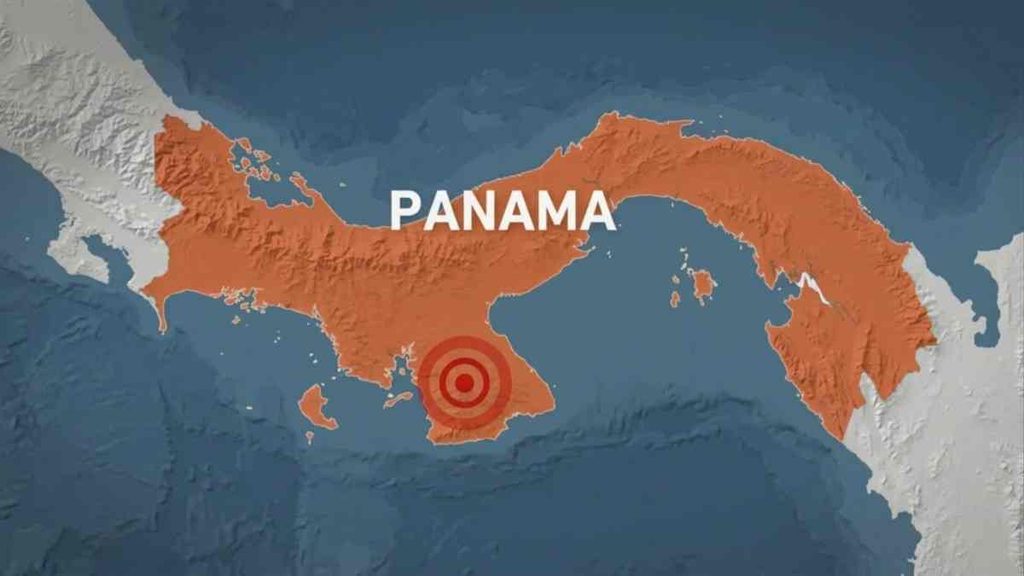
The powerful quake hit at a shallow depth near Pitaloza Arriba. Strong shaking rattled structures across the entire country.
A second 6.6 magnitude quake struck hours later. Hundreds of aftershocks continue to shake the nation.
Emergency crews are assessing damaged buildings and cracked roads. Fortunately, officials report no deaths so far across Panama.
Table of Contents
Seismic Shockwaves Shake Central America
The primary shock struck in a sparsely populated southern region. However, vibrations traveled fast across the Central American isthmus.
Residents in neighboring countries felt the ground sway violently. Reports confirmed a brief Costa Rica earthquake notice during the event.
Officials initially issued a regional tsunami warning following the shock. The U.S. Tsunami Warning System monitored coastal sea levels closely.
Authorities evaluated potential risks before canceling the panama tsunami alert. The threat of a tsunami warning Hawaii was quickly dismissed by scientists.
“The seismic signals have traveled throughout the national territory. That is why people could feel it everywhere across the country.”
— Nestor Luque, Director of Panama Geosciences Institute

Panama Earthquake Snapshot: Key Event Metrics
| Metric / Parameter | Event Detail |
| Main Shock Magnitude | 7.7 Mw |
| Primary Epicenter | Near Pitaloza Arriba, Southern Panama |
| Focal Depth | 12.6 kilometers (7.8 miles) |
| Major Aftershock | Magnitude 6.6 |
| Total Aftershocks | Over 147 individual tremors |
| Monitoring Agency | United States Geological Survey (USGS) |
| Tsunami Status | Threat canceled after monitoring |
Capital Commuters Panic as Transit Stalls
Chaos unfolded rapidly in downtown Panama City during morning hours. High-rise office towers swayed back and forth for forty seconds.
Thousands of workers rushed down stairwells to reach safety. Panic spread as mobile phone networks experienced heavy congestion.

Public transit authorities suspended service on main metro lines. Commuters crowded sidewalk bus stops looking for transportation home.
“Everything was moving: the lamp, the chair, the table. I decided to wait because running down stairs was dangerous.”
— Panama City Resident
The Panama Canal Authority conducted immediate safety inspections on locks. Engineers verified structural integrity along the critical trade waterway.
Canal operations resumed normal vessel traffic shortly after inspections. Tocumen International Airport also reopened runways following brief closures.
International Search Teams Deploy to Panama
President José Raúl Mulino called for calm across the nation. He visited affected hospitals treating patients in outdoor tents.
The United States activated specialized international emergency units to assist. The U.S. State Department deployed the Los Angeles County Fire Department’s USA-2 Urban Search and Rescue team to support Panamanian authorities.
Expert teams bring structural engineers and rescue physicians to assist. Rescuers plan a minimum two-week emergency relief deployment.
“Our personnel are currently the world’s experts in rescuing people from collapsed buildings.”
— Captain Aaron Katon, Los Angeles County Fire Department
Understanding the Azuero Sona Fault System
Geologists attribute the massive earthquake to the Azuero Sona Fault System. Fault lines in southern Panama accumulate massive tectonic pressure over centuries.
The USGS reported the earthquake released decades of stored stress. According to USGS exposure modeling, approximately 43,000 Panamanians experienced severe ground shaking during the main shock.
Essential Earthquake Safety Practices
Seismic experts from the USGS recommend three immediate actions during heavy ground shaking: Drop, Cover, and Hold On.
- Drop down onto your hands and knees immediately.
- Cover your head and neck under a sturdy table or desk.
- Hold on to your shelter until all shaking stops completely.
- Avoid running outside while buildings are actively shaking.
- Stay clear of glass windows and unattached tall furniture.
Summary Comparison: Recent Regional Earthquakes
| Location | Magnitude | Population Exposed | Fatalities Reported |
| Panama (Current) | 7.7 Mw | ~43,000 people | 0 (Initial reports) |
| Venezuela (Earlier Year) | Dual Quakes | ~1.4 million people | 6,400+ |
| Colombia (Earlier Year) | Major Quake | ~1.6 million people | ~300 |
Government officials continue inspecting damaged schools and housing developments. National recovery efforts remain active as tremors gradually subside.
FAQs On Panama Earthquake
What fault line caused the magnitude 7.7 Panama earthquake near Pitaloza Arriba?
The main shock occurred along the Azuero-Soná fault system. Tectonic stress built up where the Panama fracture zone meets the South Panama Deformation Belt. This strike-slip movement released accumulated energy along the southern margin of the microplate.
Why did the Panama Canal continue operating normally after the strong earthquake?
Engineers designed the canal structures to absorb lateral seismic forces. Civil authorities completed rapid structural checks across all lock complexes immediately. Concrete gravity dams and locks showed zero integrity loss from ground vibrations. Vessel traffic resumed without operational disruption.
How many aftershocks struck Panama after the primary magnitude 7.7 earthquake?
Seismologists recorded over 147 individual aftershocks following the initial main shock. The strongest tremor measured magnitude 6.6 later the same afternoon. Shallow aftershocks continue along the Azuero Peninsula fault zone.
Why was the regional tsunami warning canceled shortly after the tremor?
The earthquake mechanism involved horizontal strike-slip fault movement. Horizontal slip displaces far less vertical water volume than subduction thrusts. Tsunami gauges recorded minimal sea level fluctuation along coastal zones.
How far were seismic vibrations felt from the epicenter near Pitaloza Arriba?
Ground vibrations traveled across Central America and northern South America. Residents felt distinct shaking in San José, Costa Rica, and Bogotá, Colombia. Specialized sensors recorded low-frequency waves over 500 kilometers away.
What specific structural damage occurred in Penonomé during the initial quake?
The tremor partially collapsed the historic cathedral steeple in Penonomé. Brick facades crumbled from several government administration buildings. Local hospital staff evacuated patients into outdoors medical tents for safety.
Why did Tocumen International Airport briefly suspend flight operations?
Airport officials halted flights to complete mandatory runway and terminal safety inspections. Ground crews verified that radar systems and control towers maintained structural integrity. Flights resumed once engineers cleared all aviation infrastructure.
Which international emergency units deployed to support Panamanian rescue operations?
The U.S. State Department deployed the Los Angeles County Fire Department’s USA-2 team. This specialized team includes structural engineers, rescue firefighters, and emergency physicians. They brought concrete-breaching tools and search equipment.
How did soil conditions affect building shaking in downtown Panama City high-rises?
Deep alluvial sediments amplified surface seismic waves throughout downtown districts. High-rise office towers swayed continuously for roughly forty seconds. Flexible skyscraper engineering absorbed harmonic motion, preventing cataclysmic building collapses.
What caused regional water supply disruptions across southern provinces?
Severe electrical power outages temporarily disabled major water treatment facilities. Main transmission pipes experienced pressure drops in Coclé and Herrera provinces. Utility crews deployed emergency generators to restore filtration systems.
How does this seismic event compare to earlier Latin American earthquakes?
The epicenter struck a sparsely populated region with roughly 43,000 residents severely exposed. Previous earthquakes in Venezuela and Colombia affected dense urban populations exceeding one million people. Lower population density drastically reduced total casualty numbers.
What primary safety action should residents take during strong skyscraper shaking?
Occupants must drop, cover, and hold on under sturdy furniture immediately. Do not attempt running down stairwells during active ground movement. Wait for primary shaking to stop completely before executing orderly evacuations.
Which provinces experienced the most widespread electrical power outages?
Power distribution networks failed across six southern and central provinces. Electrical substations tripped automatically to prevent catastrophic grid overload. Energy teams restored primary power corridors within several hours.
How did the suspension of Panama City metro lines prevent transit injuries?
Automatic seismic sensors halted metro trains immediately upon detecting preliminary seismic waves. Operators safely evacuated passengers at station platforms. Automated safety protocols prevented derailments inside underground tunnels.
Where can residents verify real-time structural inspection updates from official sources?
Panama’s National Civil Protection System (SINAPROC) releases official building assessment reports. Citizens can track verified updates via official government communication channels. Local authorities advise avoiding unverified social media rumors.